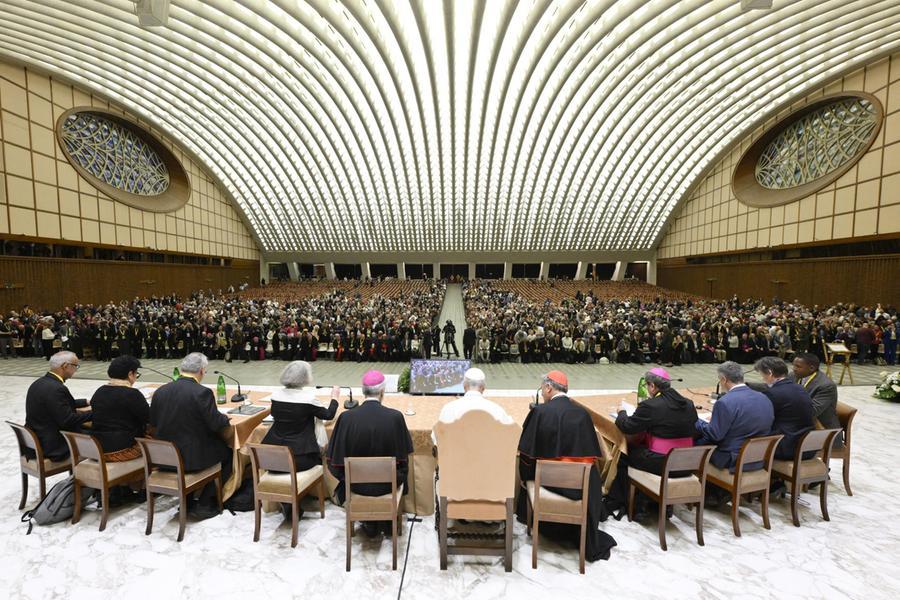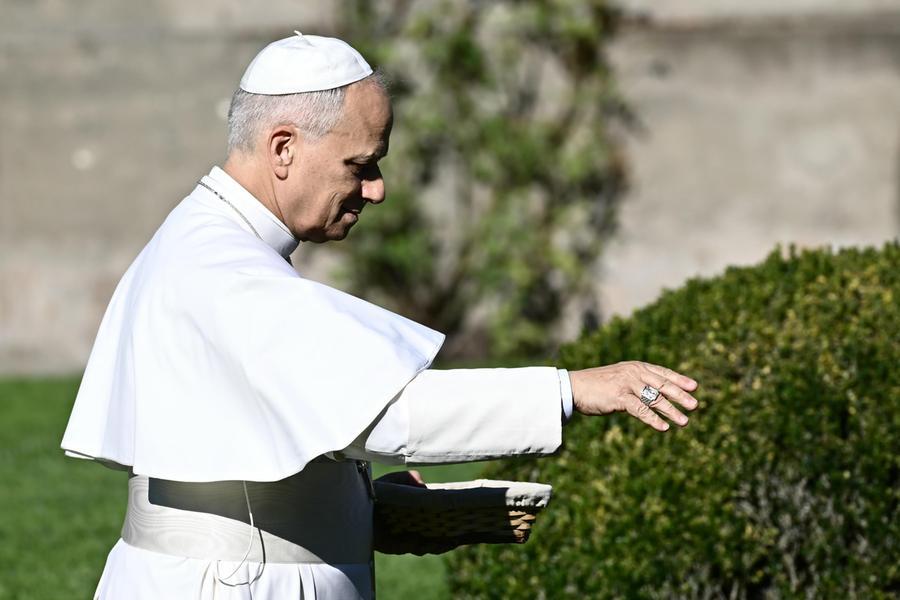






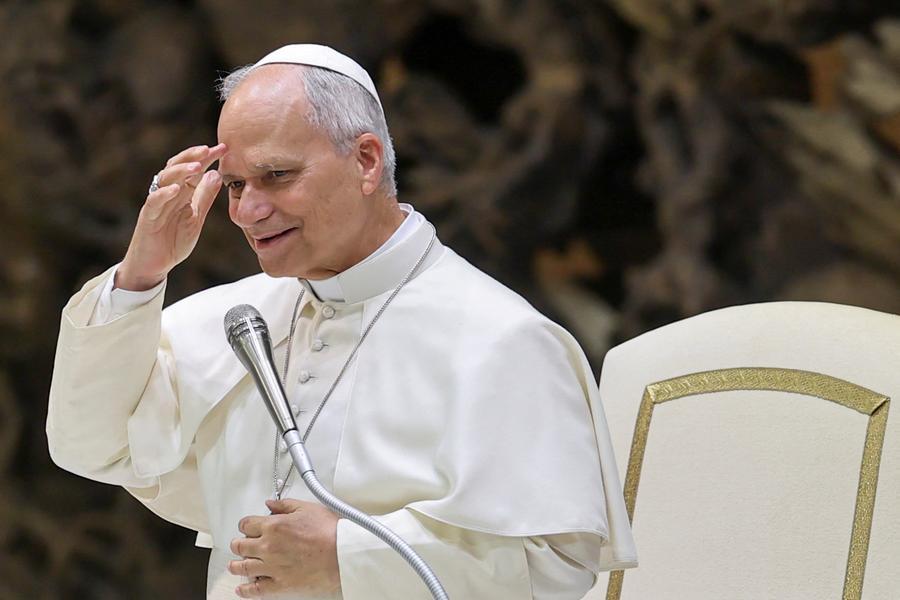
«Where are we going? What goal do we want to move towards? Which direction should we choose as a people and as a human community?”. These are the fundamental questions that Pope Leo posed again to the members of the Centesimus Annus Pro Pontifice Foundation, received in audience at the end of the International Conference “A fragmented world in search of spirituality: freedom and pluralism in the social doctrine of the Church”. The Pontiff wanted to link the meeting to the recent publication of the Encyclical Magnifica Humanitas, indicating it as a compass for facing adversity.
Leone recognized the drama of the present, marked by wars, polarization and cultural divisions. Yet, he said, in the midst of fragility, hope is born: the common denominator that unites us is our shared humanity. Although immersed “in an era marked by wars and growing polarization, as well as by cultural and social divisions”, humanity does not lose hope.
Questions about the meaning of the human journey “are a clear manifestation of humanity’s search for truth and give rise to a thirst for God and lasting meaning.”
Behind the crisis of contemporary democracies and the weakening of multilateralism, the Pope explained, lies in reality “an anthropological crisis that derives from having largely forgotten the Creator”.
The Pontiff then warned against an individualistic conception of freedom, often reduced to the “ability to do what one wants”.
Instead, it is necessary to recover its authentic, i.e. relational, meaning. Citing John Paul II, he recalled that freedom is “gift of self and openness to others” and is fully realized when it is used to love. «On the contrary», he warned, «when freedom is made absolute in an individualistic way, it is emptied of its original content and its very dignity is contradicted.”
Echoing Saint Augustine, the Pope contrasted the City of man, built on pride and self-love, to the City of God, founded on the love of God and the cultivation of relationships. Only the latter makes it possible to build a true “civilization of love”. And he added, quoting Magnifica Humanitas again: «The civilization of love will not arise from a single spectacular gesture, but from the sum of small and constant acts of loyalty that serve as a bulwark against dehumanization».
Finally, Leone urged a dialogue based on truth and recognition of the innate dignity of every person. This, he said, allows us to overcome selfishness and particular interests in favor of the common good, and opens up to a «healthy pluralism» that values the contributions of people from different backgrounds, leading to peaceful coexistence.