






Some used cars are particularly affected by rust. A study reveals that some models age much less well than others.
Rust on a car is no longer as common as it used to be. Manufacturers have made enormous progress in anti-corrosion treatments and, today, most automobile models withstand the years quite well. But some cars clearly age less well than others. To measure the phenomenon, the British company PlateInsight analyzed more than 3.1 million technical inspections, or more than 261 million pieces of data scrutinized. Even though the study was carried out in the United Kingdom, many of the cars concerned are also used in France, particularly on the second-hand market.
First of all, there are cars that go through the years almost without problem. Among them, we find recent models from Ford, BMW or Toyota. The 2019 Ford Fiesta, for example, has an almost invisible rate of corrosion-related defects. As for BMW and Toyota, the models produced from 2017 also emerge as the most resistant in the study, with very few defects reported despite sometimes high mileage, particularly on the Toyota Prius. In fact, these brands today use much more galvanized steel and inject wax-based protections in sensitive areas such as the side members, i.e. the large metal parts which reinforce the structure of the car under the floor, or the rocker panels.
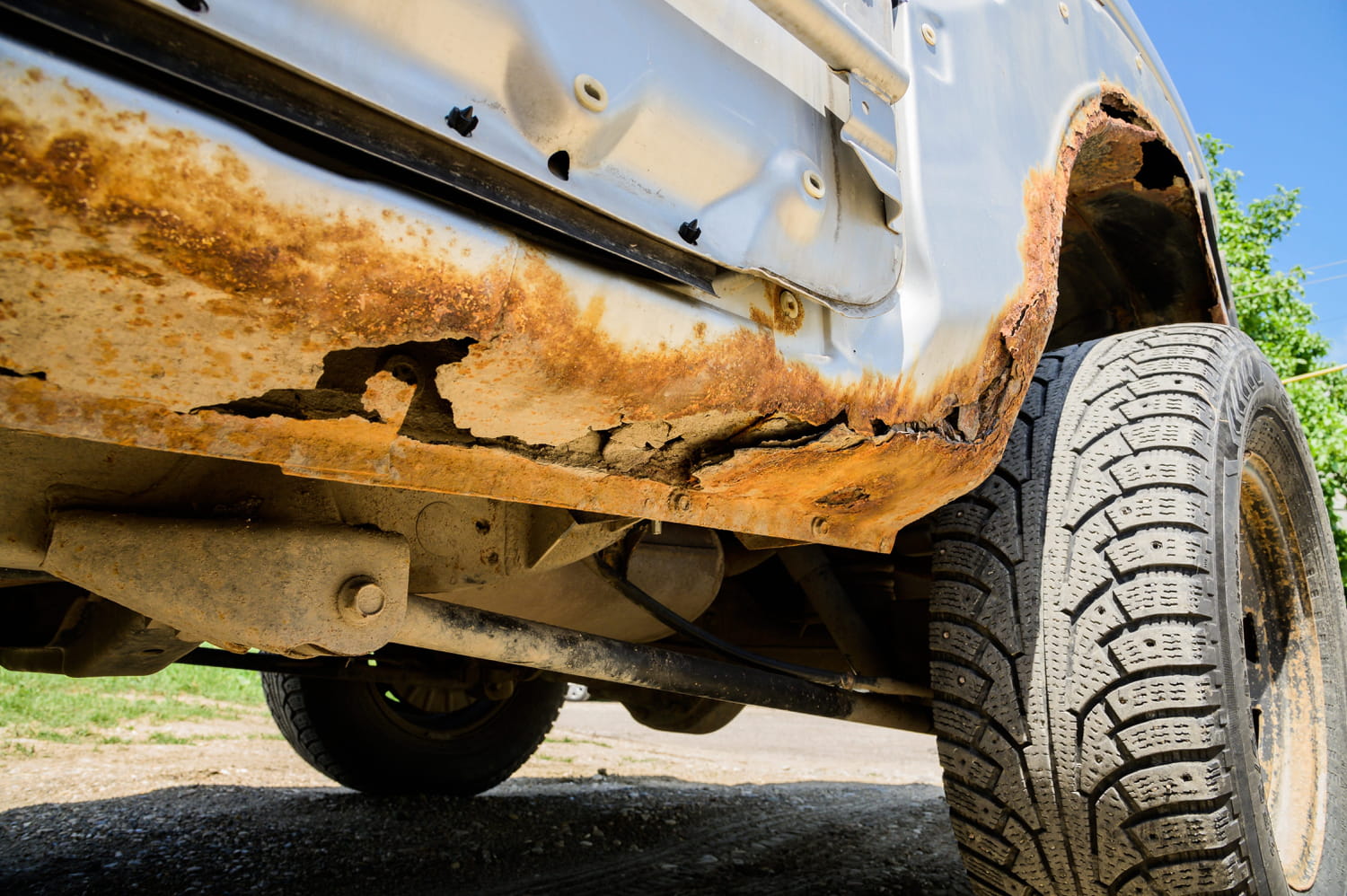
On the other hand, for the most fragile cars, when corrosion sets in, it can go very far. We’re not just talking about a little dot on a fender or a blistering paint job. The defects noted sometimes affect the brake lines, the suspension supports, the engine or even the rocker panels. In short, important elements for safety. In France, this type of repair can quickly become expensive, sometimes several thousand euros, and on certain cars, it is no longer even worth it economically.
In the models that worry the most, two names come up. The first Dacia Dusters produced between 2010 and 2014 are already showing poor results. But another model does even worse. According to data analyzed by PlateInsight, more than 71% of technical inspections carried out on this car report defects linked to corrosion. And the diesel versions seem even more affected, probably because they have often driven more. The car that holds this unflattering record is the Suzuki SX4 diesel from 2011. According to the study, rust appears especially around the attachment points of the rear subframe, a large metal part located under the car which is used to hold part of the wheels and the suspension, and the interior rocker panels. Areas that we almost never look at, but which can become a real nightmare once corrosion sets in.
The study also shows that corrosion does not happen by chance. On several models, the protection of the underbody or cavities, i.e. the hollow spaces inside the bodywork, was clearly underestimated at the time of design. Over time, water seeps in, gets stuck in certain areas and directly attacks the metal. The problem is even worse when the water drains become clogged with dirt or deposits. Result: humidity stagnates for months without the driver realizing it.