

The increasingly scorching summers, the winters that no longer know how to be winters, the sudden floods after months of drought. The climate is changing, and Italians feel it firsthand. Now scientists are launching a new alarm: it’s called Super El Niño, and it could make the next few years the warmest on record. We talked about it with Antonello Pasini, climate scientist at the CNR, professor of climate physics at Roma Tre and of environmental sustainability.
Let’s start from the ABC: what is El Niño? And what turns a “normal” El Niño into a “Super El Niño”?
«The Pacific Southern Oscillation ENSO (El Nino Southern Oscillation) is a natural cycle in the interaction between ocean and atmosphere that sometimes produces higher than average tropical Pacific surface temperatures (El Nino phase) and alternatively colder temperatures – La Nina phase. These phases can be more or less strong and this time the upcoming El Nino seems to be very strong.
The effects of El Nino are to lead to an increase in the average global temperature, partly due to a direct effect (a very large part of the Pacific Ocean warms up) and partly due to remote effects. Be careful, however, that this warming effect only adds for about a year to what is instead the continuous trend of increasing temperatures due to global warming of human origin”.
When we talk about El Niño, we think of the Pacific, Australia, South America. But what should we Italians actually expect? What effects really affect us?
«The most direct effects of El Nino bring heat waves and drought to Australia, and floods to South America, at least the part facing the Pacific. The consequences on Europe are more indirect and less certain, even if this year our seasonal forecasts show a summer that is hotter than normal and, especially in the second part and in autumn, a tendency towards even violent precipitation”.
The heat waves of recent years have especially hit cities and the most vulnerable people hard, the elderly, children, those who live in the suburbs without greenery. With this scenario, does the risk increase further?
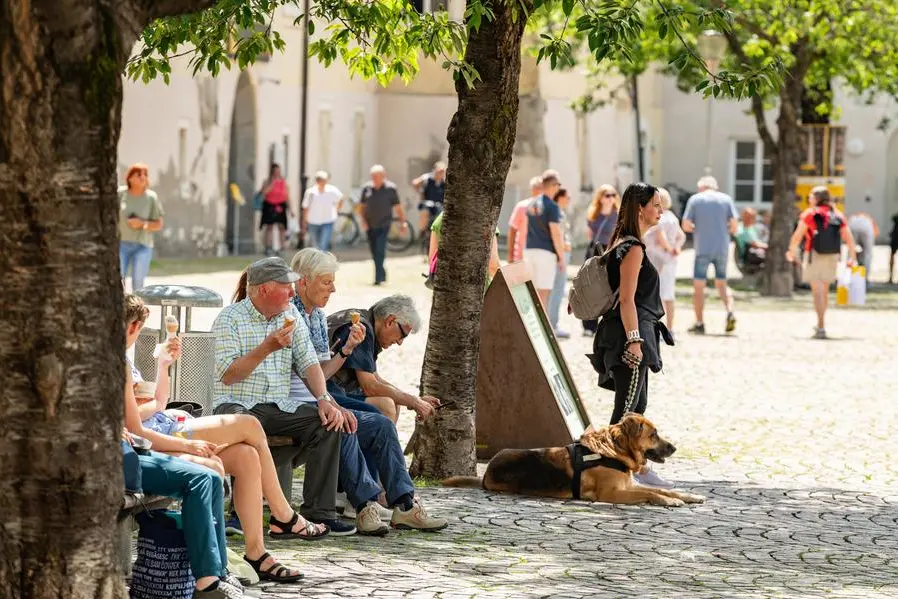
«It is clear that a particularly hot summer could be a serious problem for the most fragile population and it is necessary to equip ourselves with the so-called “climate refuges”, areas of the city where the coolness is obtained naturally (for example equipped parks) or artificially».
There is talk of effects already this summer, but also of more serious consequences in autumn, in winter, and even in 2027. How is what we have to expect distributed over time and when will the most critical moment for our country be?
«There are two things to do. Adapting to situations that we will find ourselves in the future too, because the climate has a strong inertia and we can only think of stopping this dangerous evolution, but not going back. At the same time, however, we must absolutely avoid arriving at worse climate scenarios, because in those cases it would be very difficult, if not impossible, to defend ourselves and adapt. Therefore we absolutely must quickly and drastically reduce our emissions, which come mainly from fossil fuels. We have all the means to do it.”