




The cause of beatification of Don Roberto Malgesini, a priest of the diocese of Como killed on 15 September 2020 by a person he usually assisted, has entered its first official stage, with the collection of documents, testimonies and writings to evaluate his Christian life, his reputation for sanctity and the circumstances of his death. In the case of Don Roberto, the procedure called super oblatione vitae (“on the offering of life”) was chosen, a form recognized by Pope Francis in 2017 for those who, following Christ, have freely and stably offered their lives for the good of others to the point of accepting the extreme risk.
By listening to at least forty witnesses, it is hoped to be able to complete the diocesan phase within a year.
In this case, the documents will be sent to Rome for examination by the Dicastery for the Causes of Saints. Subsequently, to achieve beatification through this route, it will normally be necessary to recognize a miracle attributed to his intercession.
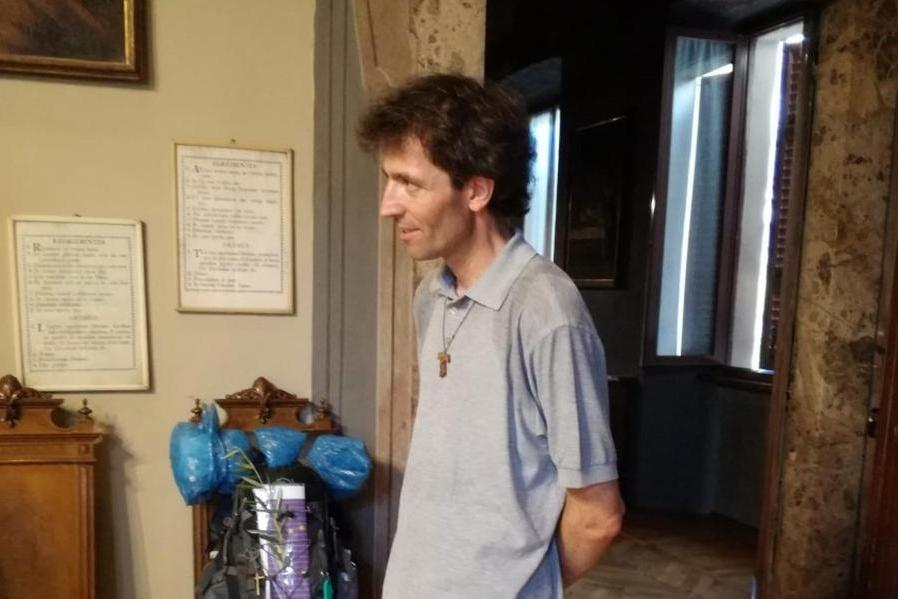
But who really was Don Roberto Malgesini? The writer in 2021 has tried to reconstruct his figure by telling the stories and collecting the voices of those closest to him in the book He dried tears with meekness (Saint Paul). Here are some:
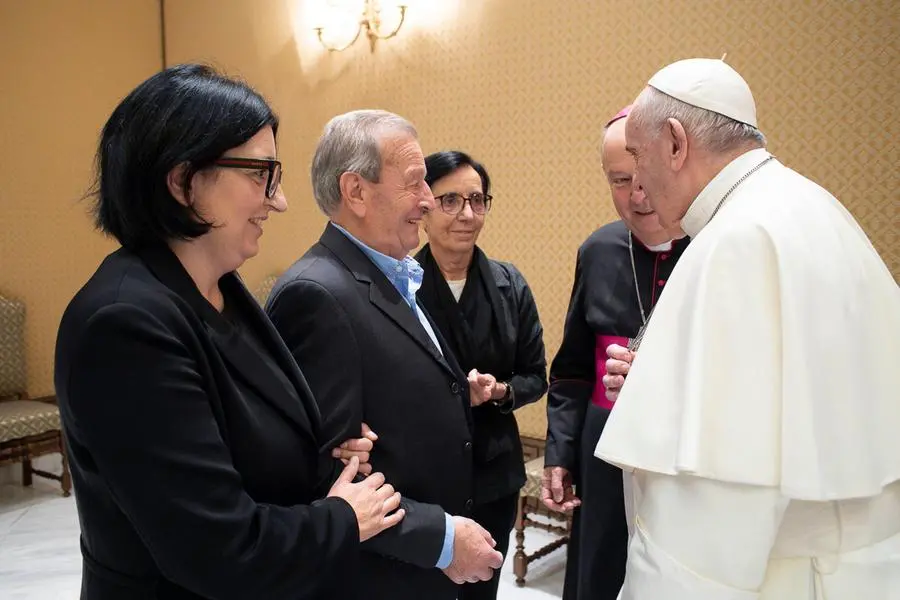
The family members of Don Roberto Malgesini received in audience by Pope Francis
(HANDLE)
According to mother IdaDon Roberto, or rather Robi, was only one of his four children, with Mario, Enrico and Caterina. She had imagined that she too would have a day, like the others, in the garage that she had been managing with her husband Bruno in Regoledo, in Valtellina, since 1963. The path was already marked: the diploma in accounting and then employment as a bank teller to gain experience while waiting to take over the company’s accounting. But one day at the end of the summer, her Robi told her: “Mom, I want to become a priest.” The world collapsed around her. He thought: “I have lost Robi forever”. So she slowly resigned herself to not having one of her children with her all the time. But then he saw that when Robi came back, at least once a week, he was always happy. He never told what he did in Como. Rather, he wanted to know what they did and above all played with his four grandchildren. With Tommaso, the eldest, he shared a great passion, Milan, and whenever he could they went to San Siro together to watch the Rossoneri matches. With the arrival of the pandemic, for four long months mother Ida was unable to see her Robi again. And when it was possible, she was only able to greet him from the window because the fear was still great and he didn’t feel like going up. Only in the summer did they finally treat themselves to a trip to Lake Como. It was the last time that mother Ida saw her family together. A few weeks later, one bad morning at the Malgesini house the phone rang.
In Ridha’s mindone of the many desperate people who gravitated around his church of San Rocco in Como, that always smiling priest was one of the two architects, together with his lawyer, of the plot hatched against him which had as its objective his expulsion from Italy. One morning in September he took a cutlass and looked for his lawyer to make him pay. Don Roberto, however, found him in front of his churchyard. As always, he was loading his dented Panda with croissants, pizzas and hot tea which he would then distribute to people like him. This is why, when the priest saw Ridha, he didn’t get suspicious. In fact, she smiled at him and asked him how his toothache was going. He himself, a few days earlier, had accompanied him to the dentist. But Ridha took out her knife and started hitting him like a fury. A few minutes later, while Ridha handed herself over to the police, Don Roberto had time to say one last word to those who had rushed to hear his screams and found him on the ground covered in blood: “Thank you”.
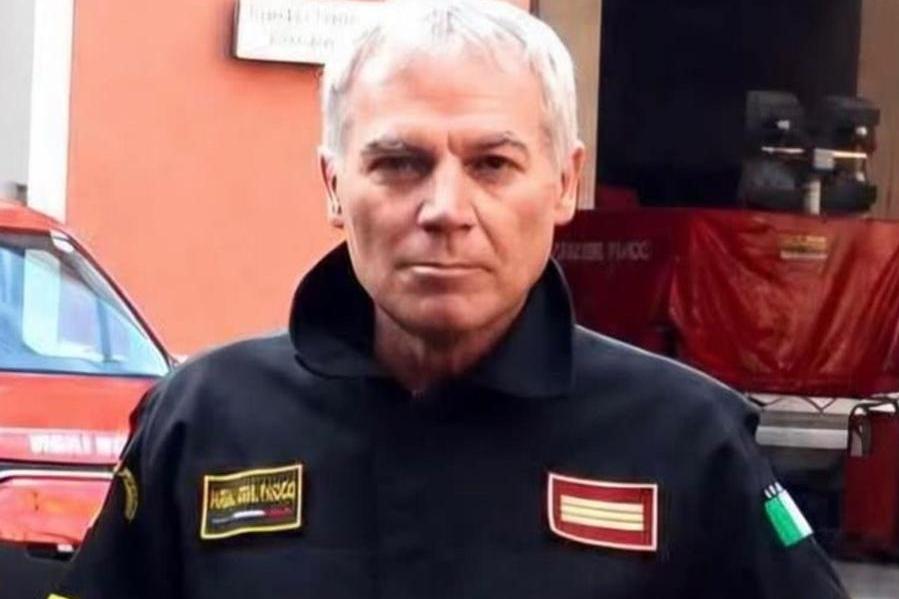
According to Domenico Isdraiàformer head of the guards at the Como prison, Don Roberto was a dear friend you could always count on. When some inmates let themselves be overcome by desperation and threatened to harm themselves and others, Domenico called him, he arrived and incredibly solved the situation. Sometimes without even saying a word, but only with his smile, he managed to bring back confidence in life in people who had lost it. For this reason, for all the inmates, Don Roberto was a point of reference: to get a new sweater, a pack of cigarettes, to deliver a message to a friend or wife. His rectory is still full of objects of all kinds: bicycles, documents, shoes, clothes. They belong to people that Don Roberto had met in Biassono and who were used to going in and out of prison because of the small crimes they committed. When they returned to their cells, at the first opportunity they asked him if he could take care of their things and he obliged them. When the news of his death arrived, there was a semi-revolt at Biassono: the inmates made it clear that if Don Roberto’s killer had ended up among them, it would have ended very badly. Now a beautiful mural that they designed together in the courtyard remembers him forever. Domenico, however, who has since retired, put a photo of himself on his desk: «It seems like he’s looking at me. I still can’t believe he’s no longer here.”
Also according to the doctors and nurses at the Sant’Anna hospital in ComoDon Roberto was a precious resource you could always count on. In 2016 the city by the lake was at the center of the news because it became the outpost from which thousands of refugees hoped to cross the border into Switzerland. In the harsh winter, the station turned into a camp. Men, women and many minors without parents risked freezing to death every night. Among the doctors and nurses of the Red Cross who wandered among those desperate people, there was him, that skinny priest always ready to take off his jacket to give it to some boy, to treat sores and wounds, without paying attention to the risk of being infected by some disease. He continued to do so even when the pandemic arrived and the hospital doctors were no longer able to treat everyone properly. So they often called him, told him the treatments they had prescribed for that patient who they couldn’t keep and Don Roberto took care to make sure that the therapy was carried out. Once at the station he found a Nigerian prostitute spitting blood. He wrapped her in a blanket and took her to the hospital. There they took an x-ray which showed that she had tuberculosis. To best treat her it was necessary to transfer her to the specialized facility in Sondalo, in Alta Valtellina, two hours away. Except that the ambulances were all busy with Covid patients. Don Roberto didn’t think twice then: he loaded that girl into his old Panda and took her to Sondalo. The pulmonologist Chiara Moras remembers him like this: «I think I never saw him tired, angry, skittish, even when the situations he faced were really difficult. We always said to each other: “But how will he do it?”».
For Sophia Loren, Don Roberto was Fausto Leali. Who knows how she ended up on that bench where she spent her days and nights. Sure enough, when someone asked her her name, she promptly replied: “I am Sophia Loren.” But this, to tell the truth, rarely happened. Because like a true diva, she hardly gave herself up to others. Above all, beware of trying to lend her a hand: Sophia Loren became abrupt, even mean, because a diva always knows how to get by on her own and no one can afford to tell her what to do. When she was in good health, however, she liked to play a game: giving the name of a character from the show to the people she saw. So when he saw that priest with slightly disheveled hair he said it was Fausto Leali. One day Fausto Leali showed up at her house with a pair of new shoes. She shooed him away rudely, but the next day he was still in front of her with another pair of shoes. The identical scene was repeated, but Fausto Leali was not the type to give up so easily. Until, perhaps out of exhaustion, Sophia Loren agreed to throw away the worn-out shoes she wore to wear the ones her strange admirer had brought her. But he wasn’t satisfied and returned with a handbag. «It’s horrible, how can you think I can carry it!». This time too, Fausto Leali was not discouraged and returned until she found a handbag that she liked. And so, little by little, after having made her rediscover her femininity, Fausto Leali managed to make his way into the heart of the diva who, between one gift and another, began to free herself from that abyss of pain that had nailed her to that cold bench. Now Sophia Loren lives peacefully in a community in Switzerland. Fausto Leali, “her” Fausto Leali, one morning in September stopped giving shoes and confidence in life to people like her.
For Don Roberto Bartesaghi, Don Roberto was a lifelong friend. They met in the seminary and a relationship of strong complicity was immediately created between them. Almost the same age, the first had just graduated in chemistry, while the second had worked in a bank. Soon, they discovered that they had a great passion in common: the mountains. The refuges of Grigna, Bollettone and many other mountains had no secrets for them: they were capable of walking for hours and hours together, without ever getting tired. Sometimes Don Roberto would lengthen his pace and then stop to wait for his friend with his arms folded. Once a month, with the other seminary companions, they met in a restaurant. Don Roberto told of his encounters, of that baker who was always in the front row in demonstrations against immigrants and the homeless, but who every evening was happy to give him the bread he had left over, knowing full well that the next morning he would feed the very people against whom he was always ready to say hell. Or that time a policeman, carrying out a municipal ordinance that prohibited giving assistance to the homeless, gave him a hefty fine because he caught him red-handed while giving some blankets and breakfast to a man who was trying to take shelter from the frost under one of the many beautiful porticoes that adorn the center of Como. The next day Don Roberto showed up at the police station and gave the Christmas blessing, without making any mention of what had happened. The fine was then dismissed. Like two true friends, sometimes the two Don Robertos did not always get along well, but the discussions never turned into real arguments, because “il Malge” remained impassive or at most he left to return after a few minutes and smile as if nothing had happened. Many times, in particular, Don Bartesaghi advised his friend to be careful, because the people he met every day could react in an unpredictable way. He then shrugged his shoulders and replied, smiling: “At most I go to Jesus.”