






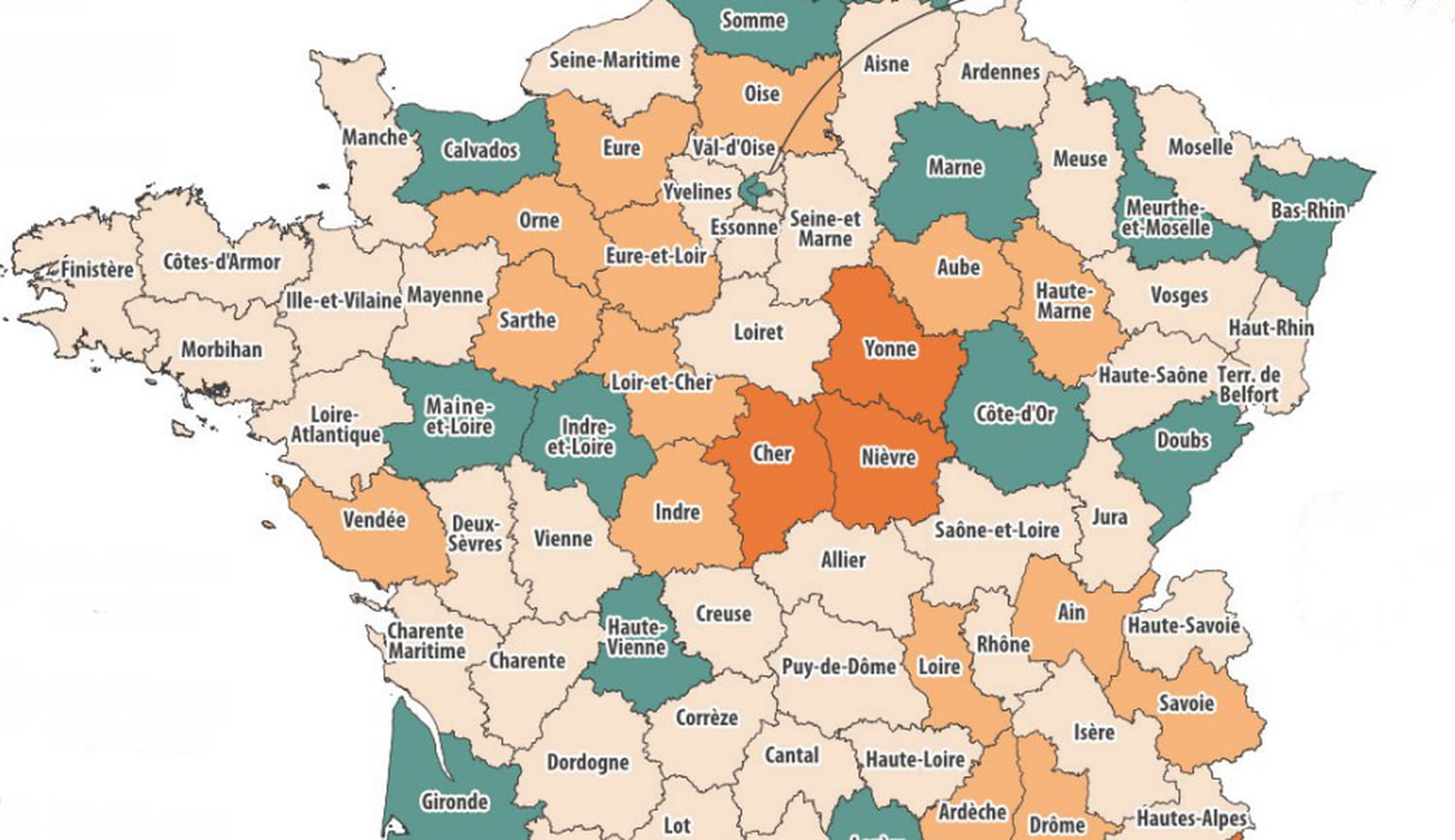
If in general it is increasingly difficult to obtain medical appointments, it is even worse in certain French territories. Here are the figures for the extent of the damage according to the map produced by the Jean-Jaurès Foundation and Doctolib.
They reviewed 234 million medical appointments made in 2025 with more than 80,000 healthcare professionals and the results are clear: access to care remains very unequal in France depending on the territories and specialties. Carried out by the Jean-Jaurès Foundation and Doctolib, the study “Maps of France 2026 of access to care” shows that there is not a single medical desert but a multitude of different situations depending on the doctors sought. While some patients quickly get an appointment, others have to wait several weeks, or even months, to consult.
At the national level, median times vary greatly from one specialty to another. It takes on average 3 days to see a general practitioner, 6 days for a physiotherapist, 8 days for a pediatrician and 10 days for a dental surgeon. The delays then increase to 15 days for a psychiatrist, 21 days for an ophthalmologist, 32 days for a dermatologist and reach 42 days for a cardiologist. However, behind these averages lie significant disparities. The most striking example concerns cardiology: while an appointment can be obtained in 16 days in Paris, the wait can reach 164 days in Gers.
The study also shows that the situation continues to become tense in several specialties. Between 2023 and 2025, delays increased by one day among cardiologists, psychiatrists and pediatricians. For general practitioners, the median time remains stable at 3 days, but the share of appointments obtained after more than a week increased from 32% to 35%, which reflects a progressive deterioration in access to primary care. Nearly one in two departments saw the delays in accessing a general practitioner worsen, while only 4% of departments recorded an improvement.
Click on a department or one of the cities in the medical deserts map below to view its information.
The territories most in difficulty differ depending on the specialties: Occitanie and the Rhône valley concentrate tensions in cardiology, the Greater West is particularly concerned in ophthalmology and pediatrics, while delays are often longer in the North and Center-East for dermatology. Conversely, certain specialties are showing progress. In ophthalmology, the median time has fallen from 25 to 21 days in two years.
According to the authors, these differences cannot be explained solely by the number of doctors available. The organization of care also plays a major role. Ophthalmology illustrates this evolution: the development of teamwork with orthoptists, opticians and medical assistants has made it possible to improve access to consultations despite demographic tensions. Because medical demographics remain worrying. France today has around 55,800 independent general practitioners, a drop of almost 8% in ten years. For patients, place of residence therefore continues to weigh heavily on the speed of access to care.