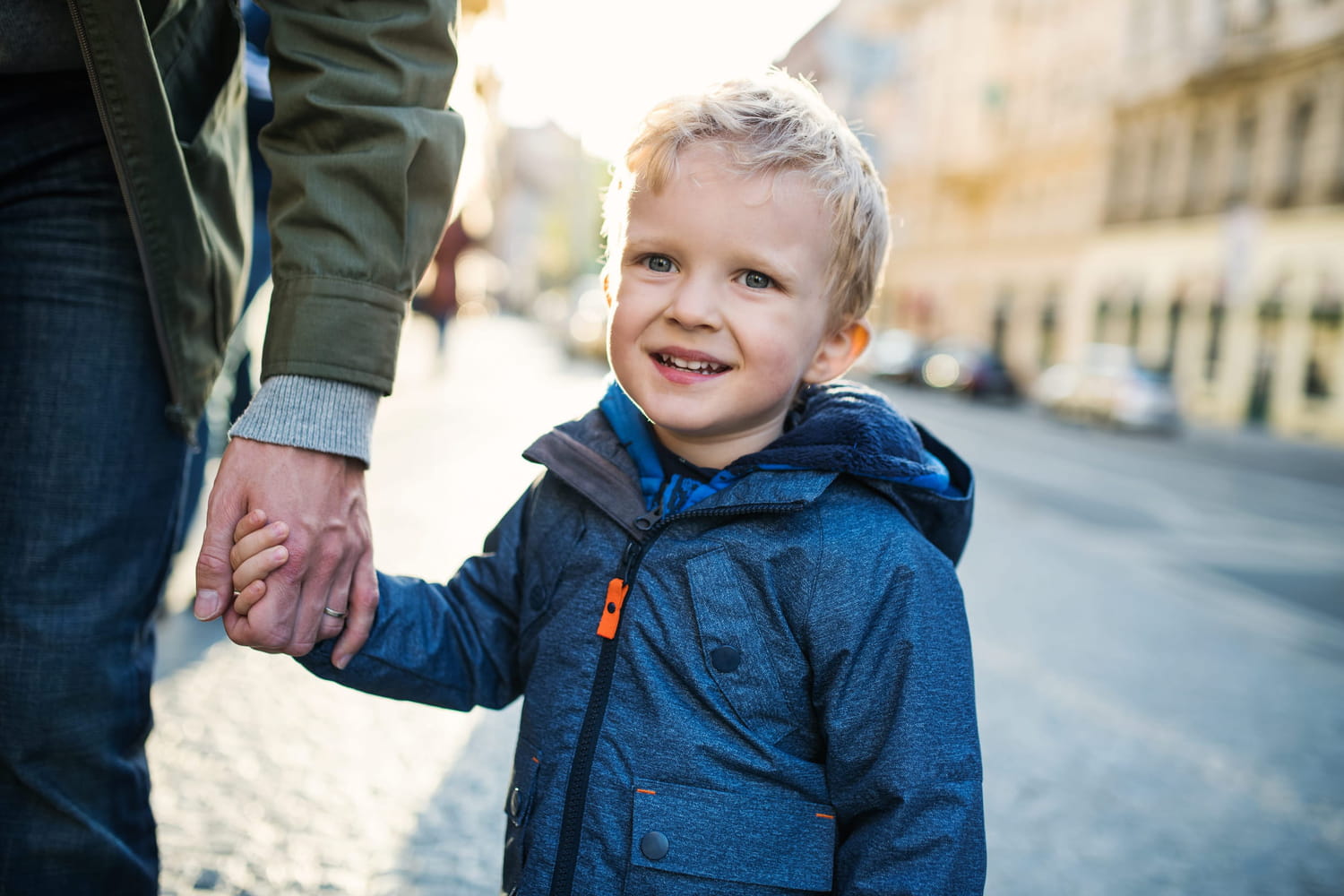
“Don’t accept candy, don’t talk to strangers”… These phrases that we all heard when we were little are no longer enough today to protect your child from malicious people. A former paramedic gives her advice to parents.
The dangers of the street lurk at every moment, and parents’ vigilance is constantly put to the test. A simple moment of inattention in a park, at the mall, in a store or at the beach is sometimes enough to lose sight of your child, even if only for a few seconds. Unfortunately, malicious people take advantage of this vulnerability: they actively observe, lie in wait and take advantage of these brief moments of distraction to approach an isolated child and try to intrude into their space of trust.
Faced with this risk, almost all parents tend to mechanically give the same traditional advice: “never talk to strangers” Or “don’t accept candy on the street“… However, these classic recommendations often prove insufficient in the face of approach techniques. To ensure effective protection, it is now essential to go much further to make children understand an essential thing, without frightening them or slipping into anxiety-provoking speech.
This is where the valuable advice of a former Australian ambulance driver comes in, relayed by the Daily Mail media. She emphasizes a detail which should particularly alert children. “Responsible adults do not ask children for help. If an adult needs help finding something, they ask another adult. If he asks a child, there is a problem.“To illustrate her point, she takes the example of a stranger who would ask a child to help him find his lost puppies. The ex-paramedic deciphers the trap clearly: “For a child, it seems like the right thing to do” she said. “We raise our children to be kind and helpful. And that’s precisely what makes it work.”
For these principles to translate into safety reflexes, children must know exactly what to respond and how to react to each situation. If anyone asks: “Can you help me find my puppy?”children must know not to initiate a conversation and to move away quickly and get closer to their parents. If someone suggests: “II have candy in my car, do you want to see?“, a child can answer: I’ll ask my mom.” If we tell them: “Your mom sent me to pick you up.”they should immediately ask: “What’s the password ?”
Beyond these scenarios, other practical advice helps to strengthen the safety of young people on a daily basis. It is strongly recommended to practice at home in the form of scenarios to give your children all the necessary tools so that they can react correctly. This learning will help them to spot strange people and identify trustworthy ones, while acquiring the habit of always calling on you to ask for your opinion before acting.