Between social prestige and financial security, certain professions are the Holy Grail for parents who want to see their children succeed in life. However, these are not necessarily the best paths for the future, as Sylvie Bremond Mookherjee explains to us.
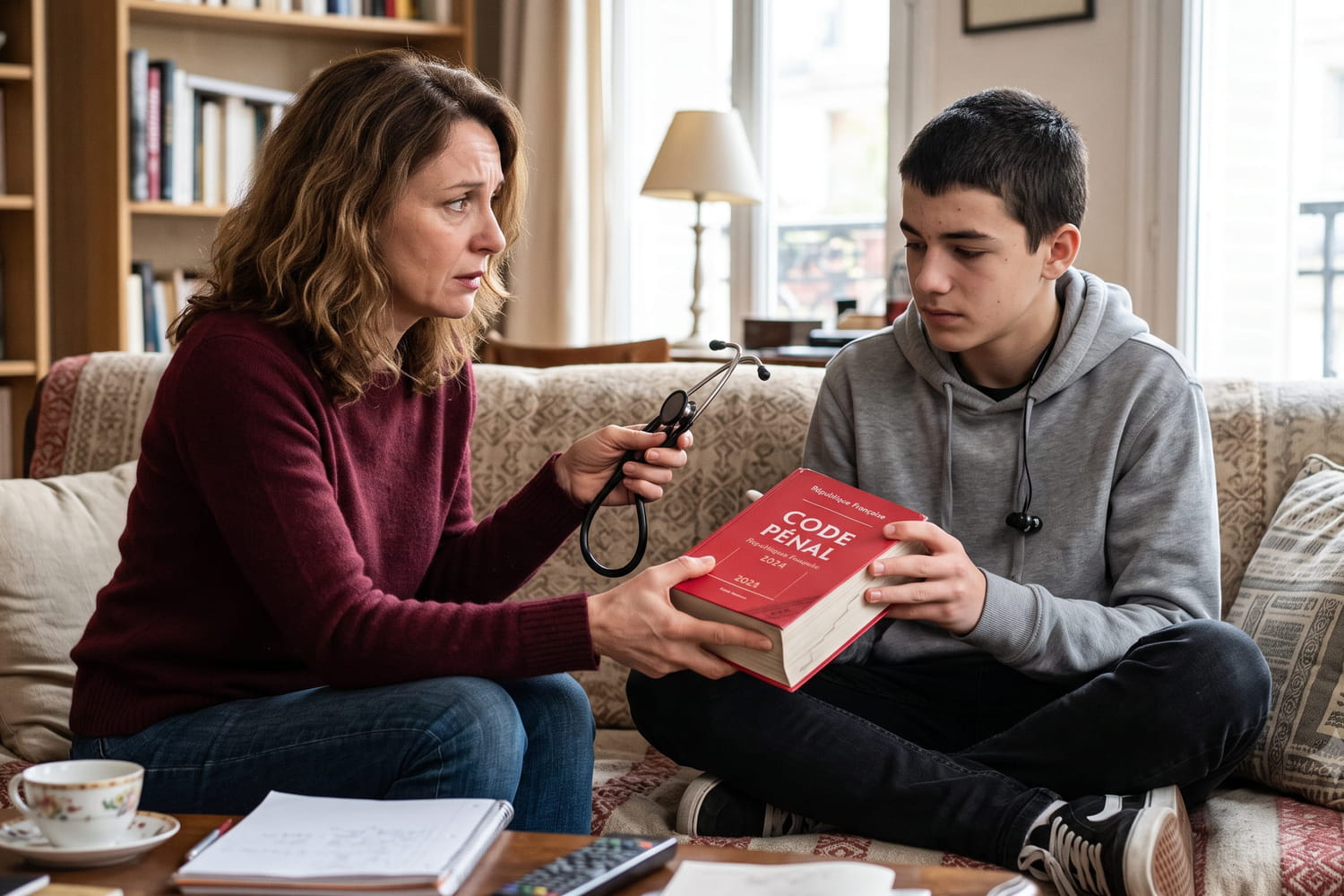
It’s a must for all teenagers: the eternal anxiety of orientation. Middle and high school students are asked earlier and earlier what they want to do when they grow up, and logically, parents are their first guides to this world of work that they do not know. Although the job market evolves with the generations, certain beliefs persist over time… For many, the professions of lawyer or doctor, surgeon or dentist remain the most prestigious of all, sure values both for social status and for future financial security.
“The problem is that parents tend to project their own experiences, their failures or their fears.reminds us Sylvie Bremond Mookherjee, former HR manager who became an orientation coach and professor at the University of Paris 1 Panthéon-Sorbonne. But in a world that is changing at full speed, these “royal” sectors are no longer the Holy Grail that they may have been. According to the expert, it is not necessarily towards these paths that young people should be directed. According to Sylvie Bremond Mookherjee, “these very structured and very conformist professions” are precisely “those who will be most questioned, most shaken by AI”. Because yes, the culprit is artificial intelligence, but not only that!
“The professions for which it will be the most difficult are the professions which are defined with a specific diploma. Lawyer or doctor, it is a minimum of 7 years of study, but which will be completely competed by the immediate memory of AI”alerts the orientation specialist. Indeed, the more the studies are based on the accumulation of technical knowledge, the easier the job will be to bypass for a machine which can process this work “by heart” in a few milliseconds. Especially since in the years to come, AI will continue to improve and overcome its shortcomings that we know today. Ultimately, it is the most technical sectors that prove to be the most vulnerable to ChatGPT.
Obviously, this does not mean that you should no longer study. Sylvie Bremond Mookherjee advises: “I would reassure parents by telling them to push their children towards fields or types of professions, but not towards closed professions, which until now were the most prestigious”recommends the coach, also author of the book Pleasure work is possible in today’s changing world. Besides, AI is not the only obstacle to these paths “closed” which are based on a single diploma. According to INSEE, today we carry out four to five different professions during our professional life: faced with this reality, “midIt is worth choosing training that opens up several professions and a wider sector.”
Of course, Sylvie Bremond Mookherjee reassures us: these professions will not disappear, but will be completely redefined to revolve around this revolution. “We can imagine that a doctor ultimately becomes a health coach, that a lawyer becomes more of a legal coach. That is to say that he will help people who will find answers for themselves about AI, but who will need to be guided“explains the orientation specialist. The time freed up by the robots who make diagnoses or draw up contracts will then have to be reinvested in what the machine does not have: emotional intelligence, ethics, and human listening. Clearly, in the professions of tomorrow, “soft skills” dethrone “knowledge”.