




Validated by a renowned neurologist, this surprising and free method relies on precise brain mechanics to “turn off” pain.
Migraine is the heavy burden of around 11 million French people with a clear female predominance since women are three times more affected than men. It’s painful, painful and often medications don’t help. Recently, a unique method using hair clips has caught the eye of experts for its ability to soothe seizures. “From a neurological point of view, it’s entirely plausible“, immediately validates Professor Christian Maihöfner, neurologist and spokesperson for the Pain Commission of the German Neurological Society interviewed by the Deutsche Apotheker Zeitung (Journal of German Pharmacists).
This approach is based on real physiological mechanisms linked to the nerve-vessel network. When a migraine occurs, this network of nerves becomes hypersensitive. By applying pressure to certain areas, we stimulate specific nerve fibers which block the transmission of pain. The neurologist explains that “non-painful tactile or pressure stimuli can inhibit pain transmission in the spinal cord or brainstem“, acting as a natural filter for the brain.
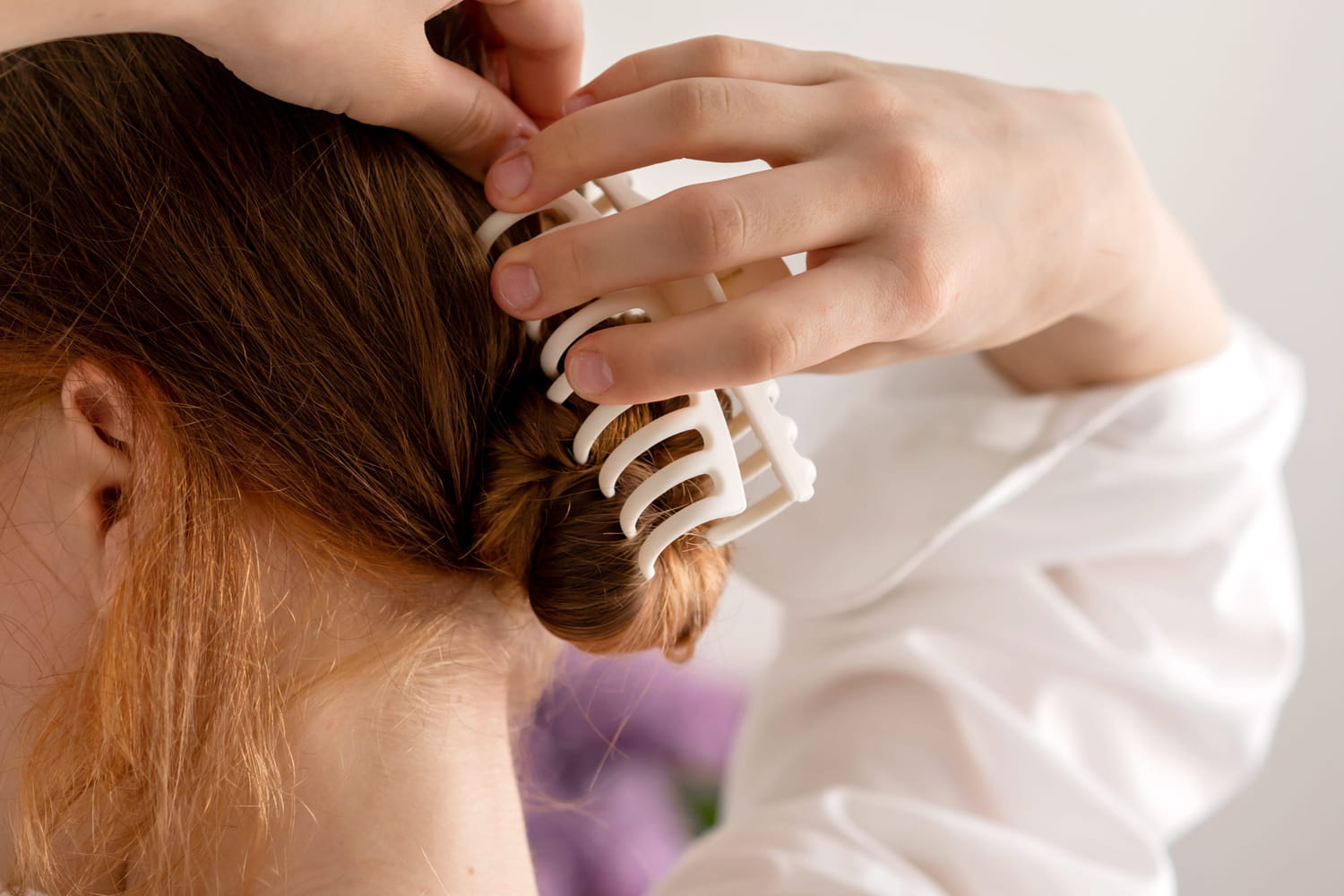
That’s the whole principle of this easy and quick tip: it consists of placing hair clips (like “crocodile” clips) directly on the face, at eyebrow level for 10 to 20 minutes. By pinching the skin at this location, we exert mechanical pressure on the branches of the trigeminal nerve, the main sensory nerve of the face. “Pressure from hair clips on nerve exit points above the eyebrows may inhibit migraine pain signals“, specifies the neurologist.
This stimulation acts like a short circuit, saturating the nerve pathways to “mask” the pain of the migraine. The patients seem won over: “I half-heartedly tried this during my attack this morning, and honestly, it cut the pressure in half in a matter of minutes. It has become my first aid gesture“, rejoices a young woman; “Amazing, I did it on my pressure points above my eyebrows and the shooting pain subsided“, confides another follower.
Although this method offers a welcome respite from pain, it must be used with discretion. Specialists point out that this is not a miracle cure: “It is of course not a therapy to treat the cause“, tempers Professor Maihöfner who deplores the lack of studies on this subject, but rather a crisis management tool. Obviously, it is advisable not to tighten the pliers too tightly to avoid skin lesions and to remain attentive to the signals from your body. If this tip can help get through an acute phase, a medical consultation remains essential to treat the root cause of migraines and prevent the pathology from becoming chronic.
In France, doctors generally favor triptans or anti-inflammatories (ibuprofen). For patients whose life is heavily impacted (more than 2 attacks per month), basic treatment is offered in order to reduce the frequency of episodes. The great revolution of recent years in France is the arrival of anti-CGRP, injectable monoclonal antibodies which directly target the protein responsible for inflammation of the “nerve-vessel network”. Relaxation, cognitive therapy and neurostimulation (via specific devices) can also help.