





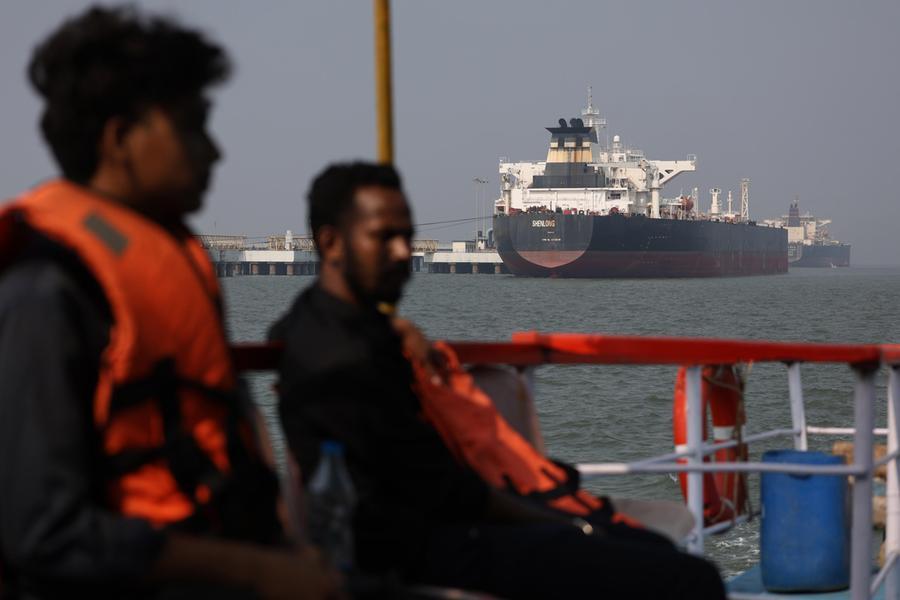
A joint force, composed of several countries, to ensure navigation in the Strait of Hormuz, which the Tehran regime closed in retaliation for the United States and Israel’s attack on Iran. The strait divides the Iranian coast from the Arabian Peninsula and is a fundamental hub for maritime traffic and international trade because a fifth of global oil and liquefied gas passes through it.
The turning point came during the European Council in Brussels. The document giving the green light to the plan for the strait was signed by seven countries, United Kingdom, France, Germany, Netherlands, Japan, Italy and Canada.
In the text of the joint declaration the signatory leaders state: «We condemn in the strongest terms the recent attacks by Iran against unarmed merchant ships in the Gulf, attacks on civilian infrastructure, including oil and gas facilities, and the de facto closure of the Strait of Hormuz by Iranian forces. We express our deep concern about the escalation of the conflict. We urge Iran to immediately end threats, mine-laying, drone and missile attacks and other attempts to block the Strait to commercial shipping, and to comply with United Nations Security Council Resolution 2817. Freedom of navigation is a fundamental principle of international law, also pursuant to the United Nations Convention on the Law of the Sea”.
The statement goes on to state that: «Such interference with international shipping and disruption of global energy supply chains constitute a threat to international peace and security. In this regard, we call for an immediate and complete moratorium on attacks on civilian infrastructure, including oil and gas facilities.”
The countries tell each other «available to contribute to appropriate efforts to ensure safe passage through the Strait». They also agree with «the International Energy Agency’s decision to authorize a coordinated release of strategic oil reserves. We will take further measures to stabilize energy markets, including working with some producing countries to increase production.” The signatories pledge to provide aid to the most affected countries and urge all States to «defend the fundamental principles of international prosperity and security».
A statement that Trump received coldly: “As far as I’m concerned it’s too late,” the US president cut short.
As for Italy’s position in the plan for the Strait of Hormuz, it comes from the Government a “brake” and a clear invitation to caution, reducing the scope of the signed document: participating in the plan does not mean participating in the war. “No one is thinking of a military mission to force the blockade in the Strait of Hormuz,” the prime minister clarified Giorgia Meloni at the end of the European Council. «The countries of the European Union are not directly involved in this conflict and are instead committed to building possible avenues for de-escalation on a diplomatic level».
For the Italian Government, any possible intervention should take place exclusively under the aegis of the United Nations. This is what the Defense Minister reiterated Guido Crosetto: «No war missions. No entry into Hormuz without a truce and without an extensive multilateral initiative. And he adds: «We believe that it is right and appropriate for the United Nations to offer the legal framework for a peaceful and multilateral initiative».
For its part, Tehran warns other countries against providing any form of aid to the United States and Israel: those who do so will be considered enemies by Iran. The Iranian Foreign Minister Abbas Araghchias reported by CNN, during a phone call with his Japanese counterpart Toshimitsu Motegi, warned that the participation of any country in the attempt to break the Iranian blockade of the Strait of Hormuz would make that state “accomplice to the aggression and heinous crimes committed by the aggressors”.