


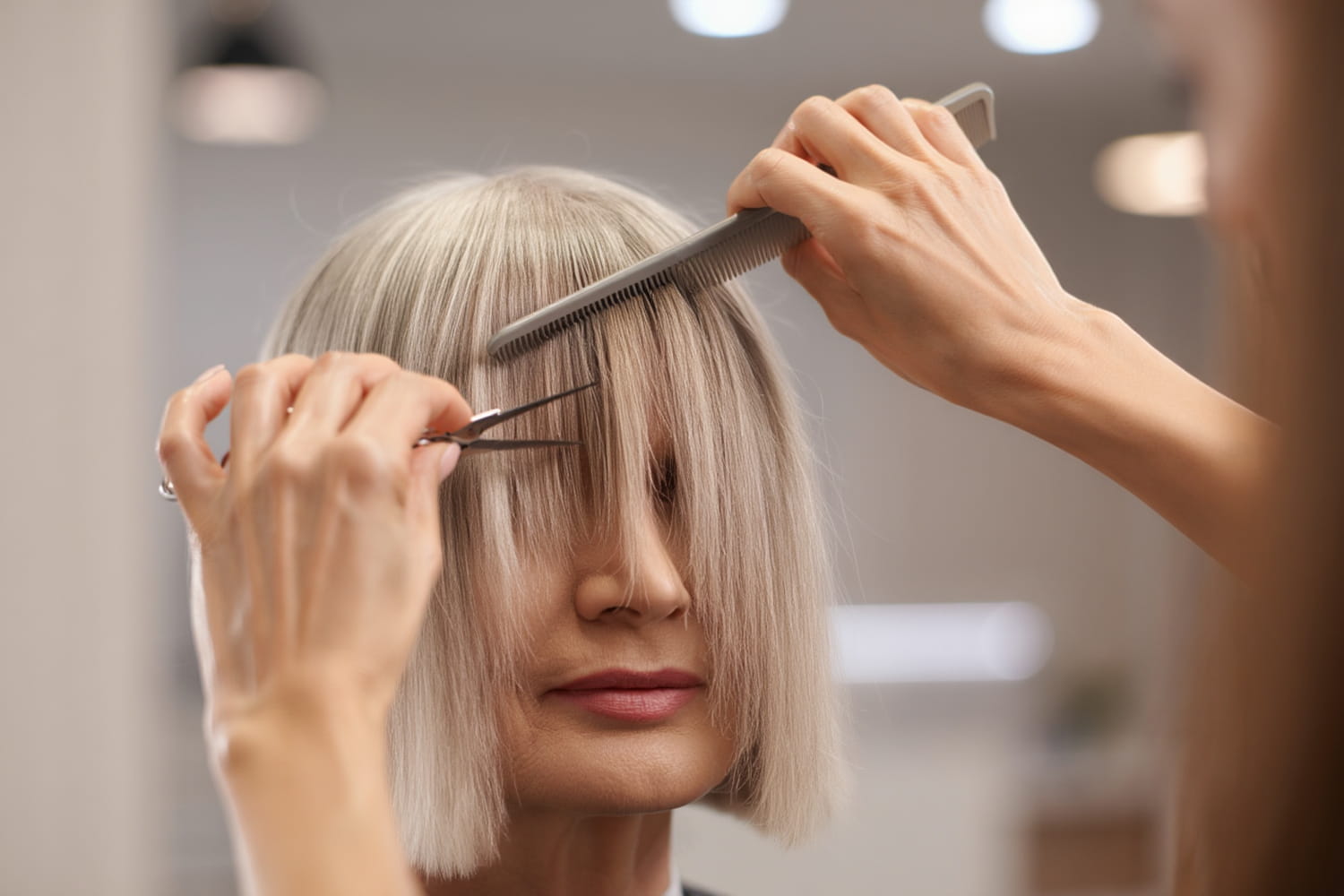
It works with almost any cut and immediately gives a more modern look, without looking too polished.
Hair trends are constantly evolving, but some manage to cross seasons and generations. For some time now, hairdressers have observed a marked return of certain bangs, particularly on mature hair. Far from being reserved for long hair or very young faces, they can also transform a classic cut by giving it more movement and relief. In salons, more and more clients over 60 are showing interest.
Bangs that are too straight can weigh down the face or create too stiff a line, especially when hair becomes thinner with age. Conversely, lightly worked bangs can bring movement to the front of the hair and subtly modify the general appearance of the cut. This is precisely what many women are looking for who want to refresh their style without radically changing their hairstyle.
Before getting started, hairdressers recommend observing the nature of the hair and its location. All hair types can wear bangs, but the result often depends on the direction of growth and the way the strands are naturally placed. The spikes, parting, and the way your hair falls when it air dries are all important. A good hairdresser will adapt the bangs to your hair, and not the other way around.
After 60 years, the bangs that work best remain the curtain bangs. For what ? “It frames the cheekbones, draws attention to the eyes and creates movement at the front of the hair, instantly giving a more youthful appearance”says David Cassidy, professional hairdresser. The result, however, relies on a precise cut. It should start at least at the level of the cheekbone and gradually taper to the ends. “The goal is to create a fluid transition between the bangs and the rest of the cut, in order to avoid a block effect”specifies the hairdresser.
In terms of styling, these bangs require a minimum of attention. A round brush and a hairdryer are usually enough to give it the desired shape. David Cassidy also recommends directing the hair dryer slightly to the side rather than downward to maintain volume and natural movement.