

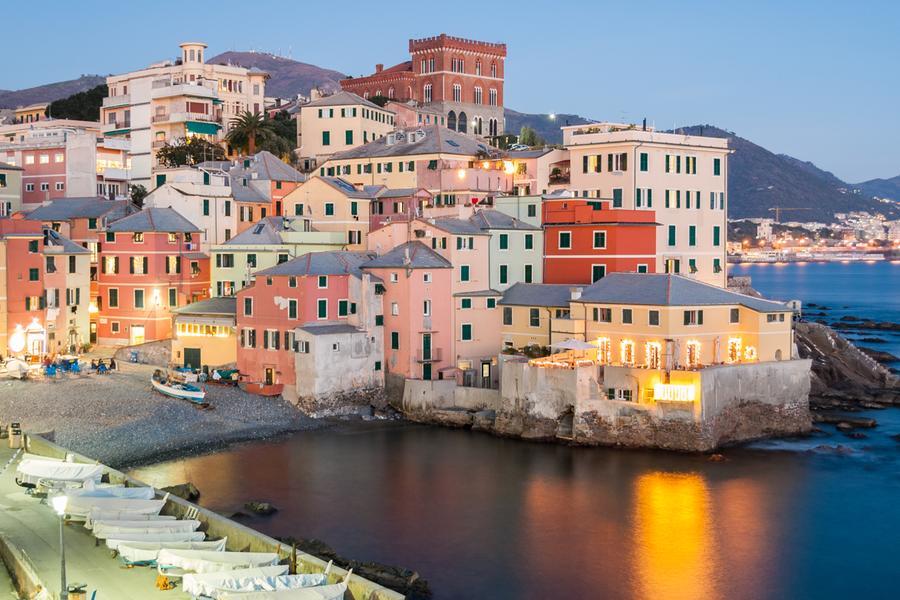



The attic told in The Catone of Gino Paoli’s best-known songs, has a precise reference to the geography of Genoa. It is located in the area of Boccadasse and, more precisely, in the area of the Santa Chiara climb, where the singer-songwriter lived for a period in the late 1950s. TOEven though it is part of the municipality of Genoa, it is a typical village characterized by pastel-colored houses leaning against each other, narrow alleys and a strong link with the maritime tradition. In those years Genoa was a lively center for the birth of Italian songwriting and Boccadasse it was a popular context: simple homes, often on the top floor, steep stairs, small spaces and basic conditions. The attic described in the song reflects this scenario: a modest environment, but with a privileged position, overlooking the sea, in a Genoa still far from the tourist circuits. In the text it thus becomes the symbol of a phase of life marked by economic precariousness but also by personal freedom.
Today the small village looks very different: it has become one of the most recognizable images of the city, a postcard landscape, with colorful houses, boats on the beach and clubs frequented by more select touristsor. It is also the arrival point of the seaside promenade that connects the center to the east, making it one of the most visited places by both Genoese and visitors.
And next to the image of the attic, there is another place linked to another of Paoli’s most famous songs. It’s the bar mentioned in Four friends. Even in this case there is a real reference: it is the Igea dairy baralso located in Genoa in the Foce district, between via Casaregis and via Cecchi. The place has changed its name over time, becoming prima Roby Bar and then Mini Mixing Barbut it remains part of the city’s cultural memory. The “four friends” evoked in the song represent precisely that group of artists and regulars who met there, sharing experiences and projects. It is no coincidence that a plaque placed outside the venue in 2024, in memory of Luigi Tenco, reminds us that young Genoese singer-songwriters met there between the end of the 1950s and the beginning of the 1960s.