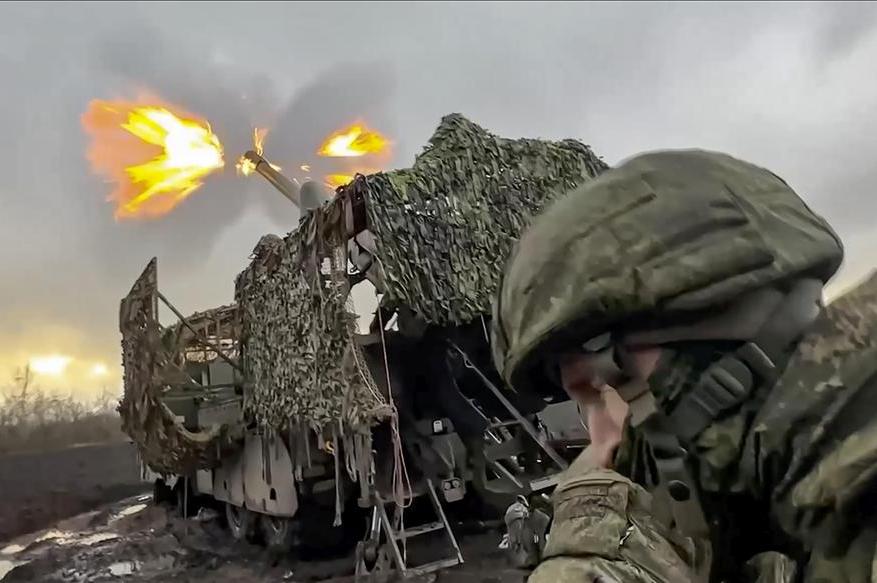




If pPope Francis had been able to give us, in a formula that has now become common heritage, the clear and painful diagnosis of our time – that “piecemeal third world war” that is crossing the planet – Pope Leo From the first moments of his pontificate he offers us a perspective of care, concrete and bold, profound and immediately comprehensible: “a disarmed and disarming peace”.
Diagnosis and therapy, we could say, as continuity and synthesis of two pontificates and two different personalities, but intimately united by the same prophetic breath.
Pope Leo insists on these words as on a refrain, so that they penetrate our often distracted listening, find space in the heart and mind, and can rise as a renewed conscience. Repetition is not rhetoric: it is pedagogy.
“Disarmed peace, disarming peace” is an expression of great strength, which the message for the World Day of Peace clearly declines in its cultural, spiritual and inevitably political significance. It forces us to make a decision: do we really believe in the possibility of a history without wars or not? Do we think of peace as a consolatory utopia or as a possible condition to be built?
Pope Leo invites us, after all, to throw away the mask. The one that often makes us pronounce solemn words without the facts corresponding to them, while our actions – personal, collective, political – openly contradict them. It calls for an account of an increasingly widespread thought that brands those who believe in peace as naive or deluded, taking refuge in an alleged “realism” that justifies rearmament and delegitimizes any unarmed effort as unrealistic. It is a surrender of consciences, even before policies.
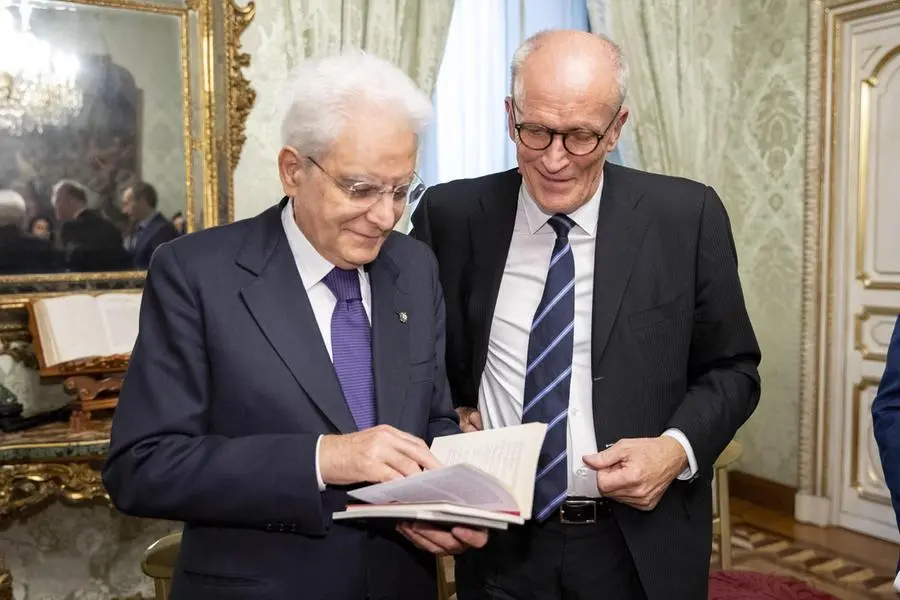
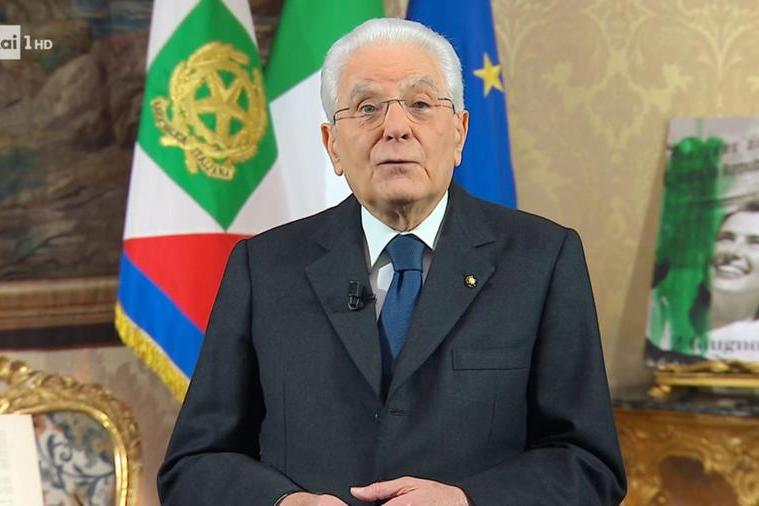
The meeting between the President of the Republic Sergio Mattarella and a delegation of the Rondine Cittadella della Pace-Onlus association led by President Franco Vaccari at the Quirinale in 2018
(HANDLE)
These days, as we prepare to recognize October 4th as a national holiday in honor of Saint Francis, lhe question becomes even more uncomfortable: is our esteem for that man sincere? Do we really draw inspiration from it for behaviors at least comparable to his testimony? As with all saints, for Francis too there is the risk of reducing him to a reassuring saint, extinguishing the restless fire of his life. A man who crossed roads and conflicts, embracing lepers, enemies and even wolves. Pope Leo reminds us of this with a timely pen, inviting us to abandon rhetoric to become authentic men and women of peace.
In fact, peace germinates from each of us and grows even starting from small numbers. It requires commitment, tenacity, patience. And war is not a written, inevitable destiny: it arises from the construction of the enemy, from relationships that slowly degenerate. For this reason, peace is not a definitive state (this would certainly be an illusion!), but a permanent process, a fragile flowering that crosses the conflict and orients it in a generative way.
Unarmed peace does not mean confusing defense with rearmament – that would be a serious mistake. The former may be necessary, the latter is historical regression disguised as realism.
In the Pope’s message, the adjective “disarming” is perhaps the most provocative because it forces critical and complex thinking, a true examination of conscience. Yes, it inevitably refers to Saint Francis, “ridiculous” in his habit, capable of exposing himself so as not to frighten anyone. If “fear” has been designated the word of the year 2025, even more so, Pope Leo’s message must be welcomed and internalized, even if it appears too demanding or excessively against the grain. It is a prophecy that can restore a future to peace and truth to our words.