






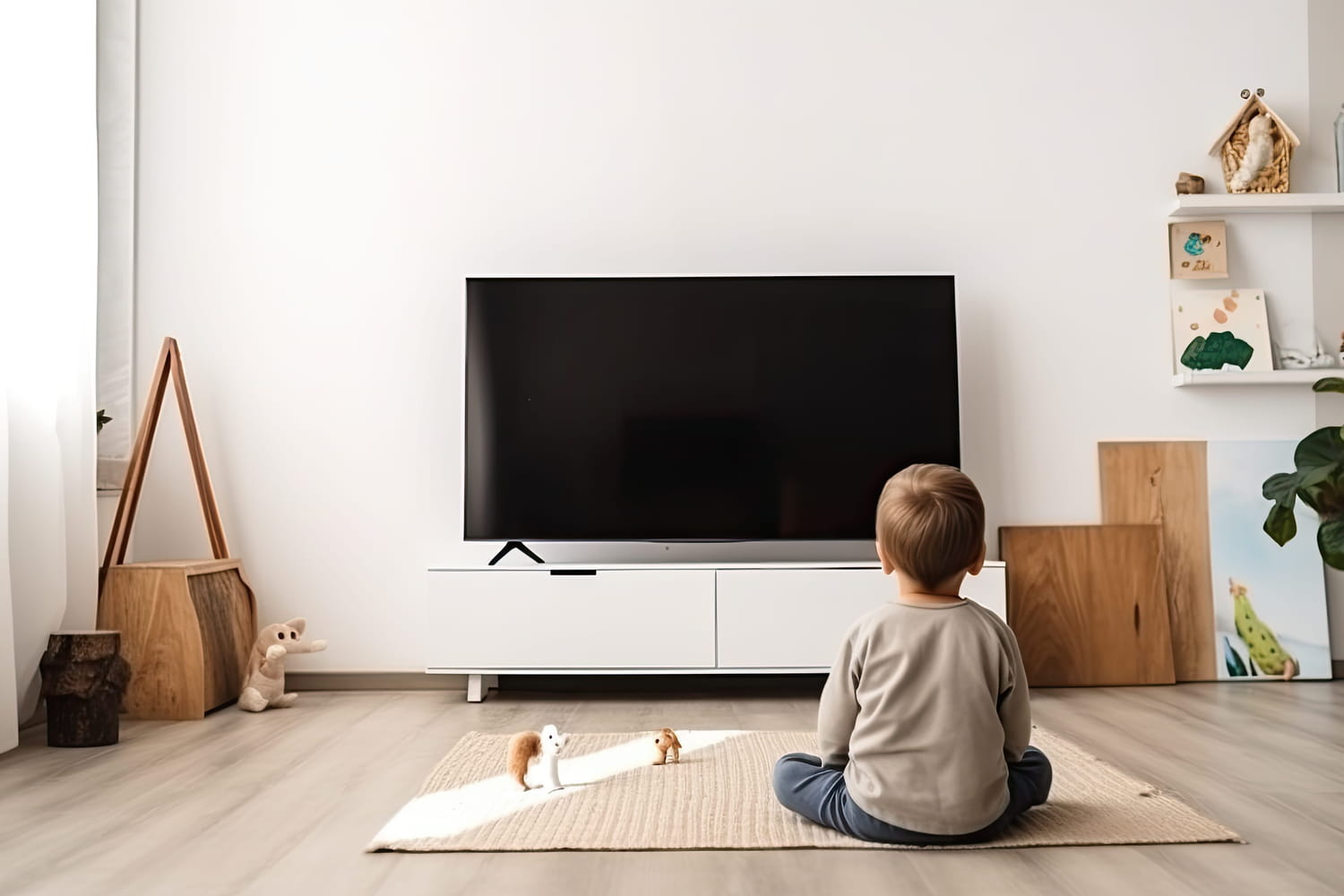
A child very quickly becomes addicted to screens. And once it’s too late, it’s difficult to get him to stop without seizures. A mother found a very effective idea.
From a very young age, children develop an almost magnetic fascination with screens, whether television, tablets or smartphones. This immediate attraction quickly turns into a real dependence, making the task of parents particularly difficult when it comes to limiting exposure time. However, the recommendations of pediatricians and health authorities are clear: no screen use before the age of 3, and very moderate consumption beyond that, because overexposure harms cognitive development, sleep and concentration. Despite these warnings, everyday reality is often more complex. The fateful moment when you have to turn off the television almost always ends in tantrums, uncontrollable crying and endless negotiations. These disproportionate reactions are not simple whims, but an alarming symptom that the child is already addicted to screens and the cartoons he watches.
Faced with this daily challenge, Aurore shared a brilliant idea for weaning her three-year-old daughter from screens, without causing drama. Tired of conflicts while trying to restrict television, she developed a completely free and extremely effective tip. The objective was to put an end to the incessant complaints without having to play the role of the “bad” parent who deprives their child of pleasure. The result exceeded his expectations: “my three year old daughter saw nothing but fire“, she tells us. Of course, this trick works on toddlers…
The method is as ingenious as it is amusing: when her daughter asks for a cartoon, this mother discreetly goes to YouTube and launches a video simulating a broken or scrambled screen, with crackling static. She then announces with a desolate look: “Oh damn, the TV is broken, it doesn’t work anymore!“. Faced with the evidence of the failing image, the little girl, convinced by what she sees, accepts the technical inevitability without protesting and naturally moves on to another activity. She no longer asks for her cartoons since she thinks that the device is out of order. Other parents compete in imagination to achieve the same result without conflict: Stéphanie tells us that she simply removes the batteries from the remote control to simulate a breakdown, or that she switches her phone to “airplane mode” as soon as his child asks for it, claiming that there is no longer a connection to start the videos.
In conclusion, if managing screens remains a major challenge, these subterfuges prove that it is possible to regain control with a little creativity. These “pious lies” not only prevent crying outbursts, but above all redirect the child towards activities essential to their development, such as free play, reading or social interactions. Sometimes a little technical trickery is better than long speeches.