




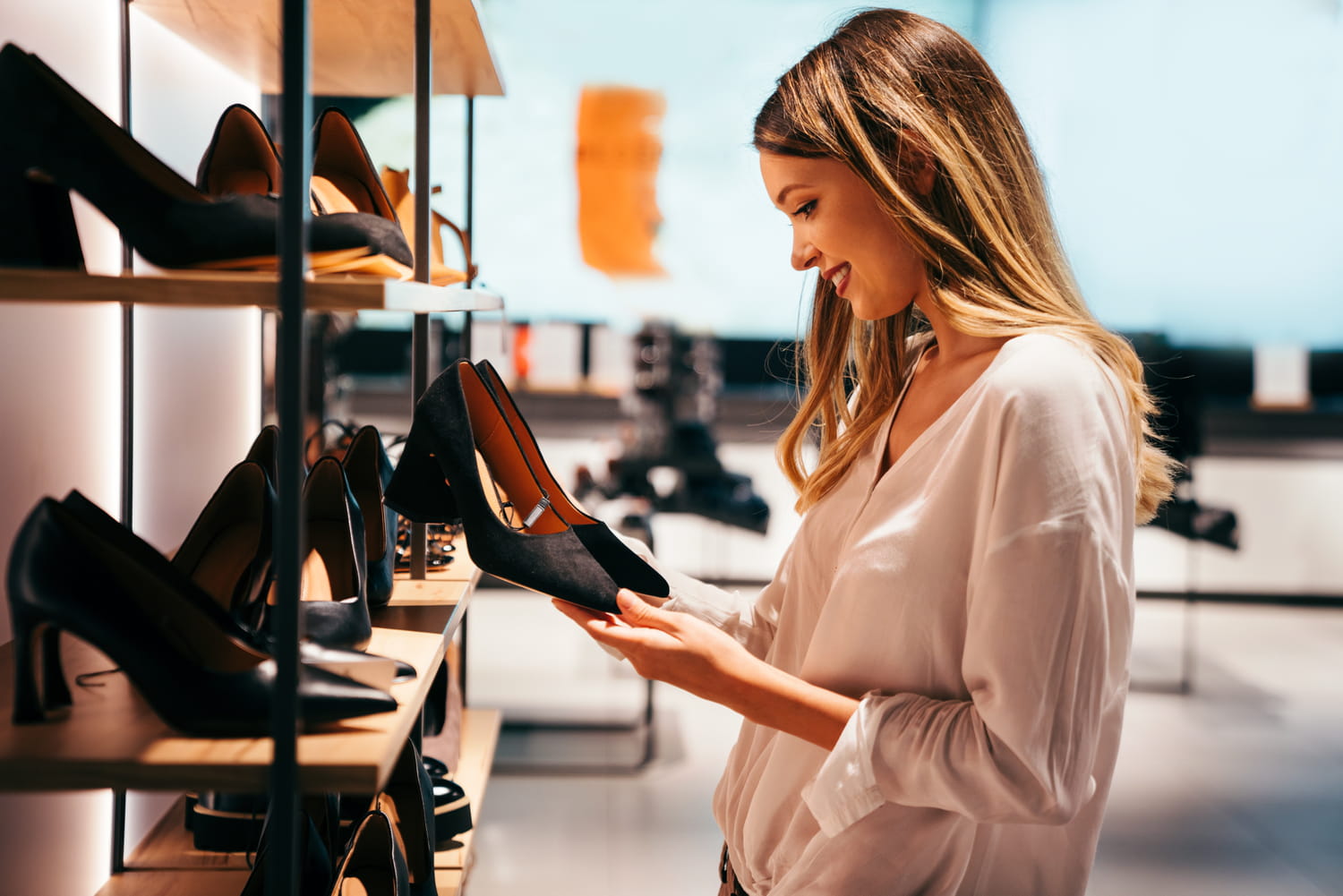
Brands do not rely solely on their collections to attract customers. A very particular element encourages you to put your hand in your wallet and the brands know it by heart.
In clothing stores, customer behavior is studied with a fine-tooth comb. The brands observe how we move, how we look or even what we grab first. Tania Kaya, consumer behavior researcher, also emphasizes that expectations differ from one audience to another: “It has been proven that women are more likely to enjoy the clothing shopping experience, while men tend to prefer functional management, where they can quickly find what they are looking for.” This distinction structures the way in which the stores are organized, from the proposed route to the areas where we stop without really knowing why.
Letizia Bini, design expert, explains that, for example, the women’s department is distinguished by soft shapes and warm shades intended to create a more enveloping atmosphere. In contrast, the men’s department relies on sharper lines and cooler tones to reinforce the feeling of efficiency. According to her, “these differences in design allow us to best respond to everyone’s expectations and purchasing habits”. As you will have understood, sensory stimuli, such as bright lights and loud music, are put in place to encourage the customer to purchase.
Even the fitting rooms follow this logic: Tania Kaya notes that those intended for women often provide a seat for the person accompanying, while those for men favor a direct, straightforward layout. However, if these contrasts persist, the researcher observes a shift among younger generations, who are gradually moving away from gender codes. Future stores could thus focus more on common styles or values than on a systematic distinction between men and women.
Furthermore, on social networks, the Swiss designer Lyssiescorner recently shed light on these mechanisms by analyzing different types of stores. It relies on neuromarketing to show that certain environments encourage more action, sometimes without knowing what activates this impulse. For example, she evokes the well-known atmosphere of a brand popular with teenagers: “It was the boutique for fashionable girls (…) and it felt like we were in the toilets of a nightclub.”
This kind of atmosphere, deliberately marked, responds to a calibrated strategy. The pace of the visit accelerates, the perception we have of the products is biased and the objective, according to experts, is to increase the spontaneity of the customer at the decisive moment. Clever.