
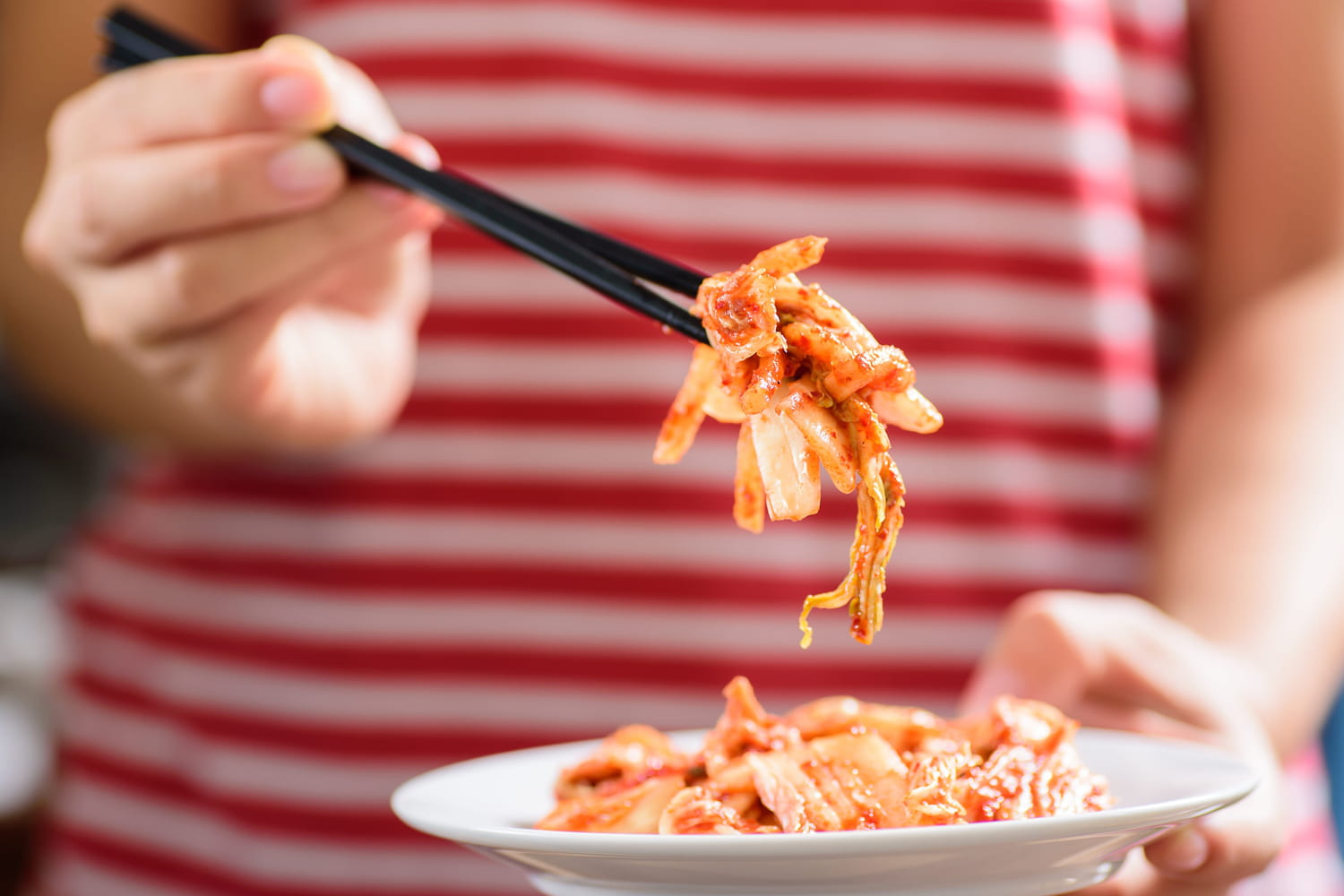





This fermented and spicy cabbage is increasingly popular in France. In addition to being rich in flavor, it is said to have interesting health benefits, including digestion, blood sugar and the heart.
Like many Korean products, kimchi is increasingly popular in France. It is a very popular food not only for its spicy and tangy taste, but also for its health benefits, particularly on digestion.
What is kimchi?
Kimchi is a traditional Korean dish that is essentially a mixture of fermented and spicy vegetables. Most often, it is Chinese cabbage (also called napa cabbage) that is salted and mixed with a seasoning paste which contains Korean chili pepper (gochugaru), garlic, ginger, and sometimes fish sauce. Fermentation gives it a unique taste: spicy, tangy (a bit like sauerkraut, but with spices) and very rich in umami (which evokes dried or smoked meat). In Korea, it is served as a side dish (called “banchan”) with almost every meal, but it is also used in soups, stews, or stir-fries to enhance the flavor.
What health benefits? To digest?
It is one of the fermented foods richest in lactic acid bacteria, such as Lactobacillus. These live microorganisms act as probiotics which help to enrich and maintain the balance of the intestinal flora. Questioned on the subject, our naturopath and weight loss expert Audrey Vergès confirms that the probiotics in kimchi facilitate digestion, help reduce bloating and intestinal inflammation, and optimize the assimilation of nutrients. The intestine being closely linked to the immune system, the action of probiotics is reinforced by the nutritional density of kimchi. “Its richness in vitamin C, antioxidants (from vegetables such as cabbage and garlic) and probiotics act in synergy to stimulate the body’s natural defenses“Research suggests that regular consumption of kimchi may increase resistance to common infections because it acts as an immunomodulator (it helps regulate the immune response).”As it is low in calories and rich in fiber, kimchi has also effects on satiety and regulates blood sugar“, continues the expert.
Finally, bioactive compounds found in cabbage, garlic and chili peppers, as well as fermentation metabolites, could have a positive effect on the heart. Research has shown that regular consumption of kimchi has helped subjects (including obese or pre-diabetic patients) improve blood pressure, better manage blood sugar levels, reduce insulin resistance, and lower blood cholesterol levels.
How much per day?
Audrey Vergès recommends consuming 1 to 2 teaspoons per day, as a condiment with rice, potatoes, raw vegetables or vegetables. “It is better to eat it raw than cooked because cooking kills the probiotics. Also, I do not recommend it to people with intestinal or gastric problems because it remains an acidic food which can worsen these problems.“. Likewise, people who have high blood pressure should consume it in great moderation because kimchi is very salty.
Where to find it?
Kimchi can be bought “ready-made” in the exotic products or fresh and organic foods section of supermarkets, or in Asian grocery stores. Fresh kimchi (from the refrigerated section) generally has a better texture, a stronger taste, and contains more active probiotics than canned or sterilized kimchi.
Making kimchi at home is a process that requires a little patience, but is very satisfying. Simply cut the Chinese cabbage, salt it generously for a few hours to soften it and disgorge it, then rinse it and squeeze it out very well. Then, make the seasoning paste with chili pepper (gochugaru), garlic, ginger and fish sauce, then mix this paste with the vegetables (cabbage, radishes, carrots). Pack the mixture into a jar, let it ferment at room temperature for 1 to 3 days until slightly sour, then store it in the refrigerator to stop fermentation.