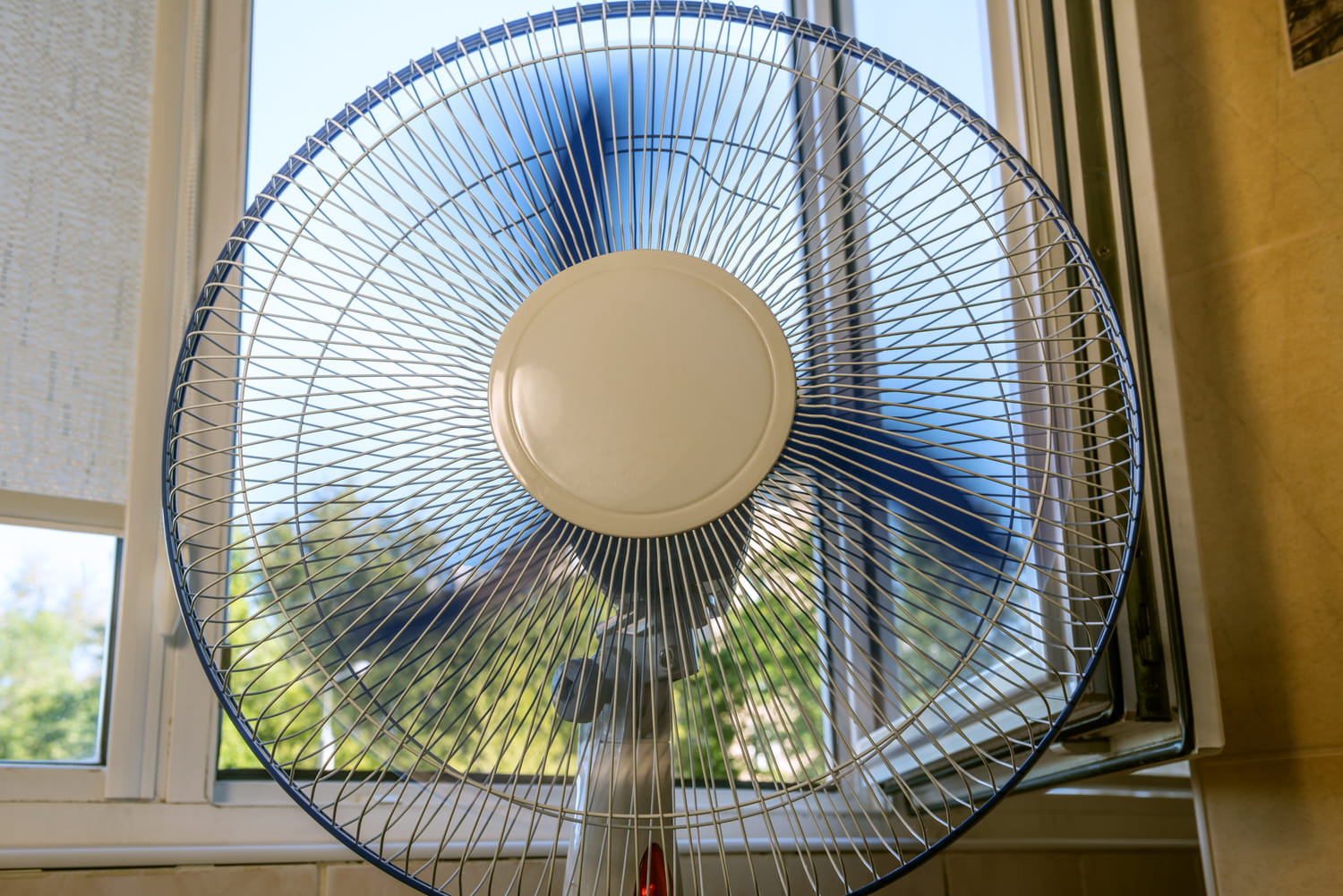
The cardiac danger mainly concerns people over 60: their body tolerates this extreme heat stress much less well and their heart tires more quickly.
In the middle of a heatwave, the fan is the best ally for finding a little coolness at home. However, this device can be misleading, even dangerous for our heart. This is what researchers showed in a study published in the prestigious American medical journal JAMA.
They explain that the wind from the fan makes the sweat evaporate instantly. The brain then believes that the skin is dry and orders it to sweat even more to cool down. It’s a vicious circle: the body empties itself of its water (+60% sweat lost) without ever succeeding in lowering its temperature. If you don’t drink more water to compensate, there is a risk of rapid dehydration. Deprived of water, the blood thickens and the body struggles to regulate its temperature. This “hairdryer effect” intensifies as heat increases, intensely overloading the cardiovascular system to the point of causing fatal heat stress or heart attack.
This is why there is a very specific critical threshold beyond which it is imperative to turn off the device. As soon as the thermometer reaches 39°C inside a room, the fan becomes harmful. This is particularly the case when the air is dry (less than 49% ambient humidity), because the dehydration trap then sets in at full speed. The cardiac danger mainly concerns people aged over 60: their body tolerates this extreme heat stress much less well and their heart tires more quickly.
Fortunately, seeing the thermometer display 39°C inside a home or office is rare. But this can easily happen under the attic, under poorly insulated roofs (where the greenhouse effect is massive) or in south-facing apartments with large bay windows. Furthermore, restaurant kitchens, factories, laundries or non-air-conditioned workshops very regularly reach (and sometimes exceed) this threshold of 39°C in summer.
To get through hot weather safely, the golden rule remains to hydrate continuously (at least 1 glass of water every hour), even without feeling thirsty, and to look for real islands of freshness (air-conditioned rooms, damp cloths on the skin, lukewarm baths). When the atmosphere becomes an inferno, turning off your fan is sometimes the best way to protect your heart.