



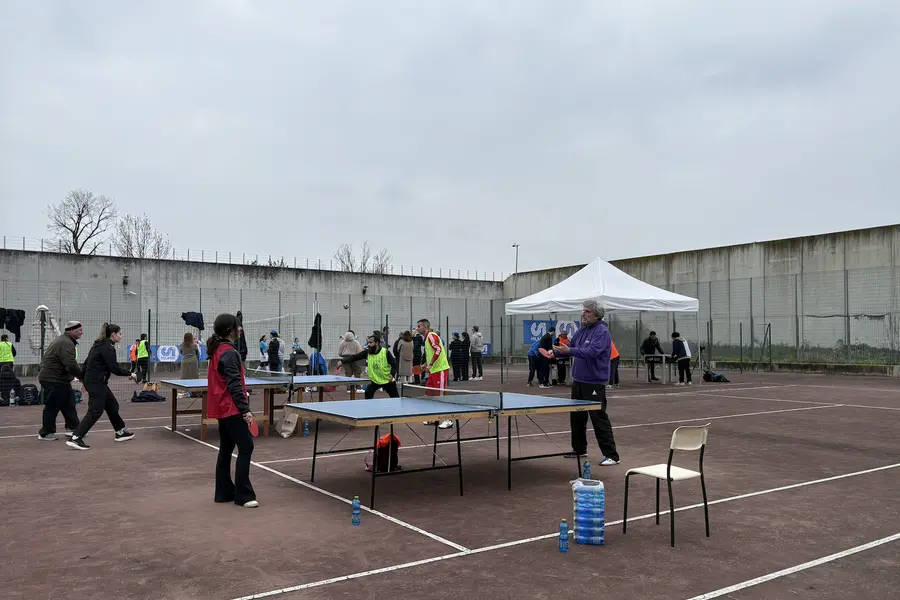
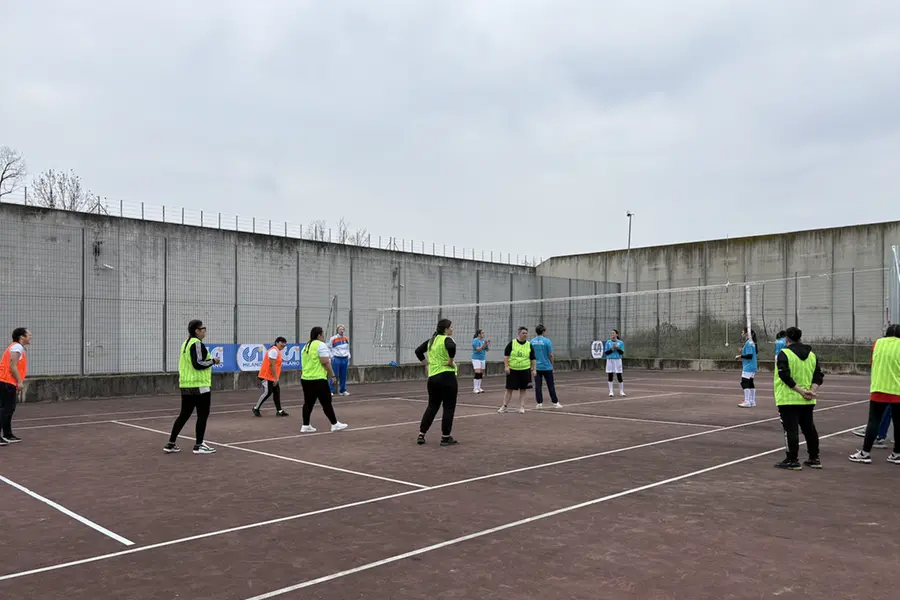
The concrete of the Milan Bollate prison does not reflect light. He swallows it. Milan on February 28th is a city bent under a low, lead-colored sky. The air smells of held rain. Here for many out there, gray is structure, grammar, apparent destiny: walls, corridors, gates that close with a metallic thud that admits of no replies. Neverthelesscolor bursts into this severe architecture.
Red, yellow, blue. The team shirts. The brothers resting on broad shoulders and narrow ones. The white lines carefully drawn on the football, volleyball and basketball fields. The athletics track that looks like an orange scar in the concrete. The sharp noise of the kicked ball, the referee’s whistle, the music, the sudden laughter at an unwanted slip or an empty net goal that break the habit of disciplined silence.
There are almost two hundred: men and women inmates, prison police officers, magistrates, representatives of the Municipality, volunteers, young athletes of the CSI Milan. The Olympic torch enters the courtyard as a foreign and symbolic object, an ideal preview of Milano Cortina 2026. But here the real flame is another: it is the possibility of looking at oneself without the barrier of the role.
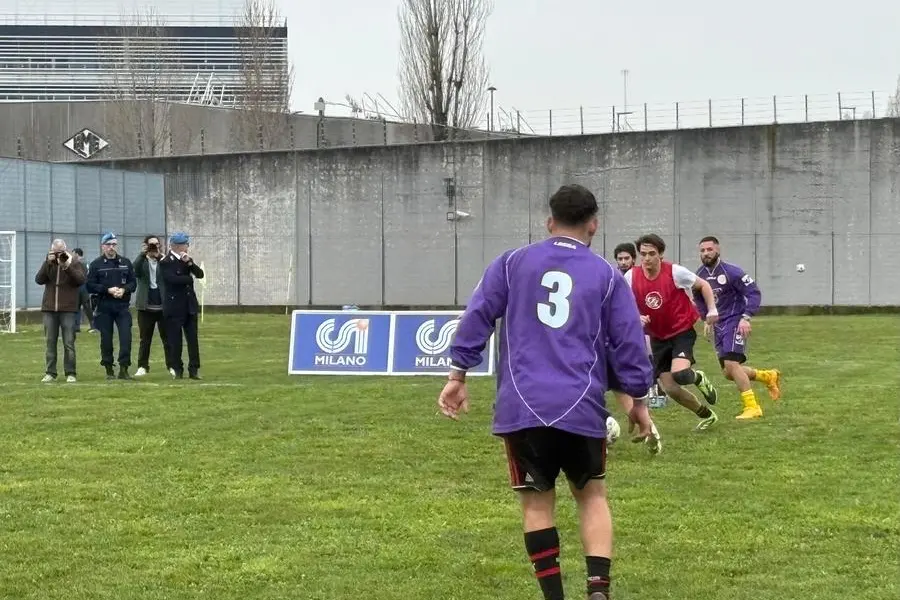
“Here the foul is a foul for everyone,” says Karim, 32, as he arranges the grass-stained soccer balls. He says it with an almost solemn seriousness. «It doesn’t matter who you are on the outside. What you do now counts.”. In this sentence there is an elementary and revolutionary pedagogy: the rule as common ground.
The Bollate laboratory
Bollate is considered a model. Not because it is a happy island, but because it attempts a complex path. The director, Giorgio Leggieri, in office since 2021, speaks of complexity without pretence: «It would all seem simple, the sport, the participation, the mixed teams, but it is not. Getting to internalize the rules, the respect, the effort of the result, is a long journey.”
Underline one word: internalize. «It’s easier to build a system where you continually tell people what to do. It is more difficult to help them develop autonomy, a sense of responsibility and the ability to question themselves». Then he adds: «Permeability with civil society is not a frill. It’s substance. Without content, punishment is empty time. And empty time amplifies errors. We must fill it with meaningful relationships.”
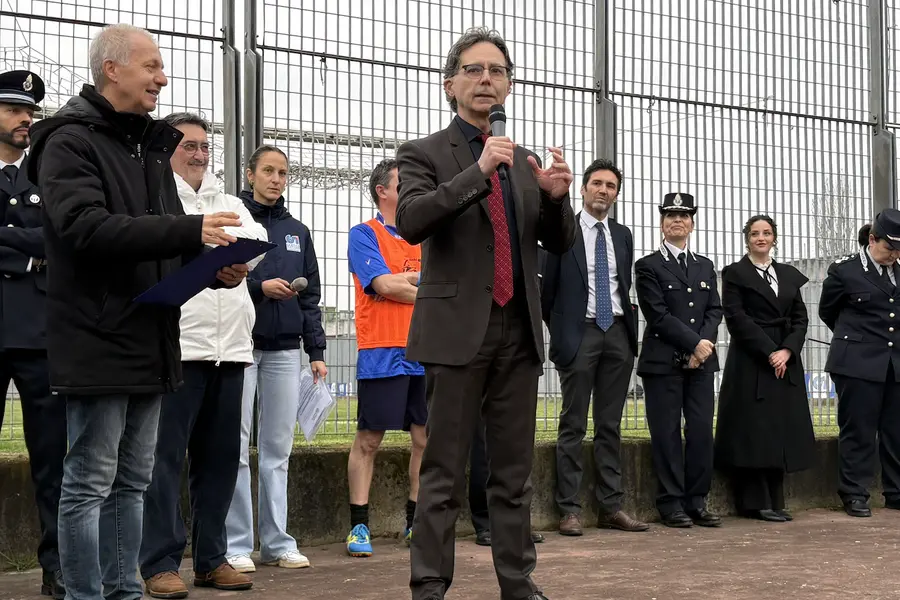
Relations. It’s the term that comes back. «If the daily climate were conflictual, distant, marked by deafening silences, today it would be theater. Instead it is possible because there is daily work, shared between the treatment area and the prison police. There is no such thing as someone who deals only with safety and who only deals with re-education. We are all part of the same process.” As he speaks, a magistrate and a prisoner argue about offside. They get heated, then shake hands. It’s not rhetoric, it’s real dynamics.
Seven hundred hours that cannot be seen
Massimo Achini, president of CSI Milan, has a voice that vibrates with conviction: «This day turns the spotlight on, but behind it there is work that lasts all year. Seven hundred hours of sport beyond the bars. Not once in a while. Every week». It tells of teams of prisoners who participate in official championships, of referees who enter, of families involved in the parent-child “mini Olympics”. «A prisoner told me: “In prison a referee who enters changes your day”. Imagine what happens when entire teams enter, when the world enters.”
Then he gets deeper: «Every time you play in prison two simultaneous transformations happen. For those inside it means feeling that life is not suspended forever. For those who enter it means calling into question their own prejudices. You come out different.” I ask him if there’s anything left the next day. «A sign remains. Not always visible, but real. The idea remains that respecting the rules is worthwhile. That the team only works if everyone does their part. They are social antibodies.”
The field as a mirror
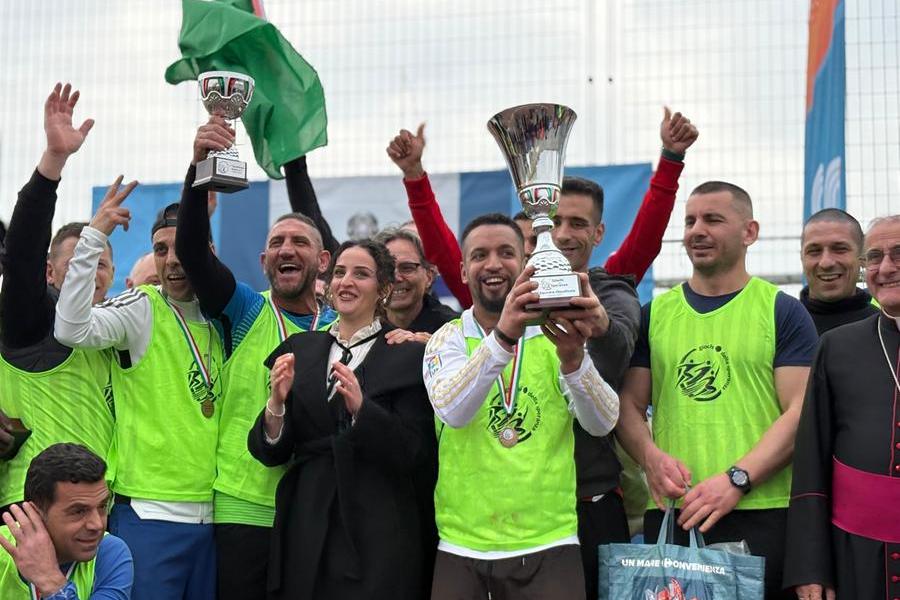
The football match between prisoners and officers is intense. It ends 4-1 for the prisoners. But the result is almost secondary. Marco scores, then leaves the pitch: «I have talks with my mother and my girlfriend». His day is divided between the field and an interview room where another game is being played, that of mending affections. El Gringo, Senegalese, MVP of the tournamentraises the cup and gives it to his teammates. “The greatest reward is having played together,” he says. His voice is firm. In that gesture there is an idea of community that resists the bars.
On the volleyball court Francesca jumps, hits, falls and gets up again. “Here I feel seen,” she confesses. «Not just judged». He has a son outside. «When I play I think of him. I want him to one day be able to say that his mother didn’t stop trying.”
From the windows, behind the bars, other inmates observe. They moved the clothes on the line to get a better view. They shout advice, laugh, comment. It’s not the curve of the Giuseppe Meazza Stadium, but the intensity is authentic.
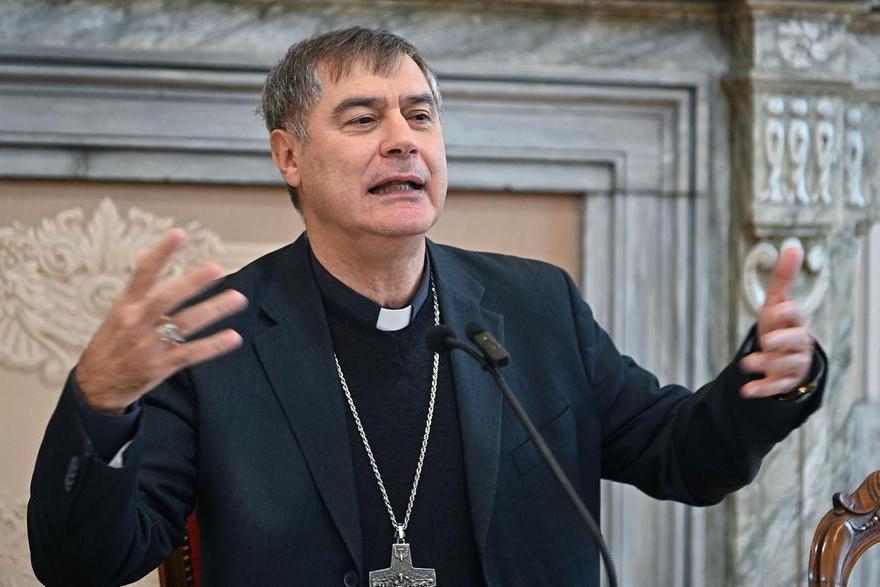
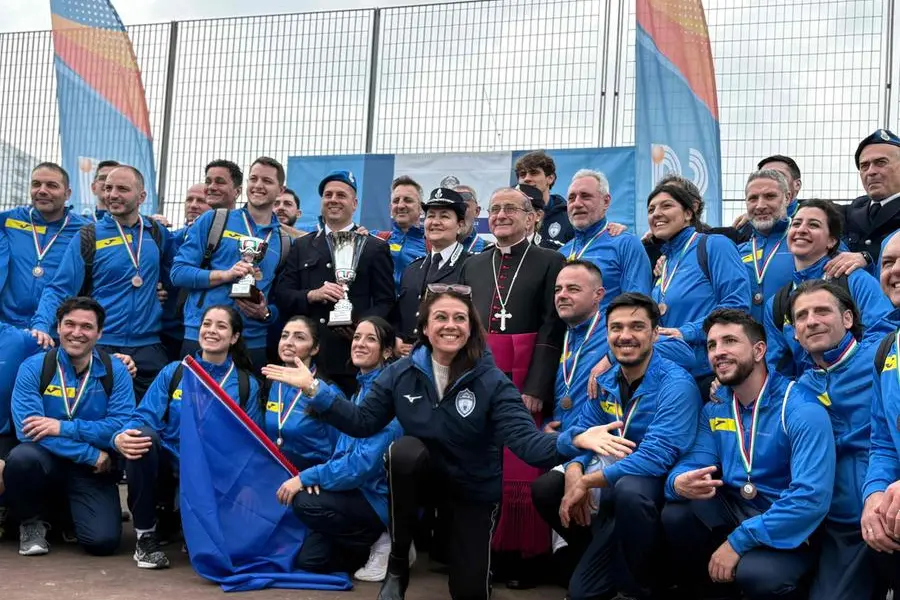
The Archbishop of Milan, Mario Delpini, spoke at the awards ceremony: «To know life you have to stay in it. But to really understand it you also need to look at it a little from the outside. Sport allows this gap. It takes you out of the daily repetition and asks you: what is really important?”. And he replies: «Perhaps it is more important to be together than to pursue a personal ambition. It is more important to respect your opponent than to win at all costs».
Don Franco Finocchio, chaplain of the Italian athletes at the Milan-Cortina 2026 Olympics and Paralympics adds: «Sport does not erase wounds, but teaches how to transform them into strength. Here it becomes training for responsibility and hope». Director Leggieri returns to a key concept: «If we build authentic relationships, we intercept discomfort first, we prevent risk. Otherwise we chase the emergency. This is unsustainable.”
A particularly intense passage was the intervention of the Archbishop of Milan, Mario Delpini, who invited everyone to change perspective: «I wonder how one gets to know life: life in prison, life in the office, the life of prisoners, the life of the Penitentiary Police. It is usually said that to know life you have to stay in it, share conditions and situations. But this event also tells us something else: to look at life realistically you need to know how to look at it a little from the outside.” Then he added: «Sport is not an escape from reality. It’s a way to escape from daily repetition for a moment and ask yourself what’s really important. Perhaps more important than pursuing a personal ambition is being together, working as a team, respecting your opponent. To be recognized, important things need to be looked at from afar.” Words that crossed the courtyard as an invitation to reread the sentence not as a definitive closure, but as a space in which a new look at oneself and others can mature.
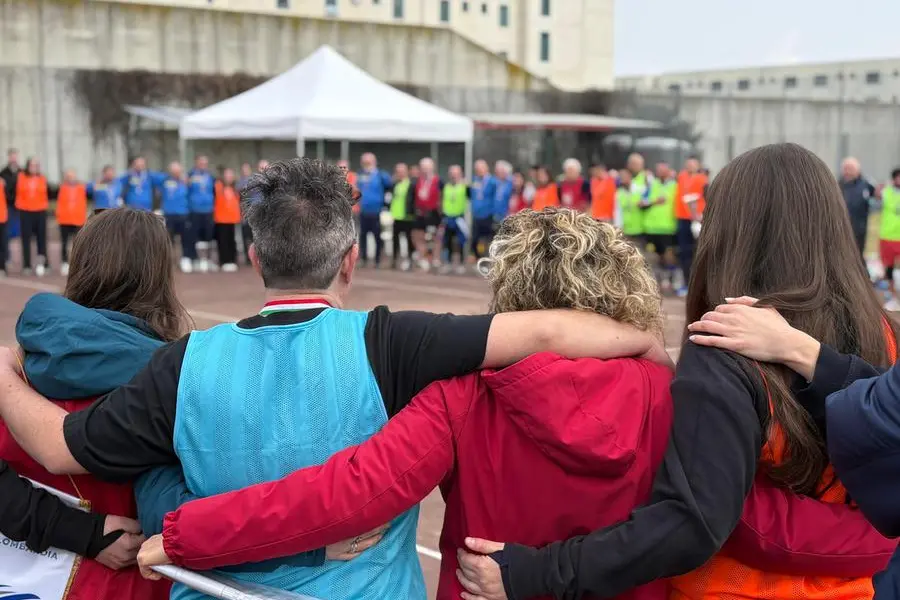
The day ends with the awards ceremony. Simple cups, sincere applause, photographs taken discreetly. An officer consoles an inmate for a spot-kick error. A magistrate jokes with a women’s team. The hierarchies are recomposed, but something has passed. When the gate closes behind you, the noise is the same as the entrance. Outside the sky is still grey. Inside, for a few hours, another shade existed.
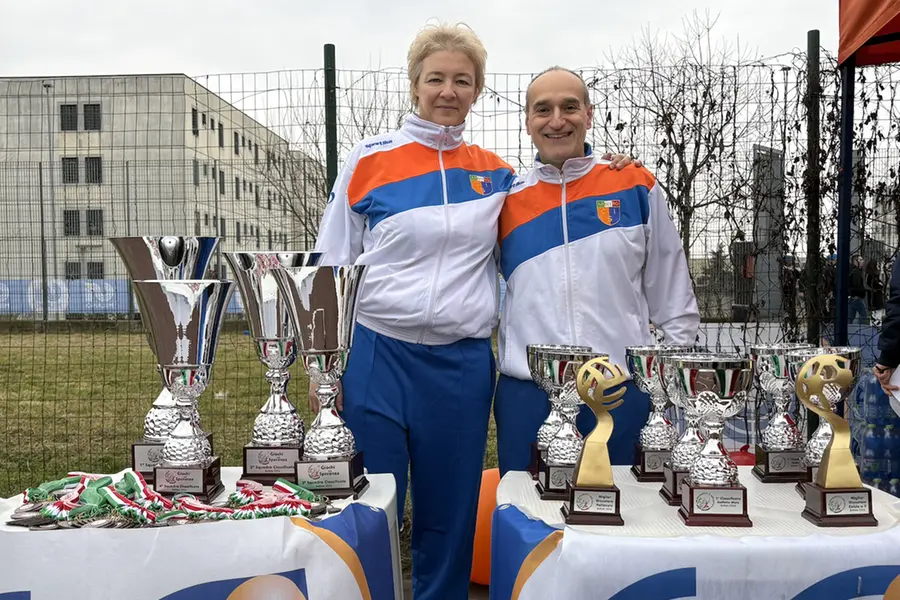
It wasn’t a miracle. It wasn’t an escape. It was a concrete experience of possible community. A laboratory where punishment is not just subtraction, but can become inhabited time, time that educates.
The concrete remains. The bars too. But a subtle wind passed through the cracks. And those who were there, prisoners, agents, magistrates, city councilors, athletes and volunteers, know that that wind is not easily forgotten. Because he reminded everyone of an elementary and uncomfortable truth: no one can be reduced to their own mistakes. And freedom, before being a legal condition, is a daily exercise.