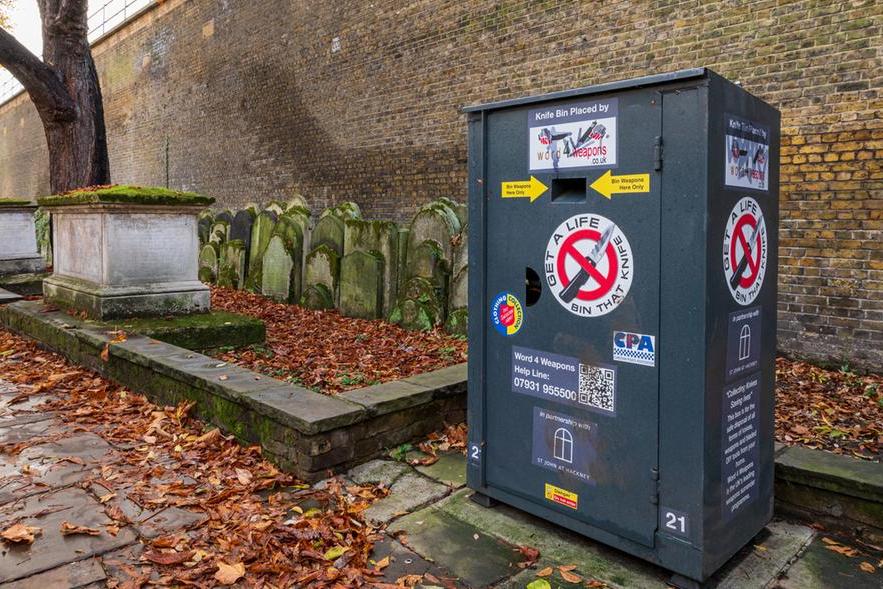





The issue of knives in the hands of children is not an Italian issue, there are countries that have clashed with it before us and on a larger scale. In England the issue of knives has been a social emergency for some time.
According to the statistics attached to the outcome of the debate on the topic, held in the House of Commons in October 2025, the number of murders committed with a bladed weapon in England and Wales has grown in the last decade: in 2024, 41% of the 594 voluntary homicides recorded in England and Wales were committed with a bladed weapon out of 59.5 million inhabitants. (In Italy there are much fewer voluntary homicides, in 2024 there were 324 out of 58.9 million inhabitants). In 2023-24 in England and Wales, eight out of 10 teenage homicide victims were killed with a knife.
«The increase», we read in the report on the parliamentary debate, «has been attributed to various factors, including social inequalities, gang-related activities and reductions in youth services (it must be said that the cost of Brexit and its impact on British public resources has seen a contraction of resources and consequently of public services in recent years)”, if the media attention has been focused on large cities, the report underlines that the phenomenon among young people is also present in rural areas.
MULTI-FACTORY AND CONTRASTING TOOLS
“The statistics highlight the complex interplay of age, gender, ethnicity, socioeconomic status and gang involvement in understanding the profiles of knife crime perpetrators in England.”
Among the contrasting instruments taken into consideration in the debate there are also bans on sales to young people online and in shops, but there is an acknowledgment of the difficulty of control for commercial establishments and of the fact that half of those knife murders committed in 2024 were committed with common kitchen knives. In Italy, as we said, the overall rate of voluntary homicides is almost half that of England, but the knife among children is an issue that concerns us, even outside of extremely serious cases such as that of the teacher stabbed in front of the school in Trescore Balneario (Bergamo).
You just need to have a chat with a high school class to realize that the idea of a bladed weapon in the pocket with the naive illusion of using it for defense is popular among very young people, who are little aware of the fact that even in Italy it is already a crime to carry a knife and the danger that having it entails if it is true that in the last two years half of the murders confirmed in Italy were the result of a degenerate dispute.
THE CONCLUSIONS OF THE BRITISH CHAMBER
The English parliamentary debate had resulted in some fixed points which are now being translated into funding and targeted initiatives:
- Knives in the hands of very young people is a multifactorial problem that cannot be addressed solely by applying the lawbecause we need to get to the root causes: deprivation, lack of services, social inequality.
- The need for synergy in prevention through education, early intervention and partnerships for community safety, done with structural funding planswith the coordination of the Government and in continuous synergy between the Government and local authorities, to counteract the cuts to services that have eroded prevention.
- The prevalence of a public health approach, capable of integrating law enforcement, social care, health and education, is the most effective way to reduce serious violence in a sustainable way
England historically has a very low threshold of attributable age, 10 years, compared to 14 in Italy, which evidently has not solved the problem, just as it does not solve the problem of juvenile violence in the United States. So much so that we are witnessing attitudes that are less based on a merely repressive approach: «The English Metropolitan Police» we read in the report released by Parliament, «is adopting a less aggressive approach in terms of searches and arrests, favoring professionalism and respect to increase trust in the community».
A NEW £320 MILLION PLAN
The outcome of this debate was translated into a prevention plan presented on 11 February 2026 by the Ministries of Justice and the Interior with the aim of halving knife crime in a decade, for which every child who is caught with a cutting weapon will receive a personalized mandatory program, through a report to the Juvenile Justice Services, so that the case is assigned to a multidisciplinary, health, educational, social team, responsible for providing a personalized prevention plan: «These specialized programs», we read in the presentation, «address the root causes of juvenile delinquency, from childhood trauma to potential gang exploitation, and may include participation in mentoring programs to encourage school continuity or training courses to improve future job prospects”.
The intervention was financed with a three-year investment of 320 million pounds equal to 369 million euros in the juvenile justice sector, to start long-term work: “The evidence,” they write, “shows that prevention programs can make a real difference in helping young people move away from crime: over 90% of young people who participated in the government’s Turnaround programme, (an early prevention program with this same philosophy financed between 2022 and March 2026 by the English Government on the model of another already active to support families, ed.) avoided subsequent police warnings or legal proceedings.” Among the objectives is the reduction of precautionary custody of the youngest, which in 40% of cases does not lead to convictions but marks lives early.
TARGETED DETERRENCE AND SOCIAL SKILL, THE MOST EFFECTIVE INTERVENTIONS
Among the rumors cited on the British Government’s program is that of Patrick Green, chief executive of the Ben Kinsella Trust, a charity that fights knife crime through education and awareness campaigns: «It is vital that responses to serious youth violence are adequately funded and take into account the reality that many vulnerable children and young people face. We welcome the focus on early and coordinated support for children and young people found in possession of knives, and the commitment to timely and targeted interventions that prioritize protection and rehabilitation over further criminalisation. Too often, children and young people are drawn into serious incidents of violence by deep-rooted vulnerabilities and systemic pressures such as fear, trauma and criminal exploitation. An ongoing commitment to early intervention and prevention is essential and represents an important step in addressing the root causes of crime.”
According to research by the Youth Endowment Fund, an English charity that deals with the prevention of youth violence, targeted deterrence programs are among the most effective interventions.when there is a need to act not on individuals but on groups at risk, and projects to grow the so-called social skills from an early age, i.e. the skills that allow you to communicate, relate and interact with empathy and appropriately.