



For most of modern corporate history, authority at the top has been indivisible. One chief executive. One final decision. One name attached to performance.
That model is being quietly redesigned.
From Netflix to Oracle — and now Spotify — global companies are embedding co-CEO structures into formal succession planning. Not as temporary experiments, but as engineered governance frameworks built for scale.
The question is no longer whether two executives can coexist at the top. It is whether complexity now demands it.
From Experiment to Governance Architecture
The co-CEO structure once carried reputational risk. Today, it is increasingly deliberate.
Netflix provides the clearest institutional example. In July 2020, Ted Sarandos was elevated to co-CEO alongside founder Reed Hastings. In January 2023, Hastings transitioned to Executive Chairman and Greg Peters joined Sarandos as co-CEO. This was not reactive restructuring. Hastings had gradually delegated operational leadership for years before formalizing the shift.
The division of responsibility is explicit. Sarandos leads content and brand. Peters oversees product, advertising, pricing and partnerships. Strategic decisions remain shared.
Since adopting the model, Netflix has expanded its global membership base beyond 300 million, scaled its advertising tier and strengthened revenue growth and margins. The structure did not slow execution. It clarified it.
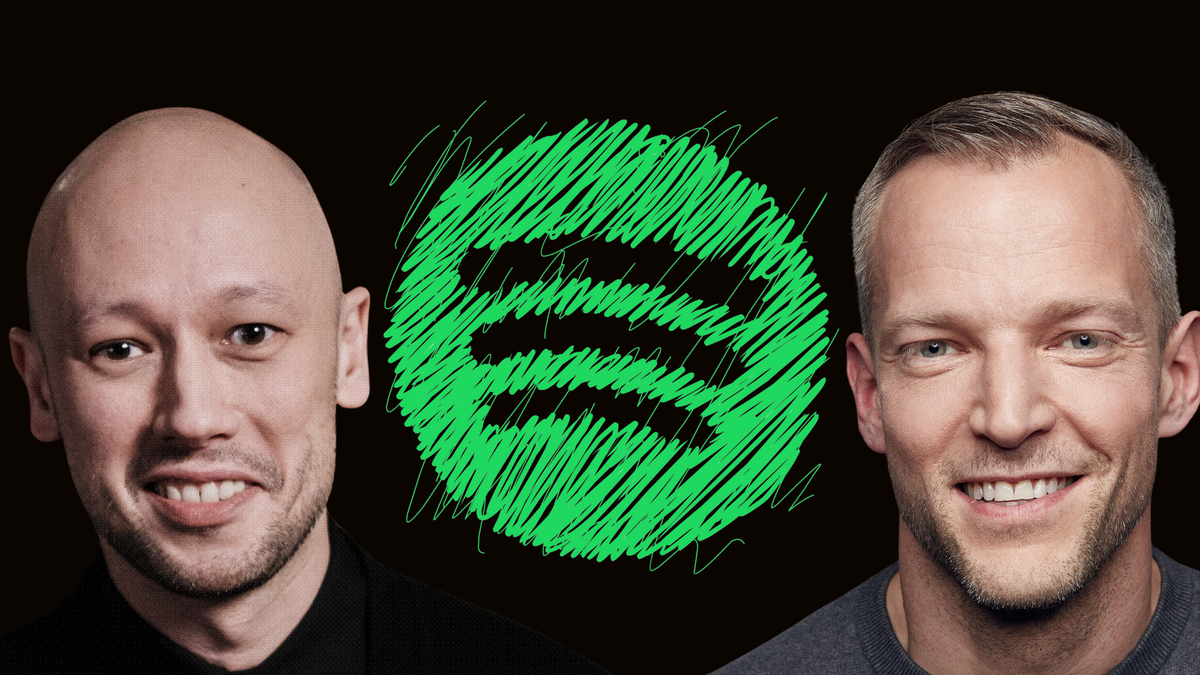
Spotify’s September 2025 announcement signals a similar evolution. Founder Daniel Ek will become Executive Chairman in January 2026, while long-serving co-Presidents Gustav Söderström and Alex Norström step into co-CEO roles. The company has operated in this configuration in practice since 2023; the new titles formalize that reality.
Ek retains long-term strategic oversight and capital allocation authority. The co-CEOs assume operational execution and join the board subject to shareholder approval. Authority is redistributed, not diluted.
Oracle offers a historical parallel. In 2014, Safra Catz and Mark Hurd shared the CEO role following Larry Ellison’s move to Executive Chairman. Their partnership combined operational control with sales leadership during Oracle’s pivot toward cloud infrastructure. After Hurd’s death in 2019, Catz resumed sole leadership before transitioning in 2025 to Executive Vice Chair, paving the way for new co-CEOs to guide Oracle’s next phase.
In each case, the structure reflects domain specialization rather than symbolic power-sharing.
The Founder-to-Chairman Pivot
A broader pattern is emerging across large technology platforms: founders stepping back from daily execution while remaining strategically embedded.
Reed Hastings made the shift. Daniel Ek is making it. Larry Ellison did it years earlier. The move preserves founder influence over long-term direction and capital allocation while reducing operational strain.
Modern enterprises operate across product ecosystems, AI development, advertising markets, regulatory oversight and global expansion simultaneously. The expectation that one individual can lead each dimension at equal depth is increasingly unrealistic.
By dividing operational control between two executives while retaining a strategically active chairman, boards attempt to manage complexity without sacrificing continuity.
The co-CEO model becomes less of an experiment and more of a governance instrument.
Why Boards Are Choosing Co-CEOs
Boards are not adopting co-leadership for novelty. They respond to structural pressure.
First, corporate scope has expanded. Technology companies now blend infrastructure, content, data, consumer markets and enterprise services in a single operating system. Dividing leadership along clear functional lines allows deeper focus without sacrificing speed.
Second, succession planning has become highly visible to investors. A single successor can represent concentrated risk. Elevating two long-tenured executives reduces key-person exposure and signals bench strength.
Third, accountability optics matter. When two executives are publicly responsible, boards can present depth rather than dependency.
Evidence suggests the model does not inherently suppress performance. A study examining 87 public companies led by co-CEOs between 1996 and 2020 found average annual shareholder returns exceeding benchmark indices in the majority of cases. While structure alone does not drive returns, shared leadership has not proven structurally inferior.
Harvard Business Review has identified recurring characteristics in durable co-leadership models: complementary expertise, explicit lane ownership, cultural alignment and disciplined communication.
The common denominator is clear.
Where Co-CEOs Fail
Failure points are equally predictable.
Ambiguity is the primary threat. If internal teams are unclear about decision rights, execution slows. If shareholders cannot identify who ultimately owns performance, confidence erodes.
Internal fragmentation presents a second risk. Competing power bases undermine cohesion.
A third failure point lies in disagreement management. Without predefined escalation rules, shared authority can slow decisive action precisely when speed is required. Successful co-CEOs must not eliminate disagreement but structure it.
Most critically, the arrangement collapses when one executive treats parity as temporary or symbolic. The model requires mutual investment. If either leader views the structure as transitional dominance, the balance fractures.
Co-leadership works only when both parties accept shared accountability as durable.
The Power Question
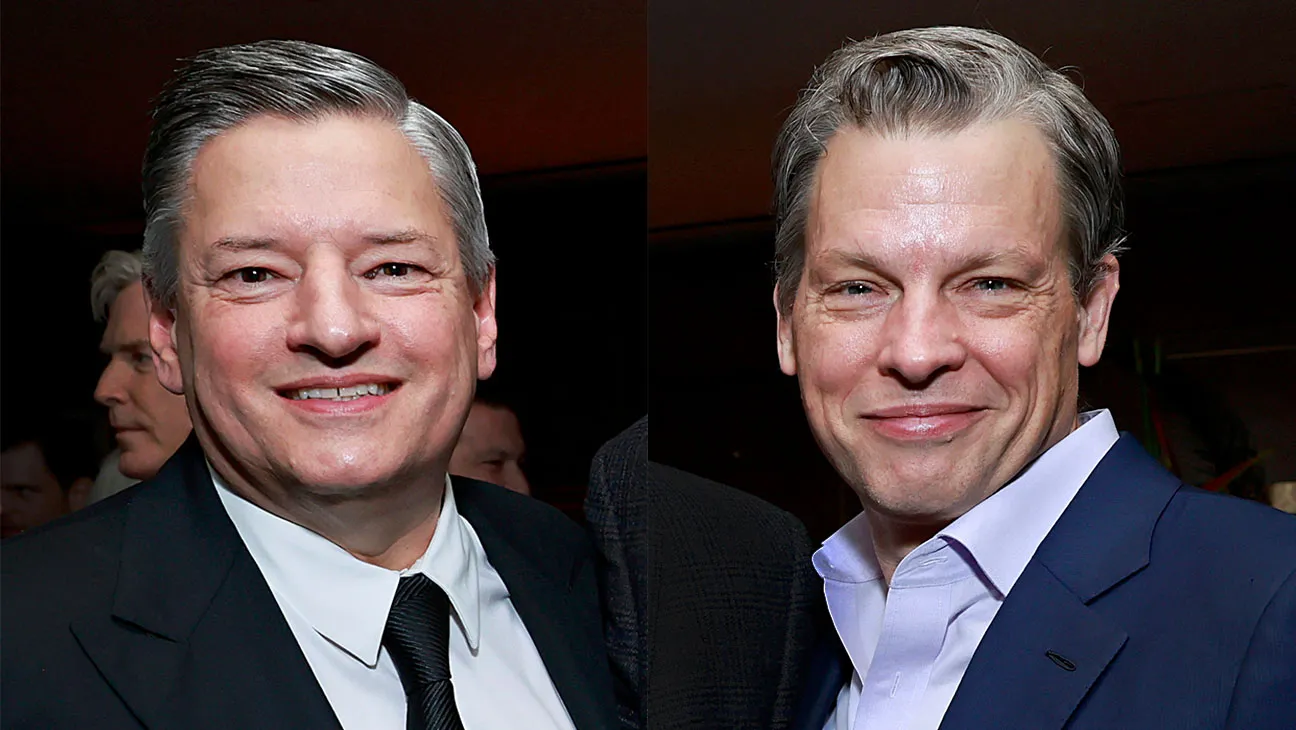
Netflix co-CEOs Ted Sarandos and Greg Peters, whose dual-leadership model has become a benchmark for shared executive governance.
Recent announcements reveal a deeper governance nuance: power calibration.
At Spotify, the co-CEOs will report to Daniel Ek as Executive Chairman while also serving on the board. Ek retains influence over capital allocation and long-term trajectory. Operational execution sits with the co-CEOs; strategic stewardship remains anchored in the founder.
At Netflix, Reed Hastings transitioned to Executive Chairman while Sarandos and Peters assumed full CEO authority, with Hastings serving as a bridge between board and management.
These models are not identical. They represent distinct calibrations of authority.
Too little founder involvement risks drift. Too many risks undermining parity. Boards must engineer balance consciously rather than assume it will emerge organically.
The co-CEO structure is not a template. It is a spectrum.
Institutional, not experimental
The narrative has shifted.
Co-CEO arrangements were once perceived as stopgap measures or transitional compromises. Today, they are embedded in long-term succession design at some of the world’s largest enterprises.
Netflix has sustained the model through expansion and earnings growth. Spotify is formalizing it after years of operational reality. Oracle has deployed it across strategic pivots.
These are not improvised decisions. They are structured governance choices made at scale.
That distinction matters.
What Boards Must Evaluate
Before embracing a co-CEO model, directors should interrogate several structural questions.
Are operational lanes unmistakably defined?
Is there a formal escalation mechanism for strategic disputes?
Does the market understand the division of authority?
Is the structure transitional or permanent?
Do the executives share long-term strategic philosophy?
Without disciplined answers, the structure risks becoming cosmetic rather than functional.
Shared leadership is not a rejection of authority. It is a recalibration of it.
For boards overseeing complex, technology-driven enterprises, the co-CEO model offers a way to absorb operational strain without surrendering strategic coherence.
But structure alone will not protect performance. Clarity, trust and disciplined lane ownership remain non-negotiable.
Authority may no longer be indivisible.
Accountability is silent.