






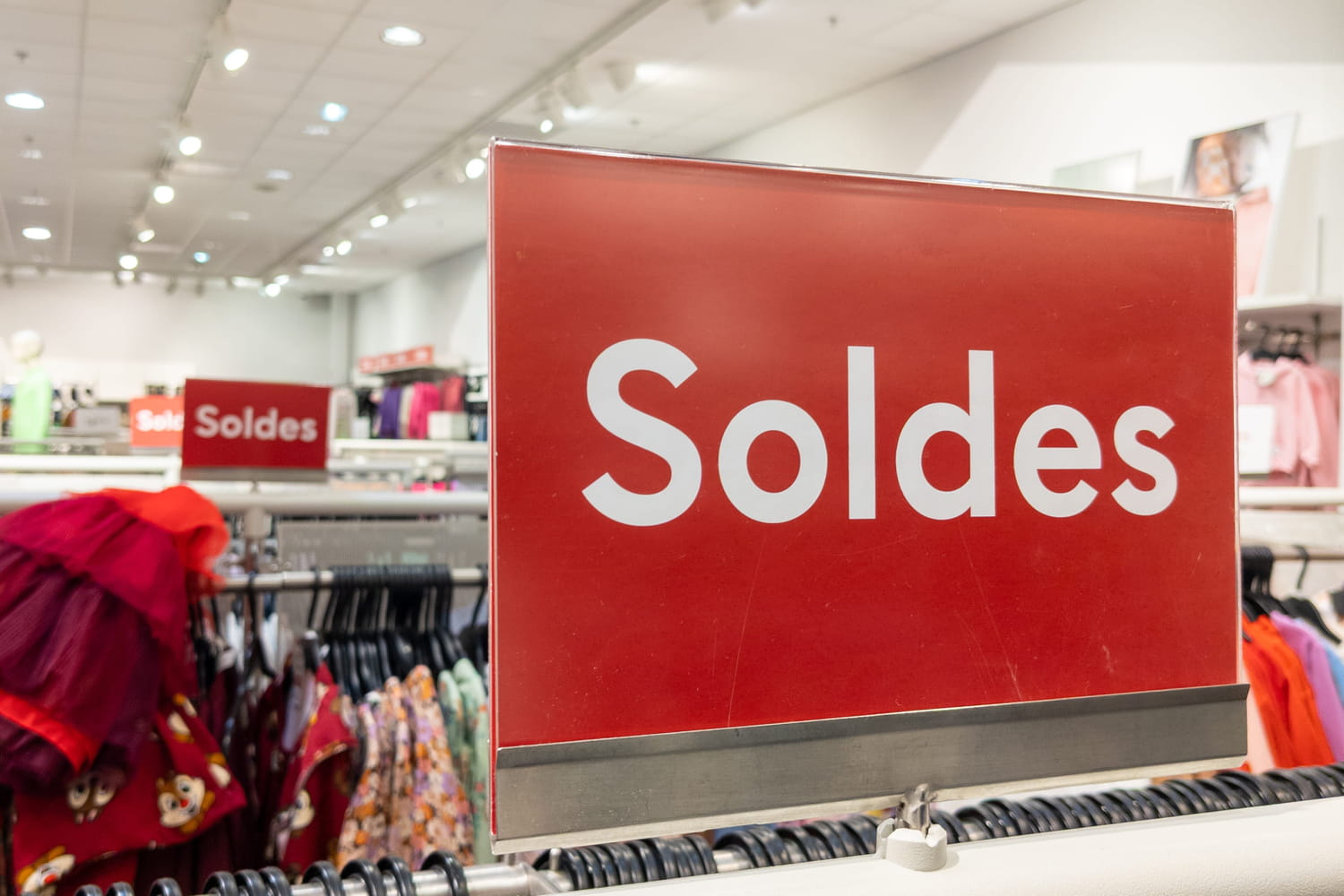
We all tend to believe that it is better to wait until the sales end to accumulate discounts and find the best promotions. But perhaps we need to change strategy.
“Last markdown”, “Up to -70%”, “Everything must disappear”… Every year, it’s the same story. In stores and on the Internet, our eyes are bombarded with colorful banners announcing slashed prices at the end of the sales. Whether it’s those of January, those of July, or even those of Black Friday, we all think that it is better to wait until the last days to take advantage of the most advantageous offers. After all, brands want to sell off remaining stocks and are therefore supposed to increase discounts. Well, that’s what we think.
In fact, the third or fourth markdowns are rarely the most interesting. First of all, we know that the range of choices is much more limited: the best items are gone very quickly, the most popular sizes are no longer available, and very often only the products that no one wants remain. But even from a purely financial point of view, the last weeks of sales do not always promise lower prices. On the contrary.
As the winter sales approach, Idealo France compared the prices of each product category from one week to the next during last year’s promotions. As a result, out of the four weeks of sales, the last two are rarely the cheapest. For high-tech products such as game consoles, headphones, speakers, processors and even PC monitors, it was during the first week of the sales that the prices were the lowest. But it is on smartphones that the difference is most obvious: during the third week, they cost on average 10% more than during the first week, or 342 euros instead of 309 euros. Processors, the electronic circuits that make up our computers, went from 997 euros to 1,055 euros in two weeks! Running shoes and sneakers, but also LEGOs, vacuum cleaners, refrigerators, laptops and touchscreen tablets were also cheaper during the first half of the sales.
Apart from smartphones, most products did not present a significant price difference between the start and end of the sales: only a few euros. But this clearly shows that it is often useless to wait for the “latest markdowns”, since prices hardly drop any more, or can even rise slightly compared to previous days. For example, during the 2025 winter sales, a games console cost on average 365 euros during the first week, compared to 384 euros in the last week. On the other hand, it should still be noted that certain product categories are exceptions: last year, televisions, connected watches, graphics cards and motherboards, as well as outdoor jackets and hiking shoes had lower prices during the fourth week. But here again, the difference is small: from 0 to 6% maximum. Not enough to jump to the ceiling and brag about your good deals to those around you.
These figures are of course indicative, because it is impossible to predict what the sales will look like at the start of the year, which will run from January 7 to February 3, 2026. Everything depends on the product categories, and above all on demand. In previous studies published by Idealo, the data varies: in 2023, the prices of smartphones fell throughout the sales for example, unlike 2025 where it was the opposite. If it is impossible to define the absolute moment to get the best deals, one thing is certain: the idea that prices collapse during the latest markdowns is often an illusion.