





We knew it, but now it’s official: Italians have stopped believing in politics as it is.
Censis, the institute founded by Giuseppe De Rita which puts together numbers and suggestions, puts it in black and white in its 59th annual photograph: a “wild” Italy, which trudges between stagnant wages, returning inflation and a growing intolerance for the tired rituals of democracy. And in this void of trust there is a fact that cannot leave anyone indifferent: almost a third of Italians believe that autocracies are better suited to the times we live in. A bad, very bad signal: the usual, longed-for request of the strong man. We thought we were immune to it, after twenty years of fascism, but instead…
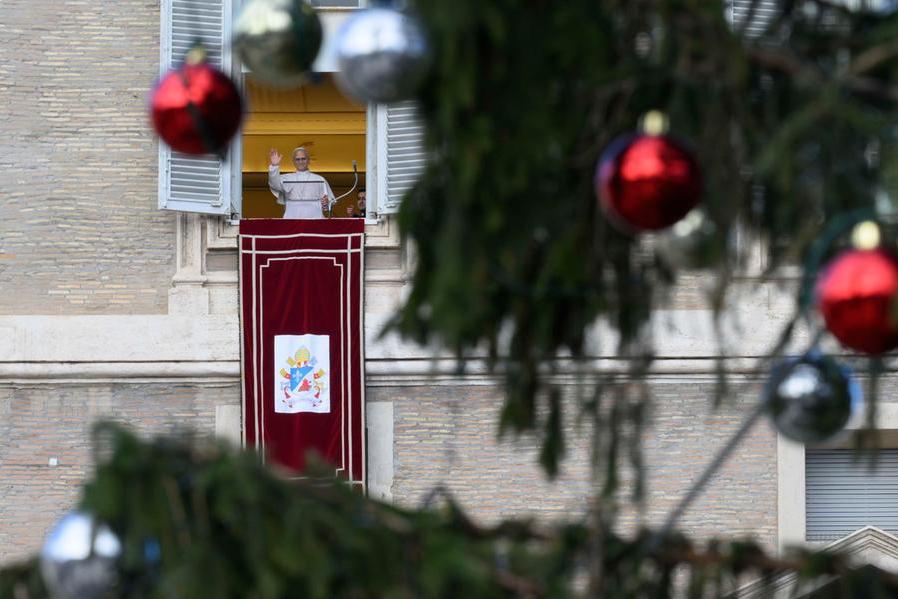
It’s not just a provocation. It is a global trend, which here takes on particular contours. Putin is liked at 12.8%, Orban at 12.4%, Erdogan at 11%, Xi Jinping even at 13.9%. Trump, in his eternal return to the scene, garners 16.3% approval. But then there is the umbrella of Leo XIV: the pontiff garners the consensus of 66.7% of the population, unique in the institutional panorama. In a country that no longer trusts anything, the Pope remains the last fixed point. Moreover, even the post-communist D’Alema has recently recognized with his usual clarity that the Catholic Church is the only cultural agency that has survived in Italy and in the world. And if he says so…
Europe in the dock
But the mistrust does not only concern Rome. Brussels is the parallel target: 62% of Italians believe that the European Union does not have a decisive role in major global issues. 53% even think that it is destined for a marginal role, in a world where those who raise their voices or flex their muscles “win”. In this climate, political participation collapses. Abstention from the 2022 elections reached a record: 36%. In 1979 we were at 14.3%. Meanwhile, the consumption of political information has eroded year after year.
Palestine exception
There is only one crack in this wall of disaffection: the protests for Palestine. It is the only area where the Italian square has shown signs of life, in the midst of a desert of civic participation.
The great sick man: public accounts
Then there is the other boulder: the public debt. It was 108.5% of GDP in 2001, today it is 134.9%. The absolute figure is impressive: 3,081 billion. Despite the recent efforts of Economy Minister Giorgetti, who applied a draconian (or would it be better to say Draghian?) treatment to public finances, we remain the worst in Europe, with the exception of Greece and Hungary. Of course, the G7 is not doing well – the average has risen from 75% to 124% – but our case remains particular: a chronically ill person who cannot recover.
The demographic revolution of work
At work, Italy experiences a paradox that cannot be seen elsewhere. The employment boom of the last two years (+833 thousand) is driven almost only by the over 50s. The elderly are rising, the young are disappearing: +704 thousand versus -109 thousand under 35s. A country that is also aging in its workforce, while the GDP grows by just 1.7% in the face of a much higher labor input.
Companies hire the most mature because they are reliable, while young people slip into inactivity: +176 thousand in just one year.
The permanent job syndrome
Checco Zalone had grasped it before the sociologists: the hunger for a permanent job. Today 46.4% of Italians dream of the public sector. In the private sector only 30.6% believe. Freelance work, once a symbol of redemption, today attracts 11%. Stability is the watchword: no layoffs, guaranteed income, long horizon. Another number bears witness to this: we stay in the same job for an average of 11.7 years, longer than the European average.
The motivational chill
But this stability does not generate happiness. Only 38% of workers rate their professional environment as healthy. Only 29.4% of private employees feel truly motivated. And the drop in productivity is evident: -2% per employee, -3.5% per hour worked. The Italian paradox: growing robots (we are sixth in the world for installations) and motivation in free fall.
Empty cots, lively elderly people
Demographics is the fault line that runs beneath everything else. The cots are not full: those over 65 are 24.7% of the population. Then some good news: i centenarians exploded: 23,548. In 2045 there will be 19 million elderly people, 34%. A gray mountain that will change the job market, welfare, even our way of thinking about the family and the future.
Culture retreats, experience advances
Cultural spending is decreasing (-34.6% in twenty years): newspapers -48%, books -24%. In the meantime, smartphones are flying (+723%). Yet cinema, concerts, museums hold on: culture does not disappear, it transforms. It is experience, no longer object.
Rome is the capital of crime, but the figure is decreasing
Rome remains the capital of crimes: 271,800 in 2024, ahead of Milan (226 thousand). But in the first six months of 2025, crimes fell by 7% in the capital and by 1% in Milan. Pickpocketing in Rome – 92 per day – remains a plague, although down by 13.7%. Sexual violence, however, is the most alarming data: +67% in Milan compared to 2019, +22% in Rome. Only in 2025 will a (slight) slowdown be seen. But it’s too much, too much, too little, because the number to reach in sexual violence is zero.