




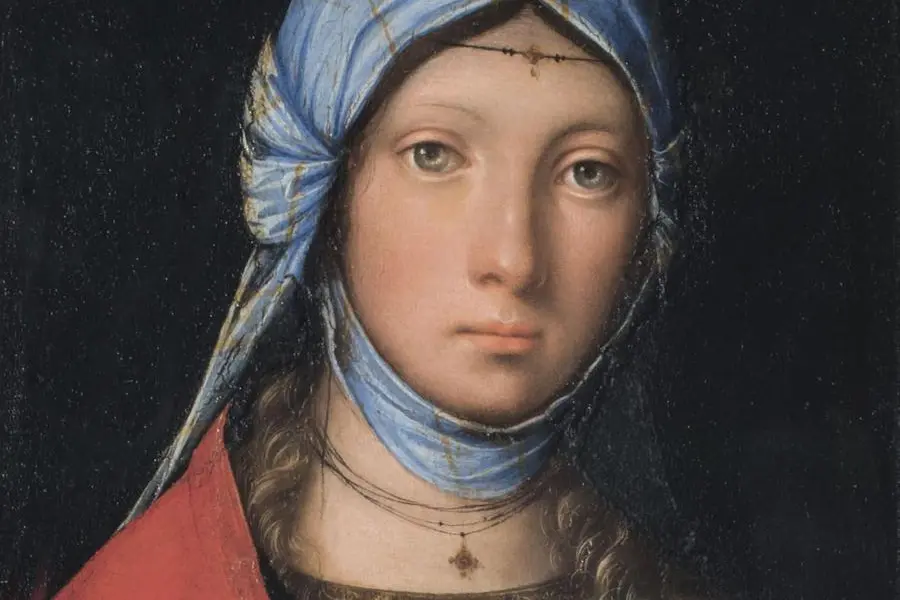
We don’t know who the young girl with the blue turban, who went down in history as, is The gypsy girlprotagonist of the small yet detailed panel in the Uffizi. Like many women of art cloaked in mystery, from the Mona Lisa to the Girl with a Pearl Earring, she captures us in her enchantment: her clear gaze, lost like most of Boccaccio’s figures Boccaccinowho do not follow the viewer with their gaze, but stare beyond, carried away by a thought that does not allow itself to be investigated, it is the heart of the monographic exhibition set up in Cremona, a stone’s throw from the Cathedral where it finds completion, in the young Diocesan Museum, dedicated to the artist, probably born in Ferrara but who signed himself “cremonensis”.
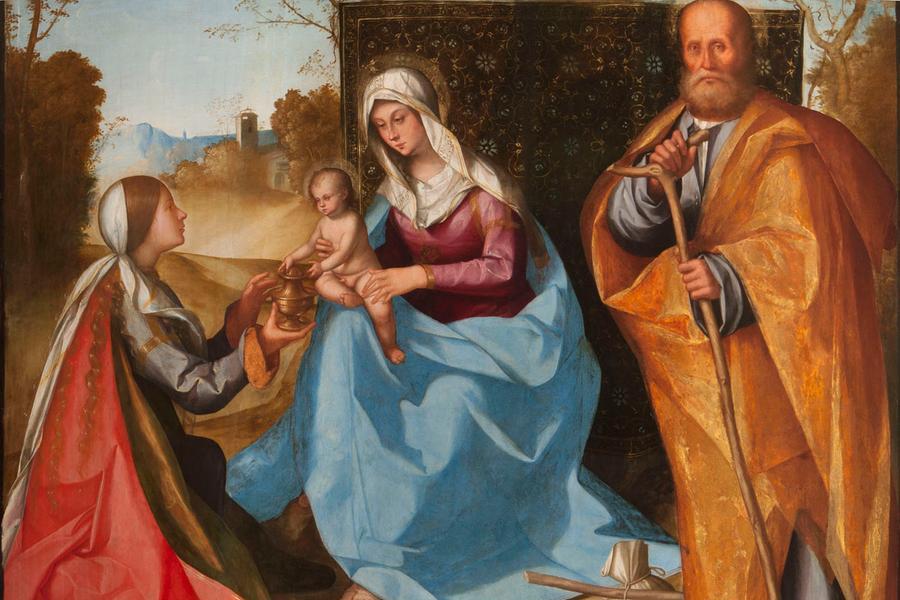
On the five hundredth anniversary of the artist’s death, it is the first exhibition to collect almost his entire corpus: 17 works, mostly sacred, in spite of a cursed life in confidence with the crime news, which allow us to approach a painter highly esteemed among his contemporaries. Giorgio Vasari defines him in the Lives as “a rare and excellent master”, but he came little known to us, even though he was the author of the frescoes of Christ Pantocrator and the Annunciation (1506-13). in the apse of the city Cathedral and a precious cycle of frescoes on the stories of the Virgin and Christ, on the left wall of the central nave (1513-19), facing Pordenone.
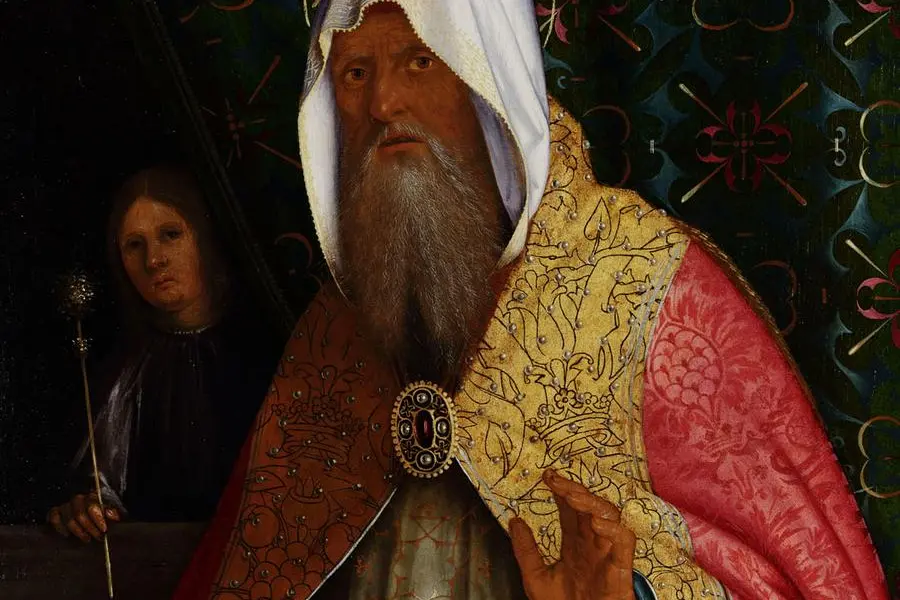
Son of the acupintore, i.e. the embroiderer of the Court of the Estensi, to the letter of someone who painted with the needle, (and both Boiardo and Ariosto have handed down in the description of the equipment of the knights in their poems how much the Court had a taste for the magnificence of fabrics and parade armaments). Boccacino overturned that art, with which he must have had domestic familiarity, painting with his brushes extremely precious fabrics of astonishing realism, so much so that the curators of the exhibition, Francesco Ceretti and Filippo Piazza, believed that he might have preserved remnants of those fabrics as models: we see the two most refined essays in Saint John the Evangelist and in Saint Matthewas well as in the very refined annunciation and mystical wedding of Santa Carina d’Alessandria, in the Gallerie dell’Accademia.

Boccaccio Boccaccino, Adoration of the Shepherds, Capodimonte Museum, Naples, 1499-1500, detail
Cremona, Milan, Ferrara, Venice are the places in which he works, forced to flee several times, to escape convictions, and “like a sponge”, in the words of Francesco Ceretti, he absorbs all the innovations of his time: in Milan, related to the Este Court due to the marriage between Beatrice d’Este and Lodovico il Moro, he comes under the influence of Leonardo, of whom some ancestry can be recognized in the angel ofAdoration of the shepherds of Capodimonte who opened the Cremonese exhibition, in Venice he learned the composition of the sacred half-figure representation, to soon contaminate it, especially in the very tender Madonna and Child in the Correr museum in Venice, with Giorgionesque atmospheres. His fame was such that in Milan, despite his turbulent life, he was arrested for having injured a miniaturist and found the flattering recommendation of the correspondent of Ercole I d’Este at the court of the Moro who in 1497 – a document on display in the exhibition – wrote to his lord to announce that he had finally succeeded in having “Bochaccino the painter” released from prison, having ended up in jail for a fight which ended with a knife in the miniature environment, and that he was ready to send him away within about ten days in Ferrara, where the court had been left orphaned by its painter Ercole de Roberti who had died the previous year, «Because here he is considered one of the first» masters «of his art in Italy». Today this Cremona exhibition, open until 11 January, born from the synergy between the Abap superintendence, for the provinces of Cremona, Mantua and Lodi and the Diocese of Cremona, triggered by the opportunity to exhibit in public, after the recent restoration of what remains of the Fodri altarpiece originally in San Pietro al Po and largely destroyed by a fire, now has the merit of giving us back five hundred years later a non-secondary piece of the Renaissance which remained out of sight, which has the pleasant flavor of a discovery. One more reason to visit the city between Christmas and EpiphanyWith nougat and mustard it decorates holiday tables throughout Italy.