


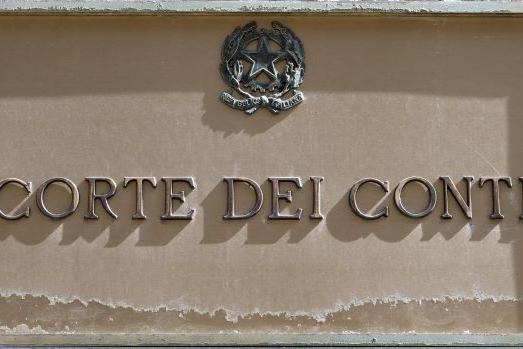



According to a definition of the President of the Republic Sergio Mattarella, the Court of Auditors is «a body of constitutional importance, also placed at the service of the State-community and impartial guarantor of the correct management of public resources» (Speech, inauguration of the judicial year 14 February 2025).
What does the Court of Auditors do? As established by article 103 of the Constitution, the Court of Auditors exercises preventive legitimacy control over Government acts, and also subsequent control over the management of the State budget. Participates, in the cases and in the forms established by law, in the control of the financial management of the entities to which the State contributes on an ordinary basis. It reports directly to the Chambers on the result of the verification carried out”. For this task to be accomplished with transparency and impartiality, «the law ensures the independence» of the Court of Auditors and of the accounting magistrates, its components «in relation to the Government»as happens with the Council of State, the highest body of administrative jurisdiction. The Court of Auditors carries out the functions of accounting judiciary, which is why it is important to underline and safeguard its independence. As stated in the same presentation on the Court’s official website, in the democratic system it is envisaged that the management of public resources is subjected to control whose purpose is to “pursue the appropriate and effective use of public funds, the pursuit of rigorous financial management, the regularity of administrative action and the information of public authorities and the population through the publication of objective reports”, in the Italian legal system this fundamental function is attributed to the Court of Auditors”.
A LITTLE HISTORY
Its original institution dates back, however, to the Kingdom of Italy and law 800/1862, it therefore precedes the republican Constitution. «In the constitutional architecture the Court is included both among the bodies guaranteeing the legality and good performance of administrative action and protection of the balance of public finances (art. 100, second paragraph) and between jurisdictional bodies (art. 103, second paragraph). From this double investiture derives the centrality of the role of guaranteeing the correct management of public resources of the Court of Auditors which, in the exercise of control functions, is a neutral, autonomous and independent body with respect to both the Government and Parliament, and, in the exercise of jurisdictional functions, is a full part of the judicial order”.
MORE EFFICIENT ADMINISTRATION OR FREE EVERYONE IN PUBLIC ACCOUNTS?
Speaking of the Court of Auditors, on the night of 1 and 2 April 2025, the Foti bill (named after the Minister for European Affairs Tommaso Foti) obtained a favorable vote in the Justice and Constitutional Affairs Commission: a controversial reform, scheduled for the Chamber of Deputies on Monday 7 April and approved on the 9th by the first of the two branches of Parliament and now scheduled for the Senate on 27 December. According to those who propose it, the reform is based on the objective of making the public administration quicker in making decisions, eliminating the so-called “fear of signature”.that is, that attitude of caution that would lead those in charge of public offices not to act, for fear of being called to account for their actions, taking refuge in wait-and-see and forms of defensive bureaucracy. The formula is the same with which the contested decision to completely abolish the crime of abuse of office was explainedrather than reformulating it with a better defined typology as would have been suggested by the supranational commitments against corruption undertaken with the Merida Convention (UN Convention to combat Corruption) and the need to somehow protect the citizen harmed by acts contrary to the official duties of the public official. Also in this case the criticisms do not only come from the opposition and from the court itself, but push a newspaper that cannot be accused of extremism such as il Sole24ore to icastically define the reform as «politician saver»due to the reduced risk of administrators being held accountable for damage to the treasury except in cases of fraud and for the speculative risk of not ensuring enough supervision over the appropriate use of public resources, causing the majority of any damage to be borne by the community, given that, every time public resources are diverted or spent in an inappropriate or useless way, their cost, if not remedied by those called to answer for it, falls on the entire citizenry. THE CONTROVERSIAL POINTS There are several critical points. One concerns the so-called Montaruli-Sbardella amendment, named after two FDL parliamentarians who proposed it, for which “the owners of the political bodies” (they can be mayors, presidents, councillors, councillors…) are always presumed to be in “good faith”, at least “until proven otherwise” for all the “acts adopted in the exercise of their competences” which have been “proposed, endorsed or signed by the heads of the technical or administrative offices”. Except for cases of fraud and those in which an opinion was received contrary to the specific act, there would be, according to critics of the reform, a sort of safe conduct which would also cover cases of gross negligence and gross negligence. And speaking of opinions, the preventive consultative power of the Court would be expanded, widening the possibility for administrators and political representatives to request opinions from the Court, even outside the matters and circumstances envisaged so far, establishing a silent consent that is worth as much as a positive opinion, which would translate into a sort of preventive shield. The other controversial issue is the fact that the accounting judiciary will not be able to request compensation for the damage exceeding 30% of the sum and in any case no more than double the compensation received by the person responsible for it. This would lead to the fact that in many cases 70% of the sums will automatically be considered lost, because they cannot be recovered. Furthermore, the Association of Accounting Judiciaries denounces in a statement the risks of «impoverishment and emptying of functions in the Court», with «serious repercussions on citizens who have the right to have an independent, autonomous judge who guarantees the correct use of their money». In particular, accounting magistrates are concerned about: «confusion of functions, hierarchization of powers of attorney, forms of control at the request of the controlled party, secrecy of some control resolutions, opinions of the Court that shield the responsibility of public administrators, presumption of good faith of politicians. It is only clear – concludes the note – that the country is left orphaned of effective control of public finances”.
WHAT IS THE TAX SHIELD WHY DOES IT EXPIRE
The reform aims to overcome the so-called “tax shield”: the suspension of tax liability for gross negligence, introduced in the urgency and emergency of streamlining decisions in the midst of the pandemicin the summer of 2020, limiting tax liability to only cases of fraud and gross negligence due to omission. Since then the shield has been extended several times until the last thousand extensions expiring on April 30th. A further extension is not likely, because the Constitutional Court in June 2024 (132/2024) when consulted on the topic specified that the provision of the so-called tax shield is legitimate only if temporary and instrumental in addressing extraordinary needs of necessity and urgency. Which is why a further extension, if referred to the Council, could be declared unconstitutional. For this reason, the majority would have the objective of ensuring the reform of the Court of Auditors by that deadline. But this would only be possible if the text was, as they say, armored that is, not subject to corrections and amendments, due to technical time constraints. In any case, it is possible that the first approval in the Chamber may be enough to secure another extension of the “shield”, having demonstrated that the Government has taken action to overcome it.
THE OPINION OF THE PUBLIC ACCOUNTS OBSERVATORY OF THE CATHOLIC UNIVERSITY
«The Foti bill», he observed last February 7, when the process of the bill had not yet been accelerated in view of the approval of an armored text which would limit the scrutiny of Parliament, in an article entitled The Foti bill: attack on the Court of Auditors or efficiency measure? Alessio Capacci«has the merit of wanting to reform the system of administrative responsibility in order to guarantee greater efficiency of the PA, and of doing so through the action of parliament. However, we must avoid letting our guard down too much. Making a request for preventive control possible, above certain amounts, is reasonable, but as proposed by the Constitutional Court it should be accompanied by a strengthening of the effectiveness of intervention of the Court of Auditors. Better typifying the serious fault would in any case be useful and would reduce the fear of signature (assuming that this is the problem that slows down the efficiency of the PA and not the lack of incentives, as we believe). Furthermore, reducing the Court’s response times requires its reorganization to prevent its controls from being substantially circumvented.”