





«Today we are witnessing the demand to impose punishments against judges of the international courts for their functions of investigating complaints against war crimes, in defense of human rights, ultimately in defense of the peoples of the world: these are demands of a world dangerously turned backwards, to the worst past. Ua world that appears to be overturned and contradictory with prison sentences for members of international courts by a country that promoted, and with its judges as protagonists, the Nuremberg trial”.
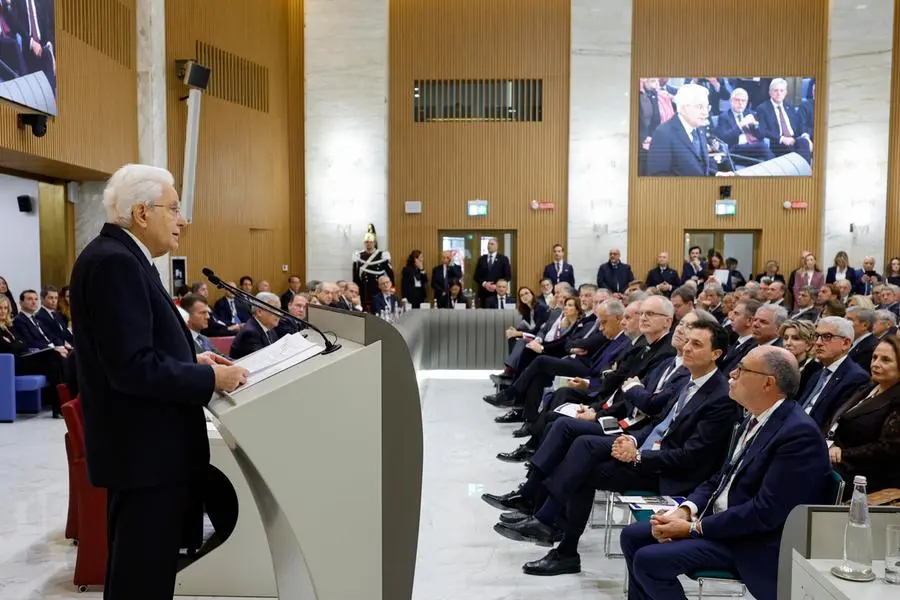
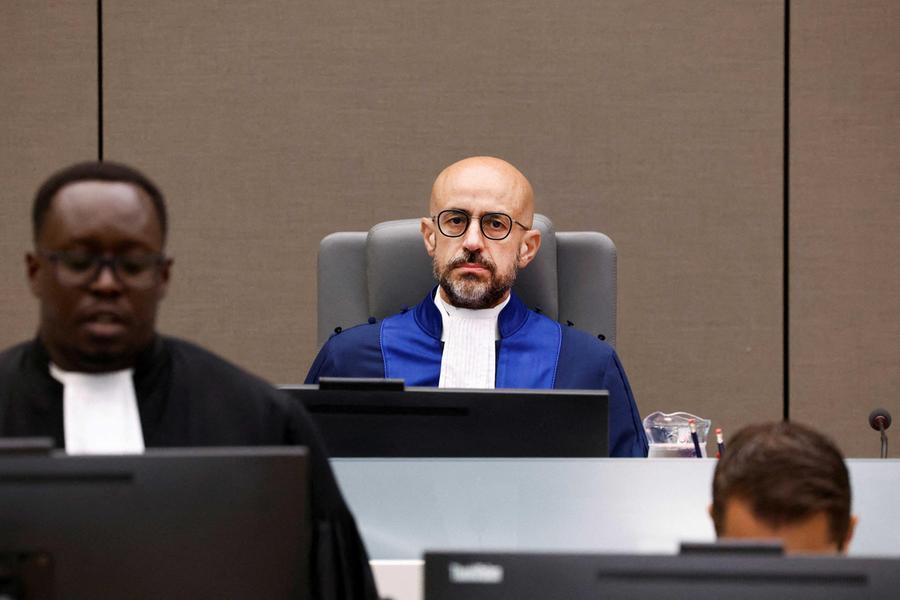
Sergio Mattarella said at the XVIII Conference of Italian Ambassadors on 15 December. The allusion is to eight judges of the International Criminal Court and the International Prosecutor’s Office, convicted in absentia in Russia. Their crime would be to have: “persecuted innocent people and attempted violence against people who enjoy international protection”. The sentence, issued by a Moscow court, bears the signature of the president, judge Andrey Suvorov, who made headlines for the conviction of Alexei Navalny and other Putin opponents.
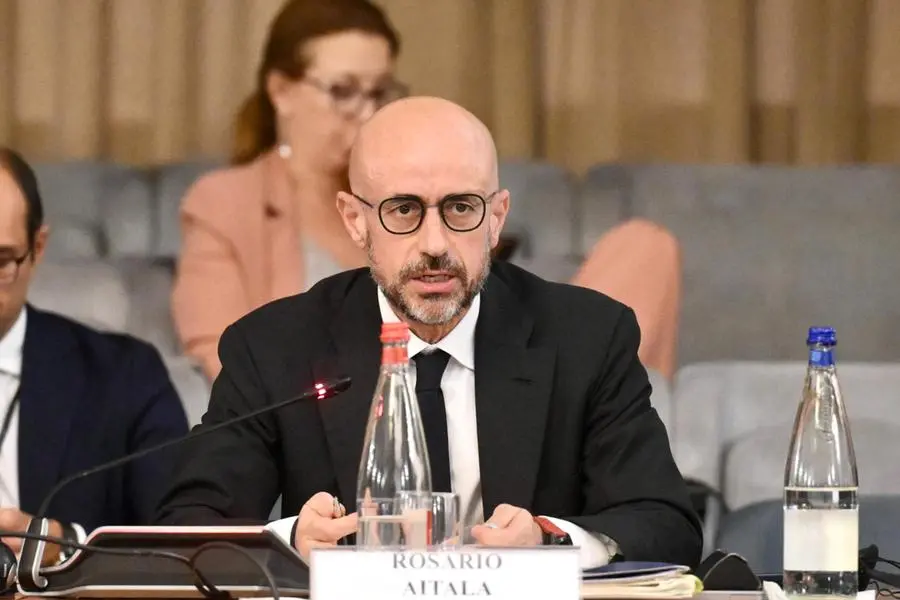
WHO IS JUDGE AITALA
Born in 1967 in Catania, Rosario Aitala has a very high CV in the field of international law and human rights and is a professor of International Law at Luiss Guido Carli in Rome. He entered the judiciary in 1997, after five years as an official of the State Police, he did his internship in Milan, was deputy prosecutor in Trapani, applied to the District Anti-Mafia Directorate of Palermo. Specializing in international protection of human rights and in the rule of law and civil reconstruction of countries in crisis, he was advisor for crisis areas and international crime to the foreign minister and advisor for international affairs to the President of the Senate in the 17th legislature. He worked and lived in Albania, Afghanistan, the Balkans and Latin America, dealing with organized crime, terrorism, international crimes. He is a scientific advisor to Limes and an editorialist for Avvenire. On 6 December 2017 he was elected judge of the International Criminal Court in New York.
HIS BITTERNESS ABOUT THE “WAR ON LAW”
Last July 16, in an interview given to the magazine The judiciaryregarding the pressure on the Criminal Court, he had expressed all his bitterness for what he had called the “war on international law”: «The Court», he explained, «now pays for its relevance. Sundergoes a series of coercive measures explicitly aimed at stopping and influencing the proceedings. A great power has announced threatening arrest warrants against judges, included in the lists of fugitives as terrorists and mafiosi. Another imposes sanctions against judges by blacklisting them as if they were terrorists, war criminals, torturers and rapists. Violent cyber attacks are repeated. But the Court cannot stop. It must continue to defend the life, freedom and dignity of defenseless and innocent civilians, especially children: kidnapped, deported, “torn by bombs” – in the words of Pope Leo – starved to death. In this international atmosphere the Court is an indispensable safeguard of civility.”
To then add: One can imagine how demanding the investigations are in ongoing international conflicts. A meticulous and dangerous job. Political support for the Court has always been mixed. But today more than ever, states would like to choose the procedures that align with their own political interests and do without or stop others. Which naturally cannot be reconciled with the desire for a true Court, endowed with independence and impartiality. The judges of the Court do not allow themselves to be influenced and strictly respect these two fundamental requirements of every jurisdiction.” At that time the arrest warrants against international judges were “announcements”, today they are a sentence, which fits into the delegitimization framework that the judge outlined, and which in the United States translated on 6 February 2025 into the executive order of US President Donald Trump imposing sanctions on the International Criminal Court (ICC), accused of “undertaking illegal actions against the United States and our close ally Israel”.
THE APPEALS FOR HIM TO ITALY AND THE EU
In these hours many are asking that the role of the Court and its members be protected by the institutions and that the voice of the Italian Government and the European institutions be raised: in Italy the words of the President of the Republic have been joined by those of the Association of Professors of Criminal Law which hopes: «that the competent authorities clarify what happened and firmly condemn any form of delegitimization and attack, especially if of a personal nature, on the International Criminal Court and its judges, who must be able to exercise their functions in full independence and without undue pressure, in the ways and forms provided for by the Rome Statute».
Even more explicit is the note fromNational Association of Magistrates: «We hope that the Italian government must immediately ask the Russian government for explanations on the circumstances that led one of our compatriots, judge Rosario Salvatore Aitala, to be sentenced in absentia by the Moscow court. Aitala works for the International Criminal Court, a body that was born in Rome, Italy, and which represents a bastion of law on a global level. We hope that Aitala’s membership in this body has not become a pretext for exercising a hateful form of retaliation by Russia against him and our country.”
It is to the same Magistrates’ Association that, from within, the executive of Democratic judiciary calls for the establishment of an observatory of threatened magistrates, which carries out monitoring and in-depth analysis on situations where magistrates are in danger and under threat due to the exercise of their functions”.
In the climate, made incandescent by the approach of the referendum on the reform of the judicial system known as separation of careers, in Italy too we are witnessing a crescendo of delegitimizations, in the face of unwelcome judicial decisions, which does not spare almost any judicial body: from the Court of Cassation to the individual civil judge, passing through the Court of Auditors, for the ordinary courts and for minors, which starts – in the face of unwelcome decisions on the merits – both from the official channels of other institutions and from ordinary people on social media but also in courtrooms, think of the attempted physical assault, a few days ago, of investigating judge Girardi in the courtroom in Naples, during the reading of a sentence.
What the risk is, proportionately valid for the delegitimization of any judge in the exercise of his functions, is made clear in the appeal signed to protect the ICC, in several languages, by numerous European jurists of all professions to the representatives of the Union: «Regardless of the opinion that anyone may have on the content of the arrest warrant», they write, recalling that all EU countries have formally recognized the jurisdiction of the ICC, «it is necessary to take note of the intolerable climate of intimidation generated by the retaliatory measures against the ICC, which risks profoundly affecting the operation of the Court and the independence of the magistrates, well beyond the specific case. Other ICC judges are warned that they may be asked to pay a personal price if they make unwelcome decisions If those who investigate or judge international crimes are sanctioned and the European institutions remain silent, it is not only international justice that is crumbling: it is the credibility of Europe as a space in which the law is guaranteed.”