


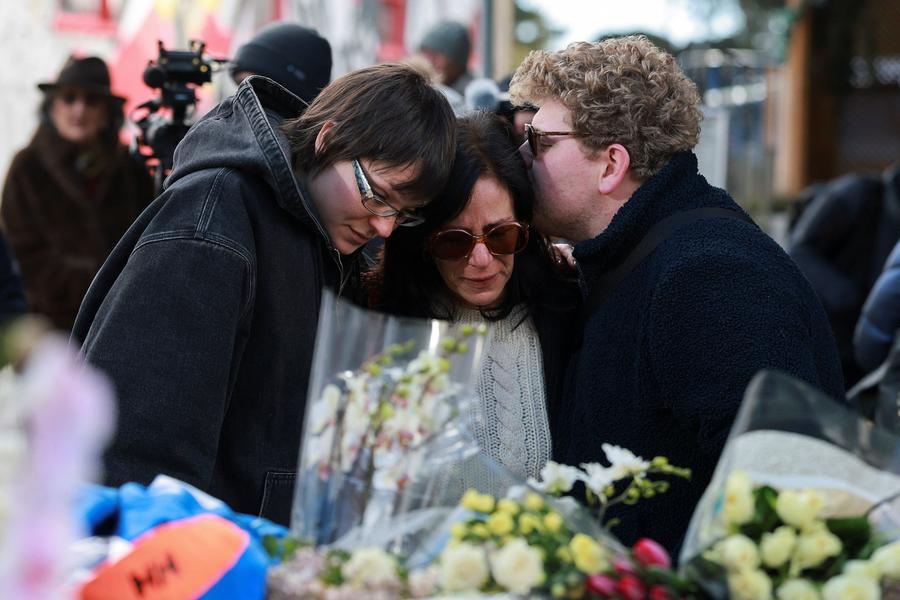


After hearing the news of the tragic fire that occurred on the night of January 1st Crans Montanain Switzerland, which caused over 40 deaths and numerous injuries, Pope Leo XIV he wanted to join “in the pain of the families” involved and “of the entire Swiss Confederation”. In a telegram, signed by the cardinal secretary of state Pietro Parolin and addressed to the bishop of Zion, Monsignor Jean-Marie Lovey, the Pontiff expresses his “participation and concern” to the relatives of the victims, praying to God to welcome those who have lost their lives “into His home of peace and light” and to “support the courage of those who suffer in heart or body”. The Pope’s hope is that “the Mother of God, in her tenderness”, may bring “the comfort of faith” to all those affected by this tragedy, keeping them “in hope”.
And Monsignor spoke to the Vatican media Jean-Marie Lovey, bishop of Zion, who said that the Church, in the face of this tragedy, is entitled to a discreet presence, which does not pretend to explain the inexplicable but chooses to remain alongside.
“Faced with a drama that has profoundly shaken the local community, the Church is called first and foremost to a silent and shared presence”, explained the prelate. «The climate is heavy and charged: there are many emotions, misunderstandings, questions. People wonder how this could happen, what happened. It’s so terrible.”
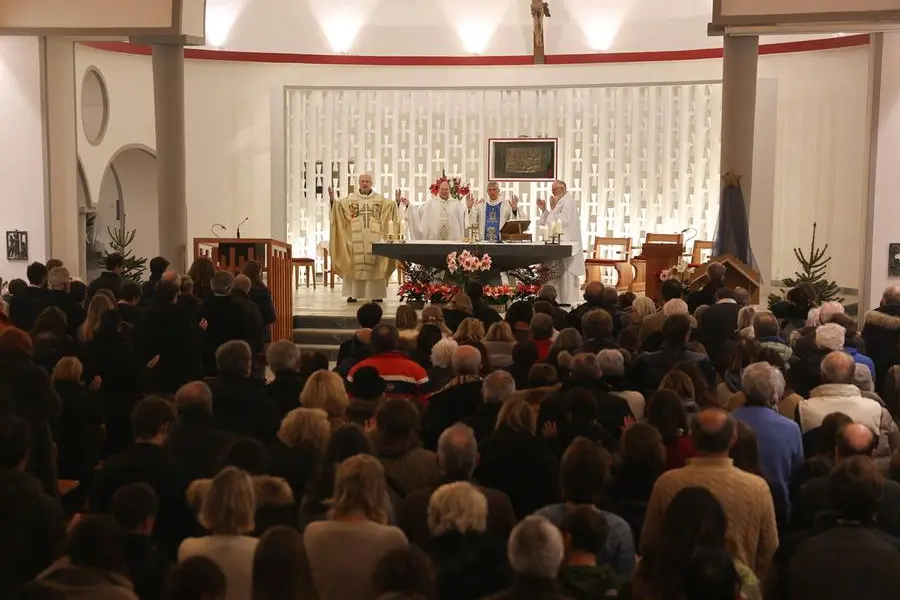
Thursday evening the bishop presided over a Mass in memory of the victims in the municipality’s church, packed with over four hundred people. An eloquent sign of a profound need: not to be alone. “People need to gather, to find each other, to live together,” Lovey said. “Loneliness, especially in moments like this, is too heavy to carry.”
Alongside the Eucharistic celebration, the diocese has activated spaces for listening and reflection: churches open for prayer, a book to leave a thought, a flower or a candle, moments of shared silence. “Sharing a word, a look, a silence: there is a real expectation on the part of the wounded families to be recognized in their suffering”, underlined the bishop.
A pastoral response also experienced in an ecumenical key. Representatives of the Reformed Church took part in the initiatives, in a communion born from shared pain. “The specific ministry of Christianity is precisely that of communion,” said Lovey, “Being with those who are alone, consoling those who find themselves alone, ensuring a presence: this is the very being of God. God defines himself as He who is with.”
Crans-Montana, an international tourist resort, currently hosts people from many countries, including numerous Italian families. «There is something very universal in what we experience here», said the bishop, «it is a beautiful image of the Church: a community made up of different peoples who, in times of pain, find themselves united».
Alongside the spiritual closeness, Lovey gratefully underlined the enormous solidarity network activated: rescuers, healthcare personnel, civil authorities, hospitals in Switzerland, France and Italy. «There really is something wonderful happening. All this is experienced with spontaneity, professionalism and a sense of responsibility. It’s comforting.”
Finally, a message directed to the families affected by bereavement, at the beginning of a year that has opened under the sign of tragedy. «I would like to be able to convey a message of hope which is at the heart of the Christian mission. Beyond these dark and black clouds, I would like to say that a light is possible.”
A light that has its roots in the mystery of Christmas and Epiphany: «On the land of darkness and on those who lived in the shadow of suffering and pain, a light shines», concluded Lovey, «God can enter the hearts of those who are affected. I wish families could believe that light is possible.”