





This challenge consists of resting your body (and your liver) from alcohol. So zero drinks?
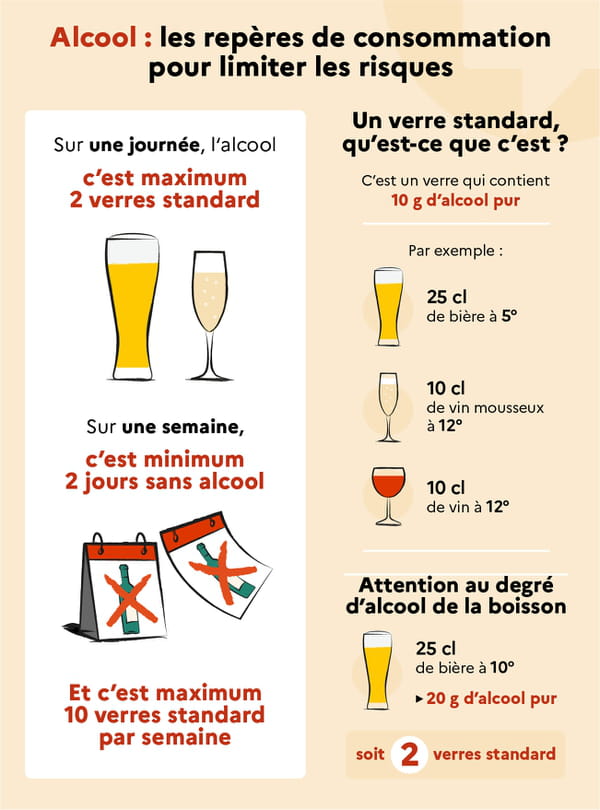
After the excesses of partying, it is time to cleanse your liver and your entire body of alcohol. Dry January or “Sober January” is made for that and the season 2026 is launched! As a reminder, the official recommendations set at 2 glasses of alcohol per day, and not every day (no more than 10 per week). But if you follow the sober January challenge, it’s 0. How to do it? For what benefits? Effects on the body? For weight loss? Detoxify your liver? Have better quality sleep? Advice and advice from our liver expert.
What is the Dry January or Alcohol-Free Month challenge?
The rule for the alcohol-free month challenge is simple: do not drink alcohol from the time you get up on January 1st until the end of the month. The opportunity to rest your body (and your liver) after the excesses of the end-of-year holidays.
What is the origin of Dry January?
This challenge, imagined in 2013 by the British association Alcohol Change UK, quickly went viral on social networks and was the subject of thousands of shares.
Dry January was launched in France on January 1, 2019 at the initiative of the French association “France Janvier Sobre” created under the presidency of Dr. Christine Joly, Head of Department of the Alcohol and Addictology Care Unit (US2A) at Valence hospital, in 2014. Laurence Cottet, ex-alcoholic who publicized her fight against the disease, assumes the presidency today.
What does “Dry January” mean in French?
Literally, “Dry January” in English can be translated as “Janvier Sec”. In France, we prefer to call it “Sober January” or “January Challenge” or even “Alcohol-Free Month”.
Dry January consists of stopping all alcohol consumption between January 1st and 31st. More broadly, the objective is “achieve reasonable consumption and keep at least 2 days without alcohol per week”.
What are the benefits and effects on the body?
- Detoxify your liver
- Avoid seasonal viruses (flu, etc.)
- Limit your weight gain
- Reduce your risk of cholesterol, diabetes, hypertension and cancer
- Improve your sleep
In a study conducted by the University of Sussex in 2019 on nearly 3,000 Dry January participants, 71% explained that they slept better, 58% lost weight, 57% had better concentration and 54% had more beautiful skin. “Many of us know about the health risks of alcohol – cancers, liver disease, mental health problems – but we’re often unaware that drinking less also has more immediate benefits. Sleep better, feel more energetic, save money, better skin, lose weight… The list goes on. Dry January is helping millions of people reap these benefits and make a more lasting change to drinking healthier“, commented Dr Richard Piper, CEO of Alcohol Change UK, the UK charity which created the challenge.
What are the benefits for the liver?
During the holiday season, we tend to eat more fat than usual, consume more alcohol and be a little more inactive. And these three factors increase the risk of overloading your liver with fat. This is called steatosis, a liver damage which corresponds to a deposition of fats inside the liver cells. “It is true that under the influence of a diet that is too rich, excessive alcohol consumption and a sedentary lifestyle, the liver can suffer and reach the stage of steatosis after just a few days of excess. But let’s be reassured, this steatosis is completely reversible provided you stop your alcohol consumption (or have an extremely low alcohol consumption) just after a period of excess.“, explains Professor Patrick Marcellin, hepatologist at Beaujon hospital and president of the APHC (Association for the improvement of the care of patients with chronic liver diseases). Whether you are an occasional or regular consumer, “Dry January” is an excellent way to boost the process of eliminating toxins in your body and particularly in your liver, an organ which performs many essential functions of the body.
In just a few days we can have a healthier liver.
“In just a few days, we can have a healthier liver and regain better shape, good sleep and better energy. Furthermore, a healthy and detoxified liver helps strengthen your immune system just before spring and fight against certain viruses such as the flu.“, specifies the hepatologist. Finally, this also has psychological effects: in fact, this period of abstinence allows you to become aware of your true alcohol consumption (consumption which is often underestimated), and above all, proves that the less alcohol you drink, the less you want to drink alcohol, because the brain becomes disaccustomed to alcohol relatively quickly!“
Does Dry January help you lose weight?
Alcohol is very high in calories and very sweet. One gram of alcohol represents 7 calories. For example, a glass of red wine or champagne contains 70 calories, a glass of Martini has 112 calories on the counter, around a hundred calories for 25 cl of beer. Not to mention the sodas and other juices that often accompany liqueurs and brandies! Logically, reducing or even stopping your alcohol consumption helps limit weight gain, due to the calories not ingested when you swap your cocktail for a glass of water. Furthermore, consuming alcohol tends to slow down the elimination of fat. Worse, it even promotes its accumulation in the abdominal area. A mechanism well known to those we colloquially call “beer drinkers”…
What are the benefits for sleep?
At very low doses, alcohol tends to “make you sleep” and does not alter the quality of sleep. On the other hand, regular or larger alcohol consumption can promote or exacerbate certain sleep disorders, including insomnia, sleep apnea and snoring. Sleep is fragmented, punctuated by waking up, which prevents you from recovering properly. This contributes in particular to the “hangover” the next day… Remember that the sleeping pill/alcohol mixture is very dangerous, can lead to breathing problems, violent behavior, parasomnias or reinforce sleep apnea.
For Jean-Michel Delile, president of the Addiction Federation and psychiatrist, this challenge constitutes “a very positive, unifying and not moralizing initiative (which) does not demonize the product, but which allows you to distance yourself from it in the form of a game, with the support of social networks“. For the rest of the year, he advises “to invent your own challenge” such as not drinking alcohol two or three days a week, or planning weeks without consuming a single drink.
In short, “taking care of your liver by banning all alcohol consumption for a period of time is essential for preserving your health and regaining the right balance in your body” explains Professor Patrick Marcellin.