

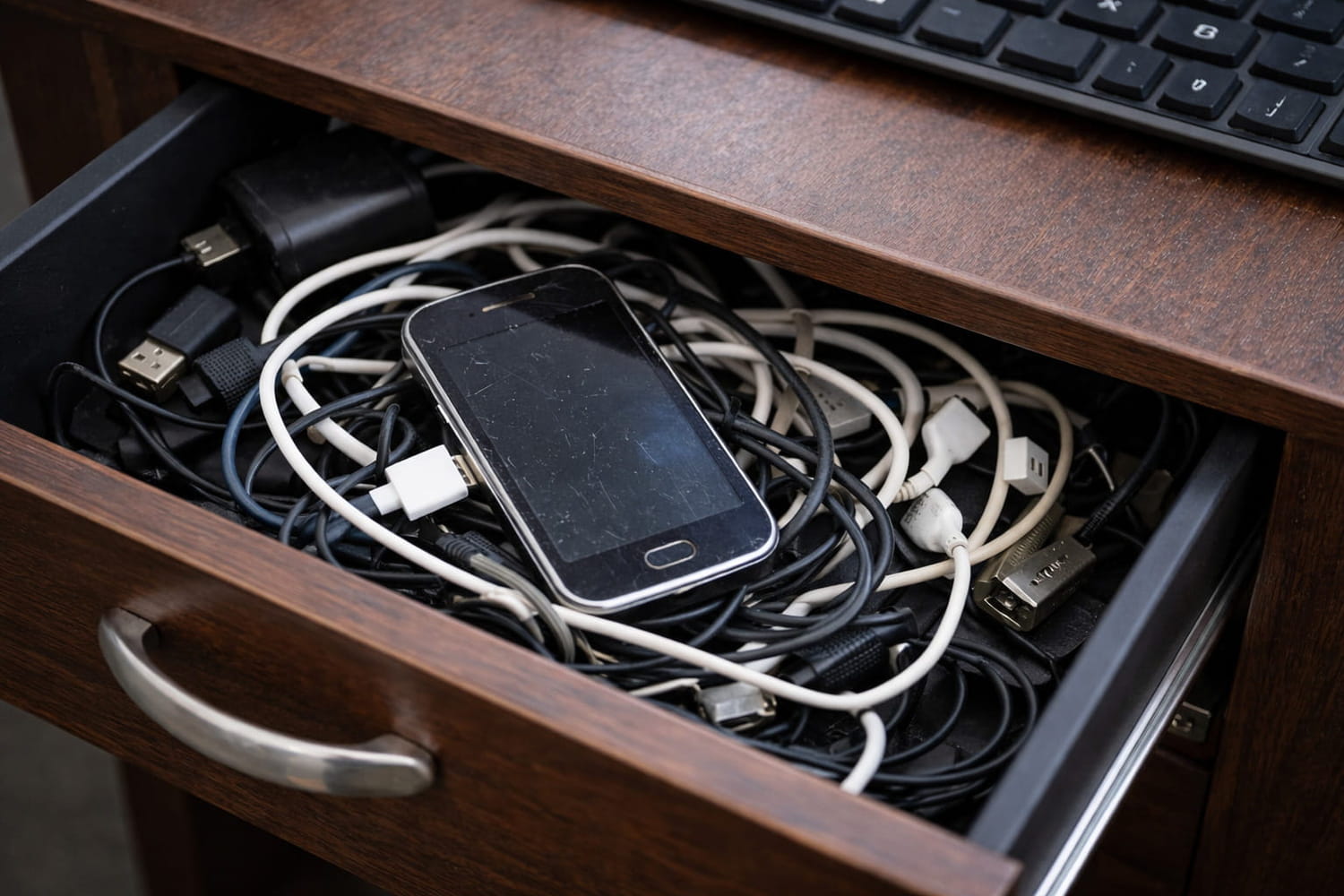




We all have, somewhere in a forgotten drawer at home, an old smartphone that we keep “just in case”. But this backup laptop presents a real risk, one that most of us are unaware of.
Today, almost the entire population has a cell phone: 91% of French people have a smartphone, according to the latest figures from the Ministry of the Economy. They have become a real everyday essential, so much so that most of us would have great difficulty doing without them… and not just young people, because even 70 % of seniors have one. While brands are constantly renewing their offerings to offer more efficient equipment, more efficient batteries, or better quality cameras, we have all already changed phones at least once, if not dozens of times over the years.
Who has never kept their old smartphone in a drawer “just in case”? If the current one were to break down for one reason or another, it is always reassuring to know that you have a “backup” device, while you can have it repaired or buy a new one. Ademe estimates between 54 and 113 million the number of unused smartphones lying dormant in French drawers. However, this reflex is more dangerous than it seems.
Because a phone, even when turned off, never really sleeps: the battery continues to drain slowly, until it reaches deep discharge. The majority of smartphones – just like most rechargeable devices, from laptops to e-bikes and even e-cigarettes – contain lithium-ion batteries. Lighter, more durable and faster to recharge, they are practical in many ways. But left abandoned, they can deteriorate and present a real risk: even when the device is not in use, the battery can gradually release toxic and flammable gases. A simple movement, such as picking it up in your hand, could be enough to start a fire, or even an explosion.
The liquid electrolyte present in the battery eventually decomposes: “This phenomenon is caused by an overcurrent in a battery cell, causing a build-up of heat and gas. Several factors can be the cause, the most common being overcharging, manufacturing defects, deep discharge or damage to the battery.explains the University of Reading on its site. Generally, a damaged battery is noticed because it has swollen: this can lift the phone case, and sometimes give off an unpleasant chemical smell.
If you notice these details, do not try to turn on or plug in the smartphone, and even less open it. The battery components are unstable and you could puncture the battery, causing “may cause fire and explosion”. Better to go to a repairer, who will estimate the cost of replacing the battery. And if the swelling has damaged the device too much, to the point of detaching the screen or the back cover for example, it must then be disposed of at a specialized collection point. But “sIf the swollen battery starts to smoke, do not touch it, sound the fire alarm, and call the (number of) the fire department for information.”.
In short, leaving an old, unused phone in a drawer represents both a risk to health and the home, but also a financial loss – it is better to resell it while it is still usable – and a real impact on the environment. 80% of a smartphone’s carbon footprint comes from its production phase, and not recycling it means losing these precious raw materials and the many metals that make it up.