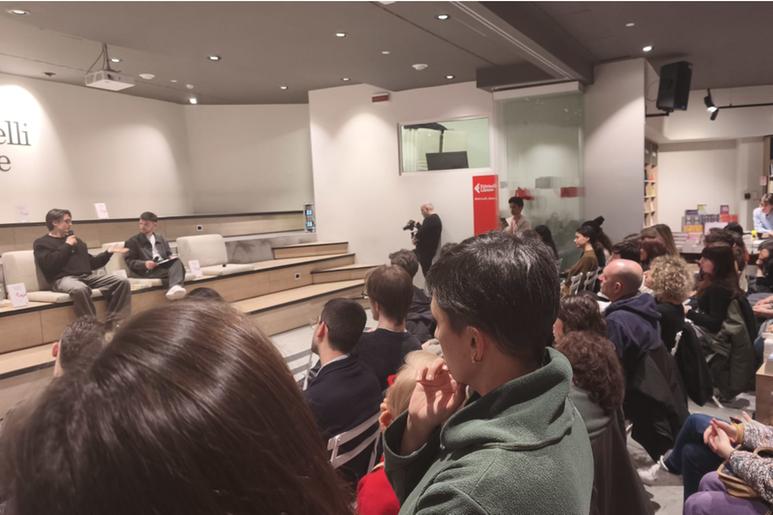




In the silence of numbers, the DCSA 2025 Report outlines an alarming scenario for Lombardy: heroin seizures increased by 178.2% and cocaine seizures by 66.9%. Milan confirms itself as the central hub of a widespread drug dealing network that crosses every social class, blending into the urban fabric. It has been operating in this context for over thirty years Ark Project Foundationcommitted to assisting people with addictions and in marginal conditions. This “throwback” scenario has been the focus of the show recently Dal Buco – Pioneers of heroin by Masiar Pasqualithe theatrical evolution of his podcast of the same name. Through vintage videos and direct testimonies, Pasquali retraces the advent of heroin from the early 70s to trace a red thread up to today’s addictions: a work of awareness that is especially affecting young people, necessary to understand the legacy of that phenomenon. Precisely on the sidelines of this reflection, we met Costantina Regazzo, Director of External Relations of Fondazione Progetto Arcato delve deeper into the operational model of the Foundation in the area and address the drama of consumption among very young people, a plague that today is once again destroying not only individuals, but entire families.
What is the real urgency you find in the field today and how are you directing your educational work?
«All educational work deserves new attention. There are health education and orientation programs that aim to ensure that substance use is somehow well understood, so that young people can not fall into what we call “a trap of life”. The objective is to educate children in schools, on the streets, in places that young people naturally frequent and where they encounter substances or alcohol for the first time. These are discos, places of social life that are transformed into occasions that, sometimes, also dramatically transform those who use the substance into those who supply the substance. The problem is that we no longer talk about this topic because it is seen as governed by all systems, including communication and information; instead, there are individual or group experiences of substance use that are of great interest to us.”
What are, in your experience, the root causes that push towards addiction?
«Experience tells us that often, in moments of greater fragility or loneliness, the substance covers other pathologies such as depression or the inability to assume an adult role in relation to one’s personality evolution. Many encounter the substance in adolescence: it often starts with the use of cannabis and can go further, even if cannabis does not have the devastating impact of other substances. In the stories, a moment of suffering always emerges, where it is thought that the substance helps to overcome a sense of inadequacy. Some guests tell us the idea that it is something manageable, but the dramatic reality is that the temporary power of being outside the system and one’s responsibilities becomes the element to try to recreate that momentary well-being, then impacting with a physical and psychological need”.
How is your action structured in the Milan area and what services do you offer?
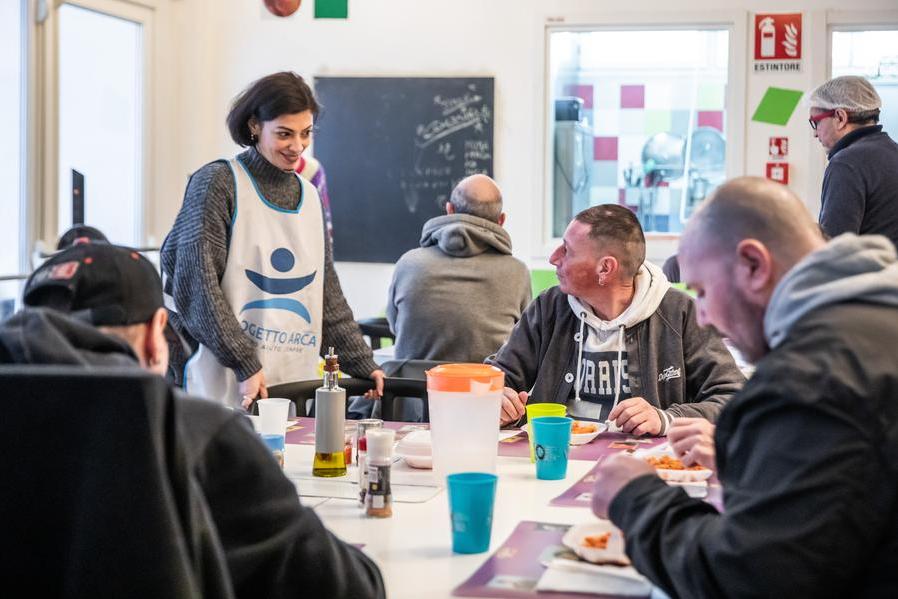
«We have been working on this for 30 years, also through the IntegrAzione project directly on the street. We have mobile units that network with third sector actors and with the Municipality of Milan. We are currently the only company in Milan that has a night service, accredited by ATS, in network with the SERT and CAD of the city: for those who use alcohol or other substances we are a point of reference. We also have two initial reception centres, accredited with ATS Milan, where people can stay for 90 days and then move on to the community. The people we welcome arrive through the regional network of drug addiction services with a clinical certification of pathology.”
What is the journey that guests face inside your reception centres?
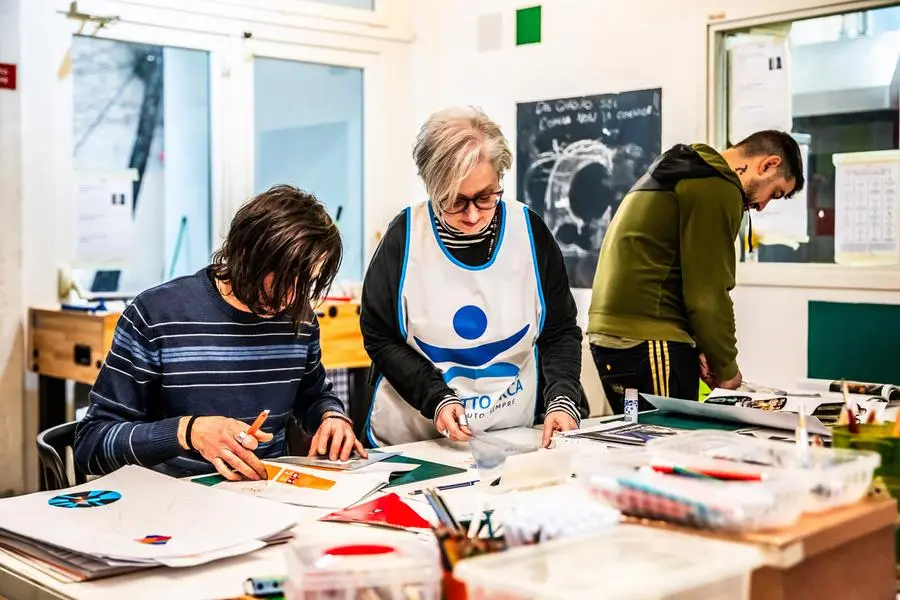
«We offer two types of care: night care is a residential reception which as such operates from 7pm to 8am; and the prompt reception that works 24 hours a day. As for the nocturnal workers, when they enter they sign a regulation: they cannot bring and consume substances in the center and must undergo “filter” interviews. They can have dinner, take a shower, have a bed and are looked after by educational figures. Our work is mainly educational, but also psychological or healthcare support if necessary: we take on the burden of those who use methadone or other pharmacological supports, because the substance is abolished in the structures. As regards the residential reception of the other centres: a regulation is signed to enter into relationships with the outside world and the family members are managed and evaluated in collaboration with the educational team in the context of personalized projects. The objective of these 90 days is to prepare for entry into the community. We don’t do a detoxifying treatment in terms of medical therapy, but we help people give meaning to everyday life: hygiene, taking care of their own space and community life.”
What is the picture of the population you welcome? Are they just very young people?
«The average age range is from 35 to 45 years old, but there are both very young people and people in their 50s or 60s. In chronic conditions it is easy to see adults who have passed from one service to another. It makes me smile when we appeal exclusively to young people, because in reality there are also those who are over 60. It is important to reiterate that the substance does not move by income or age group: cocaine, for example, is used both in rich environments and where social hardship is more felt.”
How do you support families crumbling under the weight of addiction?
«The relationship with the family is fundamental and we never lose sight of the reference figures. Despite the context of partial isolation, we foresee moments agreed with the sending institution that the person must live with their children, partner or parents. We push a lot on this because the objective is social reintegration. Often the family is not able to set the essential rules and we enter a dimension of “sick” support or conflict. Dynamics of manipulation and blackmail are created: those who need the substance activate them towards their loved ones, who due to suffering try to help but don’t know how to do it.”
What, in conclusion, is the current picture of the phenomenon compared to the past?
«Today perhaps people don’t die from drugs like in the past, but there are other forms of substances and other methods of treatment. Methadone and substitution drugs are able to compensate and give people more time to be taken care of through more structured community projects. However, the topic remains complex and requires, for example, having the courage to leave contexts where being together necessarily involves the use of substances.”