



Easter is the culmination of the Easter Triduum, the center and heart of the entire liturgical year. It is the most solemn celebration of the Christian religion which continues with the Octave of Easter and with the liturgical time of Easter which lasts 50 days, incorporating the feast of the Ascension, up to the solemnity of Pentecost.
What does the word “Easter” mean?
Comes from Greek: paschain turn from Aramaic pasah and it properly means “to go beyond”, therefore “passage”. The Jews remembered the passage through the Red Sea from slavery in Egypt to liberation. For Christians it is the celebration of the passage from death to life of Jesus Christ.
What are the origins of this holiday?
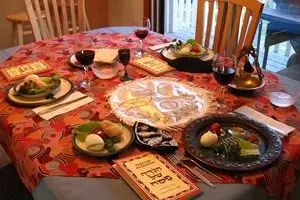
Among the Jews, Passover (Passover) was originally linked to agricultural activity and was the celebration of the harvest of the very first fruits of the countryside, starting with wheat. Other parties, just to remember them, were there Feast of the Weekswhich celebrated the wheat harvest in early June, and the Feast of Tabernaclesthat is, of the harvest, in September. Subsequently, Easter became the annual celebration of the liberation of the Jews from slavery, a meaning that was added to the other, as a memory of the escape from Egypt and of the fact that the doorposts were painted with the blood of the lambs so that the exterminating angel, as the Bible says, passing through those houses, would spare the firstborn. Even today, the Passover dinner among the Jews takes place according to a specific order Seder. We eat bitter foods to remember the bitterness of Egyptian slavery and the amazement of newfound freedom. To celebrate Easter, the Israelites at the time of Jesus went to Jerusalem every year. He too went there. His death occurred, in fact, on the occasion of the Jewish Passover. For Christians he is the paschal lamb that saves from death, the new bread that makes new (see 1Cor 5,7-8)
Why do we eat lamb?
The tradition of consuming lamb for Easter comes from Passoverthe Passover. In fact, lamb is part of the origin of this holiday. In particular, reference is made to when God announced to the people of Israel that he would free them from slavery in Egypt by saying “This night I will pass through Egypt and strike to death every firstborn Egyptian, both among the Gentiles and among the cattle”. Thus ordering the people of Israel to mark their doors with lamb’s blood so that he would be able to recognize who to hit with his punishment and who not. Furthermore, in the past there was a commandment regarding the Jewish Passover which said to make the offering of the lamb on the 14th day of the Jewish month of Nisan and to consume the Pesach sacrifice that same night.
With Christianity, the symbol of the lamb sacrificed for the salvation of all becomes Christ himself and his sacrifice has redemption value. One of the Easter culinary traditions is to prepare almond paste lamb.
Why is the date of Easter movable?
Because it is linked to the spring full moon and is celebrated on the first Sunday after the first full moon of this season. The dating of Easter in the Christian world was a cause of serious controversy between the Churches of the East and the West, the first was made up of converted Jews and celebrated it immediately after the Jewish Passover, i.e. on the evening of the full moon, 14 Nisan, the first month of the Jewish year; therefore always on different days of the week. Only with the Council of Nicaea in 325it was achieved that it was celebrated on the same day throughout Christianity, that is, by adopting the Western rite, fixing it on the Sunday following the spring full moon. Today the celebration falls between March 22nd and April 25th thus calling it low or high Easter, depending on the period in which it occurs. Being a movable feast, it determines the date of other celebrations connected to it, such as Lent, Holy Week, Ascension, Pentecost. The Church contemplates for Catholics the obligation of the Easter Precept, that is, confessing and receiving the Eucharist at least once during the Easter period.
What do the Gospels say? From the “provisional” burial to the Resurrection of Jesus
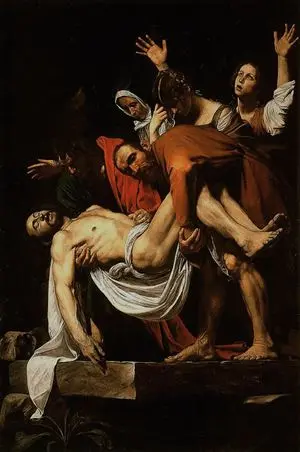
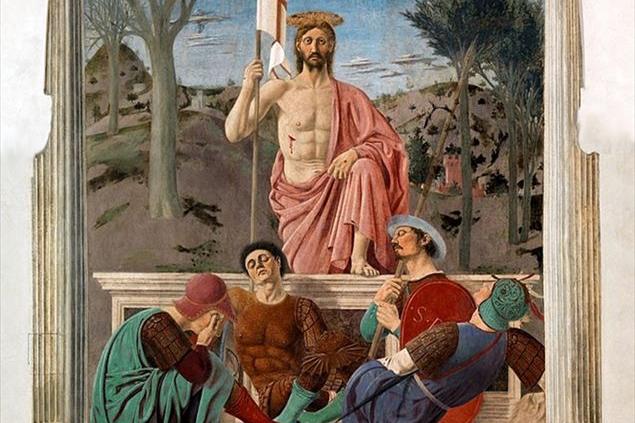
After his death on the Cross, the burial of Jesus was a temporary operation, as it was now evening time and the Jewish Sabbath was approaching with sunset, where it is known that any activity was prohibitedthe body of Jesus was wrapped in a white sheet and placed in the new tomb dug into the rock, belonging to Joseph of Arimatheamember of the Sanhedrin, but now a follower of Jesus. The operations necessary for this type of burial, which was not burial in the ground, and that is the sprinkling of the body with preservative perfumes and ointments and the wrapping of the same body with bands or bandages (we have the example in the story of Lazarus resurrected by Jesus himself); these operations, we were saying, were postponed until after the Sabbath by the pious women, who, after having prepared the aromas and seen where the body of Jesus had been placed, finally left. After the Parasceve (Saturday eve) therefore as soon as Jesus was buried, the priests and Pharisees went to Pilate telling him that they had remembered «that that impostor, when he was still alive, said: After three days I will rise again. Therefore order the tomb to be watched until the third day, lest the disciples come and steal it and then say to the people: He has risen from the dead. So this last imposture would be worse than the first! And Pilate, according to the Gospel of Matthew alone, authorized the sealing of the tomb and arranged some guards to control it. When the Sabbath was over, in which all observed rest, Mary of Magdala, Mary of Cleophas and Salome, they completed the preparation of the perfumes and went to the tomb early to complete the anointing of the body and the bandaging; along the way they said among themselves, who could help them move the heavy circular stone, which closed the low opening of the tomb, which was composed of two rooms dug into the rock, consisting of a small atrium and the burial cell; the latter containing a kind of stone rise, on which the corpse was placed. When they arrived, according to the Gospels, there was an earthquake, a blazing angel came down from heaven, approached the tomb, rolled the stone and sat on it; the guards, struck by great fright, fell unconscious. But the Angel turned to the dismayed women, telling them: «Don’t be afraid, you! I know you are looking for Jesus the crucified. It’s not here. He has risen from the dead, and behold, he is going before you to Galilee; there you will see it». Continuing with the story of the Gospel of Matthew, the women ran away to give the announcement to the disciples. It should be remembered that the Resurrection of Jesus is announced by some women, who according to ancient Jewish law, were incapable of testifying, therefore with this event which sees them as messengers and witnesses, a historical event is also inserted into Jewish sociality. When the women reached the apostles and reported what had happened, they ran towards the tomb, but Peter and John ran ahead, the younger and faster John arrived at the tomb first, but stopped at the threshold after seeing the sheet (Shroud) on the ground. Peter arrived and entered first and noticed that the sheet was on the ground, while the shroud, used to place it on the head of the deceased, was folded in a corner. then John also entered and they both understood and believed what Jesus himself had previously said regarding his Resurrection.
How is the liturgy of the Easter Vigil composed?
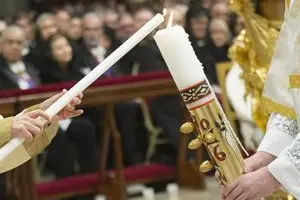
For Saint Augustine it is Easter «the mother of all holy vigils, during which the whole world remained awake». During this night, the Church celebrates the Resurrection of Christ, baptizing new Christians (the catechumens) and asking those who already are, to renew the commitments of their Baptism together.
The Easter Vigil is a complex and unitary celebration, which takes place in four successive moments:
1) Liturgy of Light which begins with the blessing of the fire, the preparation and lighting of the candle as the “light of Christ”, and the procession with which it is introduced into the dark church, which is then illuminated by the candles of the faithful lit from the Paschal candle. The solemn Easter announcement follows, also called the initial Latin word Exultet;
2) Liturgy of the Word with nine readings, seven taken from the Old Testament and the last two from the New;
3) Baptismal Liturgy;
4) Eucharistic Liturgy. The rite takes place at night, a symbol of humanity which, without Christ, is immersed in the darkness of ignorance and error, sin and death.
What is the Urbi et Orbi Easter blessing?
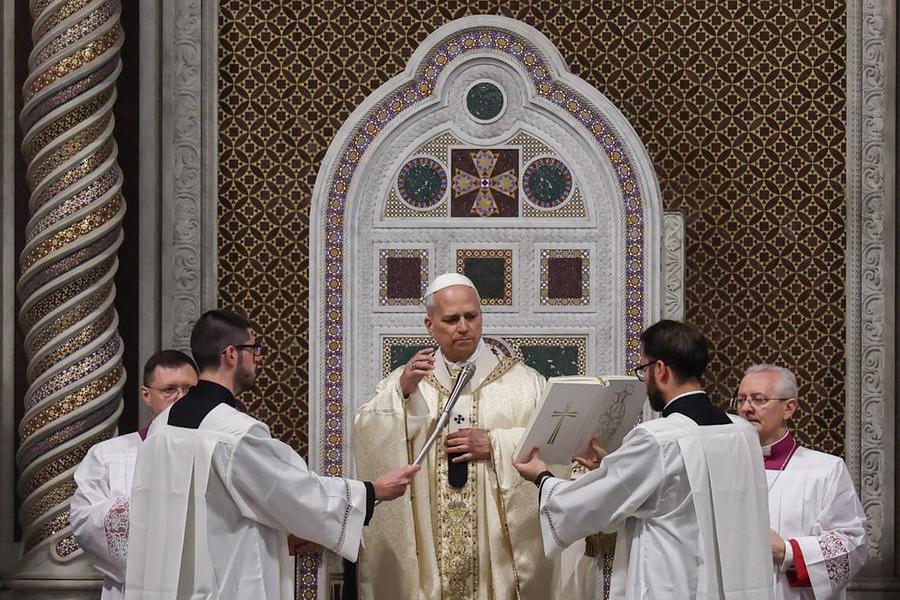
Urbi et Orbi is a Latin expression meaning “To the city (of Rome) and to the world”. The Urbi et Orbi blessing is the first blessing made by a Pope, immediately after his election to the Conclave, from the central lodge of the Vatican Basilica. It is also released by the Pontiff on the days of Christmas and Easter to the crowds gathered in St. Peter’s Square and on special occasions. The blessing, usually accompanied by a message, involves the absolution of all temporal sins for all those present in St. Peter’s Square and for those who receive it through the various means of communication.
Why are eggs eaten?

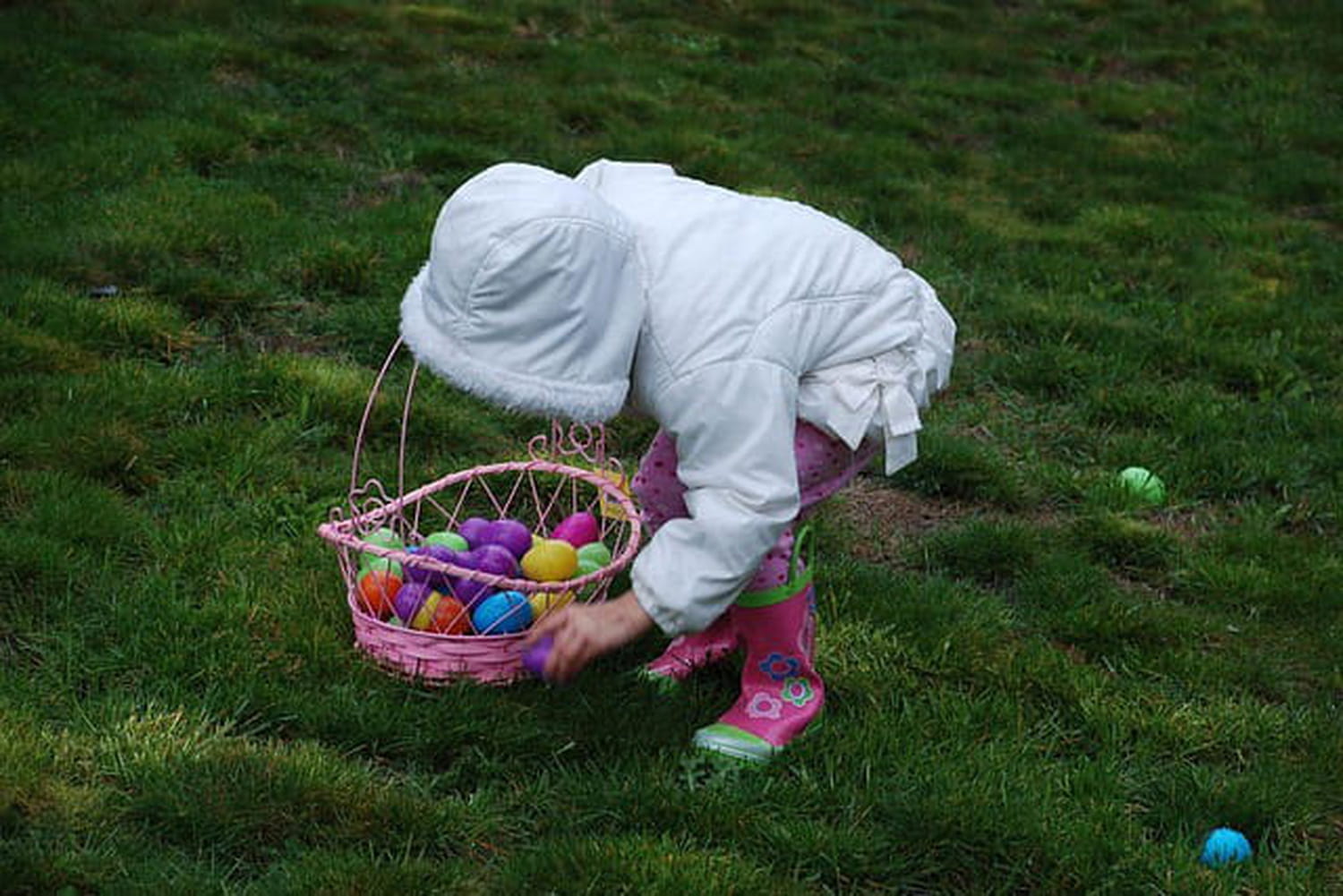
The tradition of decorating eggs dates back to the first Christians who painted eggs red, to remember the blood of Christ, and decorated them with crosses or other symbols (a tradition that still lasts today in Orthodox and Eastern Christian countries). The symbolism of the egg is evident: life is born from the egg which in turn was associated with the rebirth of Christ and therefore with Easter. In reality, eggs decorated according to this symbolism would also have been suitable for Christmas, on the occasion of the birth of Christ, but according to some studies the tradition of Easter eggs was strengthened by a typically Easter custom: Lent, the forty-day period before Easter in which believers are required to fast and abstinence. During this period it is forbidden to eat meat. In the past, and still in Eastern Christian churches, it was also forbidden to eat eggs. However, it was difficult to force hens not to lay eggs at that time, so the early Christians found themselves with a surplus of eggs that they could not eat. From the need to do something with them, the tradition of boiling them until they became hard as rocks and then painting them with sacred and symbolic colors was born.