




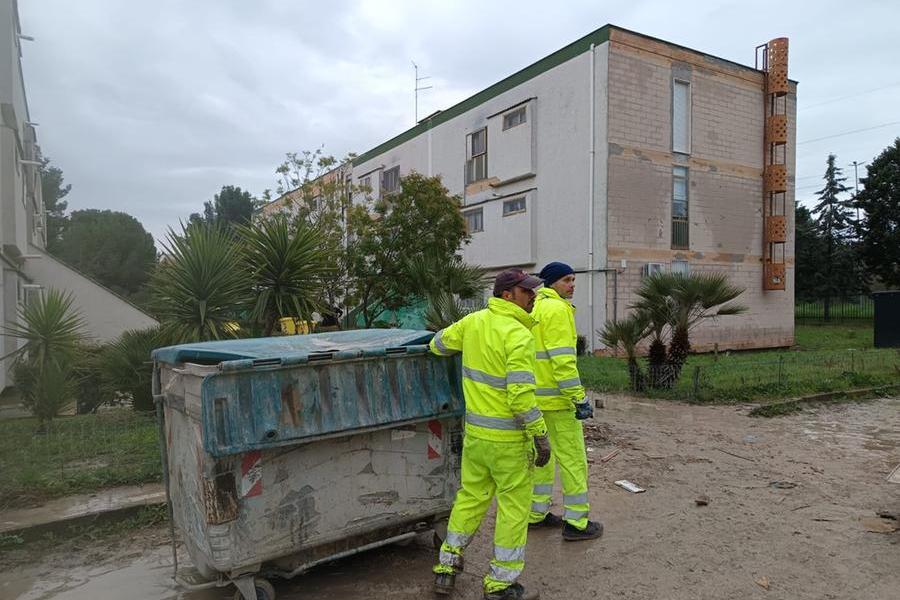
Borgo Incoronata wakes up in the heavy silence of the post-storm. A silence broken only by the noise of the pumps and the scraping of the shovels against the mud. The acrid smell of stagnant water enters homes, mixing with wet wood, soaked fabrics, destroyed memories.
A few kilometers from Foggia, this small village – which has around 600 residents and was founded close to the Sanctuary built in the place where in the year 1001 the Black Madonna appeared to the Count of Ariano and the shepherd Strazzacappa – is today one of the most evident symbols of the emergency that hit the Capitanata on the eve of the Easter holidays.
Here, where Easter should have brought set tables and reunited families, over a dozen families will instead spend the holidays away from home, guests of friends and relatives. Their homes were invaded by water after theflooding of the Cervaro rivertransforming apartments and cellars into fields of mud and debris in just a few hours. In some buildings the water reached the first floors, submerging furniture and objects. About twenty basements are completely flooded. The firefighters, civil protection and municipal vehicles work tirelessly to empty the areas and make roads and entrances accessible again.
«The water arrived suddenly, within a few minutes– says Mrs. Maria as she continues to stare at her floor completely covered in brown water. We didn’t have time to save anything. A life inside the house and now we don’t know where to start again.”
The scene is repeated from house to house: sofas swollen with water, wardrobes that need to be thrown away, appliances that are unusable. «There are sixty centimeters of mud to be removed – says another resident -. There is nothing to recover.”
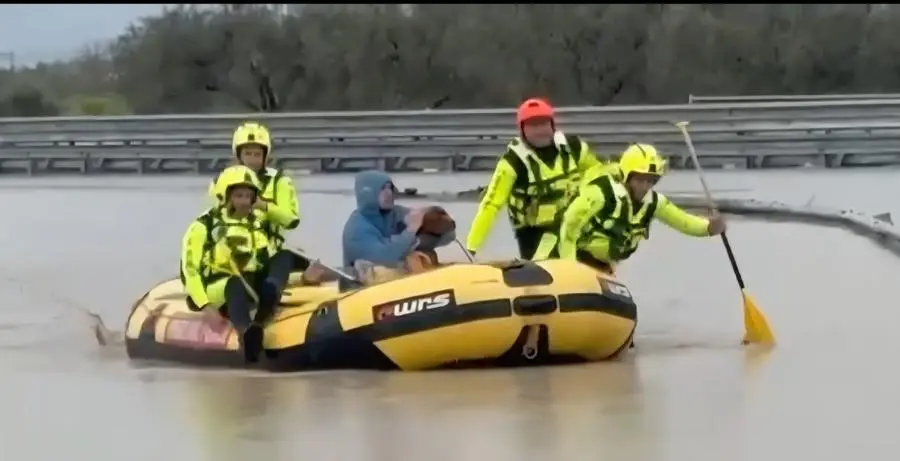
When the water started to rise, many were forced to leave everything. «It arrived like a flood, within two hours our house was invaded. We escaped”: says a woman who has lived here since the 1980s. The inhabitants were helped by the neighbours, the young people of the village, together with the emergency teams. To save a family living in a farmhouse in the countryside of the village, the firefighters had to go with a rubber dinghy. «Every time it rains heavily – says Mario, a 65-year-old farmer – we are afraid. Here it doesn’t take much to end up under water. But this time we thought we couldn’t make it. I went out onto the balcony and no longer saw my land, the road. I am water. It was impressive.”
Anna, a 57 year old housewife, had imagined another Easter. «I had already prepared almost everything for Sunday lunch – he says -. My children, my grandchildren, had to come. We had organized lunch, the table, like every year. It was a time for us all to be together.” Then he stops, looks at the floor marked by mud and adds: «Now instead we have to go to a friend’s house. I really thank them, because without them we wouldn’t know where to go. They are giving us a huge hand.” But thoughts immediately return to what was lost. «This will be – he says – a sad Easter. We should be happy, because the Lord is risen but I just want to cry.”
Among the alleys of Borgo Incoronata, alongside fatigue, anger also grows. It’s not the first time this has happened. In the past, floods had mainly affected the cellars; this time the water entered the homes.
«The river – Maria continues – is always full of debris and branches. The situation could have been managed better.”
The economic damage is huge, but the emotional damage is even more difficult to quantify: a life built over time swept away in a few hours. Objects, photographs, family memories: everything compromised. For many families, the return to normality is still far away. The homes are not usable, the cleaning work will take time, and in the meantime there remains uncertainty as to how and when it will be possible to start again. Easter this year will be lived elsewhere. Not in their own homes, not among their own things, but in borrowed spaces, with a sense of temporariness that weighs more than anything else.
The emergency does not stop at the Foggia village. In the Dauni Mountains, in Celle di San Vito – the smallest municipality in the Puglia region – a landslide made provincial road 126 impassable, completely isolating the country. “Whoever bought the dove will be able to eat it, the others won’t”, comments the mayor Maria Giannini with bitter irony, describing a community accustomed to living with isolation but increasingly tired of facing cyclical emergencies. The situation is also critical in Roseto Valfortore, where other landslides have compromised traffic, isolating the community. The intervention of the Army is expected to evaluate alternative routes and guarantee minimum connections, while The soldiers of the 11th Engineers of the Italian Army have already arrived in Borgo Incoronata. The prefecture announced that necessities, such as medicines, and urgent transport will be guaranteed by air rescue vehicles.
While the water slowly recedes, a question remains suspended between the houses of Borgo Incoronata and the inland towns: what will happen when the floodlights go out?
Between the mud still to be shoveled and the upcoming holidays, the greatest fear is not only that of the next rain, but that of being forgotten. A sensation that makes its way slowly, just like water which, in retreating, leaves behind not only debris, but also unresolved fragilities. And from the balconies of a house in Borgo Incoronata comes a clear appeal: «Don’t leave us alone – says a woman -. We need real interventions, not just emergencies.”