



A truly historic event in Bariwhere the first Symposium of the Christian Churches in Italy. Gathered around the theme of the “Italian Way of Dialogue”, i 120 Catholic, Anglican, Orthodox, Protestant and Evangelical delegates representing 20 different ecclesial communities they met on 23 and 24 January in the Apulian capital.
A city chosen for its historic vocation to ecumenical dialogue, in particular with the Christian East. The heart of the convention are the two magnificent churches of Bari Vecchia: the Cathedral of San Sabino and the Basilica of San Nicola.
The symposium is the culmination of ecumenical work that began three years ago, when a special table was established, born as a basic need during numerous ecumenical contacts. The Catholic soul of the symposium, and certainly one of the protagonists of the ecumenical journey in Italy in recent years, is Don Giuliano Savina, the charismatic director of the Office for Ecumenism and Interreligious Dialogue of the CEI. Also present were numerous bishops, presbyters, theologians and lay Catholics.
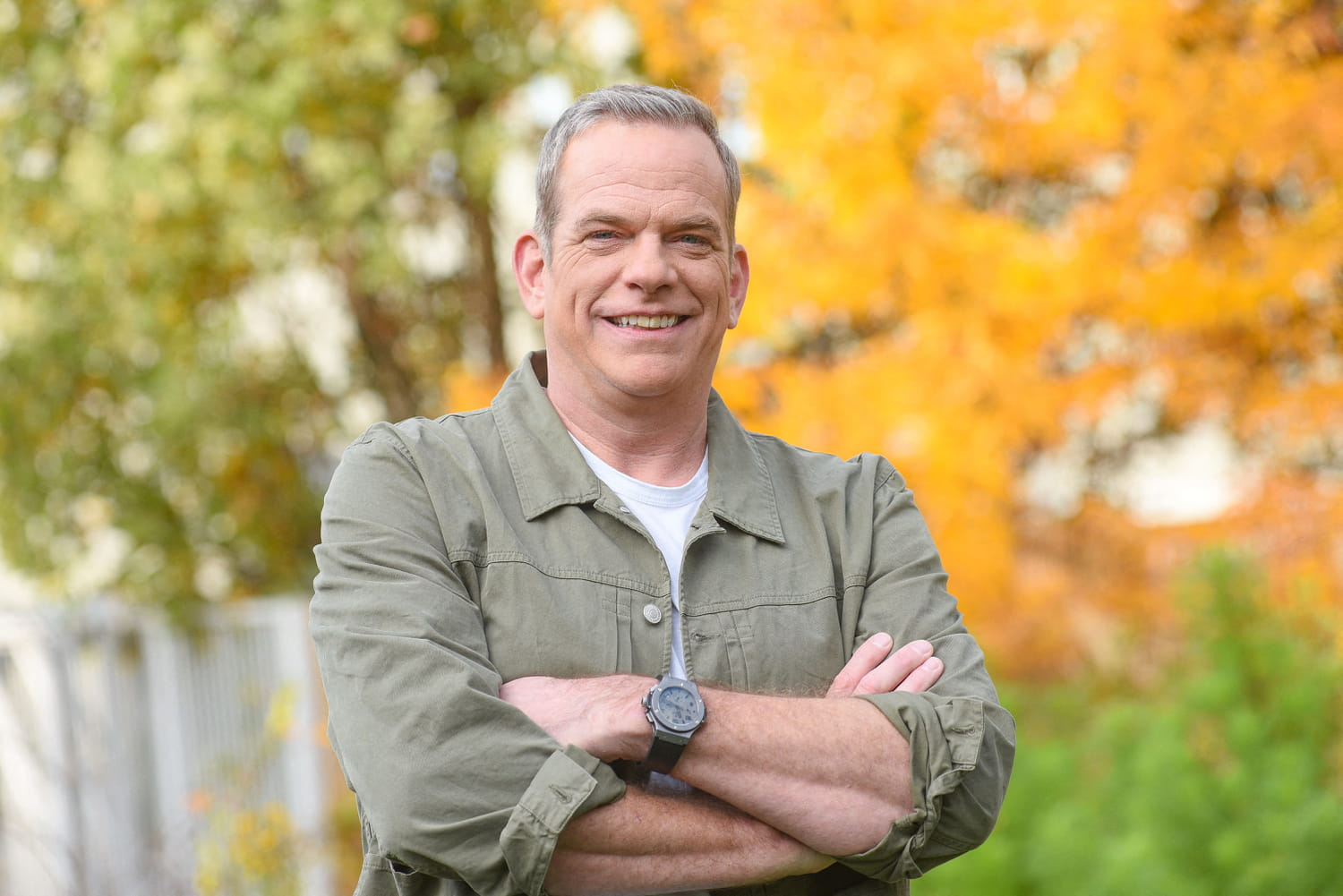
On Friday evening the pastors of the churches in Italy greeted those present with an evocative ceremony: the cardinal Matteo Zuppi, President of the CEI, the Metropolitan of Italy and Exarch of Southern Europe Polykarpos, the Pastor Daniele GarronePresident of the Federation of Evangelical Churches in Italy and the Rev.da Jules Cave Bergquist, of the Church of England in Italy. It was a true national ecumenical assembly, the first of its kind.
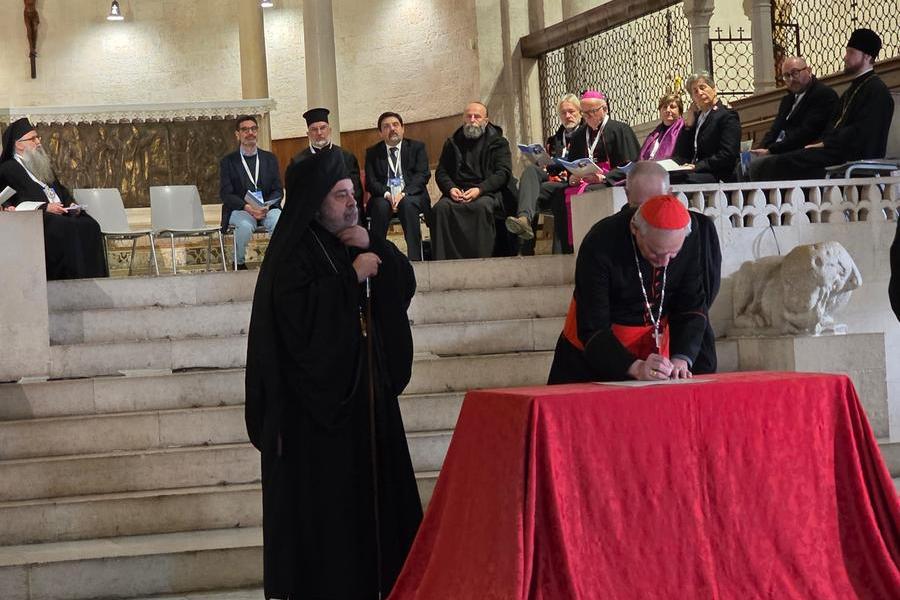
The most evocative moment, which some present described as moving, was the signing of the Pact between Christian Churches in Italy by the twenty leaders of the Christian Churches. A historic event, as it is the first Pact of this type signed at a national level. The signatory, for the church in Italy, is the president of the CEI himself, Cardinal Zuppi. The Pact is certainly a very significant point of arrival, but it is also a promising innovation full of future. Consisting of six short and dense articles, in the Pact the Christian churches recognize each other as sisters and not rivals, avoiding competition, abuse and proselytism and always seeking dialogue, even when there are important differences of views. They are committed to bearing witness to the faith in public space, respecting secularism and in dialogue with society. And the churches are committed to promoting the freedom and equal dignity of every Christian confession before the state.
Saturday was dedicated to the “laboratories” or working groups, which met in historic churches in the center to identify new ways and paths of mutual relations in the territories at the service of peace, the common good and social cohesion. The work and discussion workshops, into which the delegates were divided, dealt with the topics of ecumenism as a grammar of peace, as a gift for public space, as care for spirituality, as wisdom of differences. From the synthesis of the work of the workshops, indications for the ecumenical journey of the next two years can be drawn, in view of the next convocation.
Much space was given to common prayer in the Cathedral and to Saint Nicholas. On the morning of Saturday 24 January, different confessions led the prayer according to their own tradition in significant places in the city. The Holy Spirit, the Spirit of Jesus, has often been invoked as the true convener of the symposium, and as the soul of the different path.
On Friday 23rd evening, under the banner of the primacy of beauty, the concert-meditation was proposed at the Basilica of San Nicola “Nikolaos – Between East and West”, dedicated precisely to the patron saint of the city. And again on Saturday evening, in the Basilica of San Nicola, the symposium concluded with an ecumenical celebration.
———————————
THE FULL TEXT OF THE COVENANT
«Try to preserve, through the peace that unites you, that unity that comes from the Holy Spirit. There is only one body, there is only one Spirit, just as there is only one hope to which God has called you. There is only one Lord, there is only one faith, there is only one baptism. There is only one God, the Father of all” (Eph 4:3-6)
Article 1 – Foundation of communion
We recognize that our unity has its source in Christ Jesus, the only Lord and Savior, and that the Holy Spirit guides us to build relationships of authentic communion. We confess that every division and misunderstanding between our Churches is a wound to the Body of Christ and manifests the sin of the Churches. We implore the divine grace of mutual forgiveness and reconciliation.
Article 2 – Commitment to mutual respect
The Churches signatory to this Pact undertake to recognize and respect each other as Christian communities animated by the same Spirit, avoiding any form of competition, proselytism or abuse. Therefore, we are committed to guaranteeing our fidelity to the Pact: the option for dialogue is a choice to be pursued with determination even when positions diverge and when internal or external pressures fuel fractures and disagreements between us and could divide us. Each community will guard its own confessional identity in truth and love, welcoming the other as sisters in the faith. We commit ourselves to praying and working to remove what still painfully separates us today.
Article 3 – Collaboration for social cohesion and the common good
In obedience to the commandment of love and the evangelical mandate, we commit ourselves to cooperate in favor of justice, peace and solidarity among the men and women of our time. In particular, our Churches will work in a spirit of service to: protect the dignity of every person created in the image of God; the promotion of peace and dialogue between peoples, cultures and religions; welcoming the poor, migrants, the marginalized and those who suffer; the custody of creation as a gift entrusted to our common responsibility; the fight against anti-Semitism, Islamophobia and any other form of religious discrimination.
Article 4 – Common testimony
We wish to make the unity of faith visible through common prayer, shared listening to the Word of God and solidarity action in our cities and communities. We are aware that only a unanimous testimony, despite its diversity, can be a credible sign of Christ’s love for the world. We are committed to collaborating to be able to best announce the Gospel in secularized and post-secular society. We are committed to assuming a public presence of the Church that is respectful of secularism and in dialogue with society. We are committed to promoting the freedom and equal dignity of every Christian confession and religion before the State through a critical and constructive dialogue on the relationship between religion, secularism and politics in the Italian context, in the awareness of the contribution that religions can offer to the material and spiritual progress of society: «Every citizen has the duty to carry out, according to their possibilities and choice, an activity or function that contributes to the material or spiritual progress of society» (art. 4, co. 2, Constitution). We are committed to respecting the freedom of conscience of every person. We are committed to pursuing religious freedom for every person.
Article 5 – Permanent commitment
The signatory Churches undertake to maintain a constant and fraternal dialogue, through periodic meetings of prayer, discernment and concrete collaboration. Each Church will promote, internally, initiatives that promote knowledge and mutual esteem between the faithful of the different Christian confessions. We are therefore committed to asking all our communities present in the area to draw up a precise work program every year.
Article 6 – Final invocation
We entrust this Covenant to the mercy of God, so that he may bless it, safeguard it and make it fruitful. We pray to the Holy Spirit to renew our hearts and lead us towards that full communion that only He can achieve: “so that they may all be one” (Jn 17.21).
Conclusion
Signed in a spirit of brotherhood and peace in Bari, on 23 January 2026
Signatories
Catholic Church – Matteo Maria Zuppi
Sacred Orthodox Archdiocese of Italy – Polykarpos
Romanian Orthodox Diocese – Siluan
Evangelical Lutheran Church in Italy – Carsten Gerdes
Bulgarian Orthodox Church – Ivan Ivanov
Waldensian Evangelical Church – Alessandra Trotta
Evangelical Baptist Christian Union of Italy – Alessandro Spanu
Federation of Evangelical Churches in Italy – Daniele Garrone
Evangelical Church of Reconciliation – Giovanni Traettino
Armenian Apostolic Church of Italy – Nerses Harutyunyan
Administration of the parishes of the Moscow Patriarchate in Italy – Ambrogio Matsegora
The Church of England – Jules Cave Bergquist
Serbian Orthodox Church – Dusan Dukanovic
Salvation Army – Lidia Bruno
Coptic Church of Milan – Shenuda Gerges
The Church of Scotland – Tara Curlewis
Work for the Evangelical Methodist Churches in Italy – Luca Anziani
Communion of Free Churches – Eduardo Zumpano