






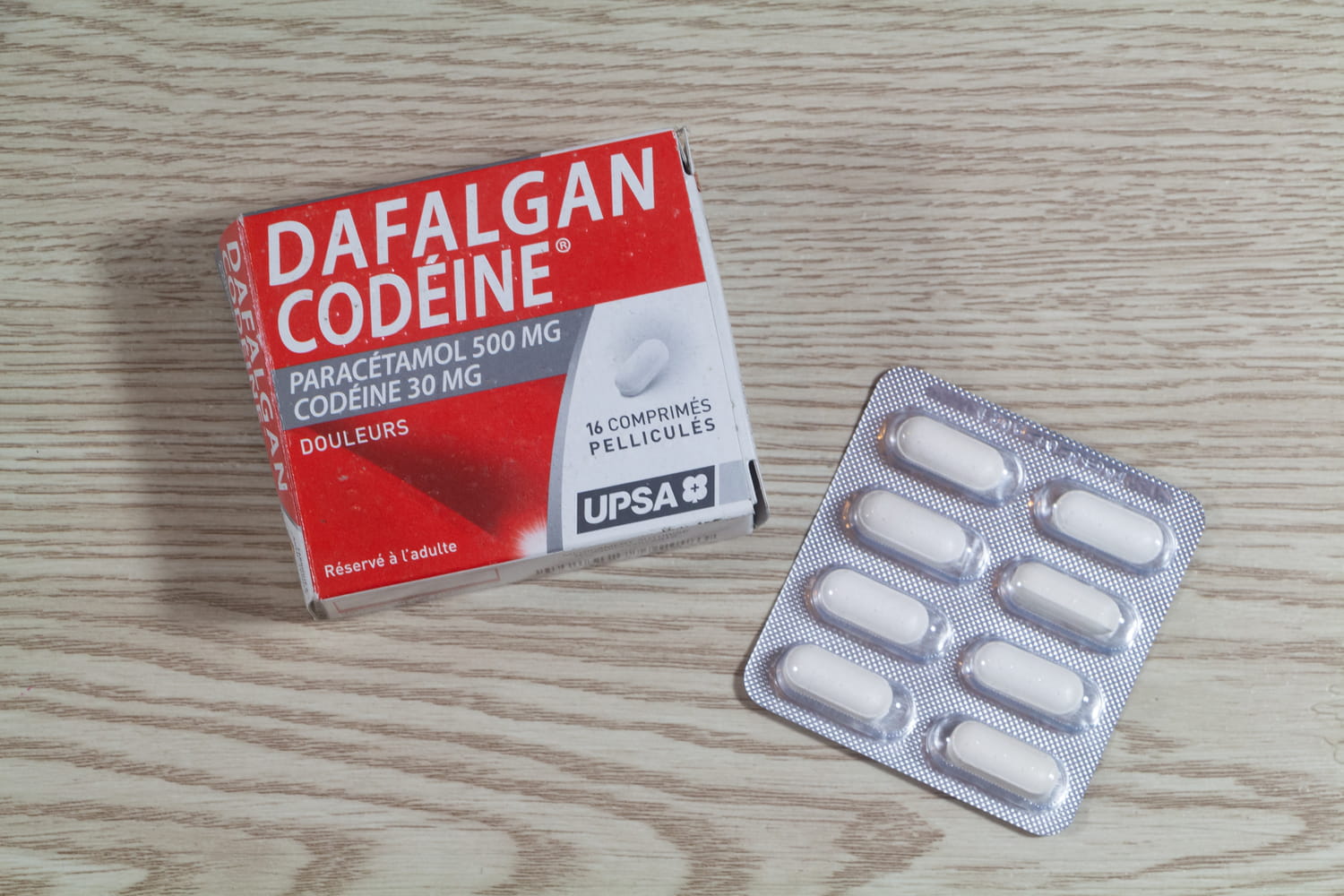
Effective against intense pain, codeinated Dafalgan requires vigilance. Effects, maximum dosage, harms, deliverability: advice from a pharmacist for taking this medication without risk.
In France, pain management experienced a major turning point in 2017 with the ban on over-the-counter medications containing codeine. Dafalgan codeiné® falls within this strict regulatory framework: it is one of the most prescribed level 2 analgesics to compensate for the ineffectiveness of paracetamol alone. Although very common in French pharmacies, its consumption is not trivial. Between the risks of misuse, the increased surveillance of opioids by health authorities and the need for personalized medical monitoring, understanding its mode of action and its limits is essential.
What is codeinated Dafalgan?
Dafalgan codeine® is a level 2 analgesic combining two complementary active ingredients: paracetamol (500 mg) and codeine (30 mg). While paracetamol acts on pain and fever, codeine, transformed into morphine by the body, reinforces the analgesic action to relieve moderate to intense pain that traditional treatments fail to calm.
Indications: when to take codeine Dafalgan?
This medication is reserved for adults and adolescents over 12 years old. It is indicated in the treatment of acute pain which is not relieved by first-level analgesics, such as paracetamol alone or ibuprofen. Due to its composition, its use should be limited to the shortest possible duration (generally 3 days). It is important to note that Dafalgan codeine® is not effective against neuropathic pain (pain linked to nerve damage); the latter require specific care and therefore do not constitute an indication for this treatment.
How much can you take per day?
The dose depends on weight, age and intensity of pain. In all cases, it is imperative to respect an interval of at least 6 hours between each dose. The duration of administration should not exceed 3 days.
| Profile | Dose per dose | Number of tablets per day |
| Teenager (12-15 years old, 31 to 50 kg) | 1 tablet | 4 per day (over 24 hours) |
| Teenagers from 50 kg | 1 to 2 tablets | 6 per day |
| Adult | 1 to 2 tablets | 6 to 8 per day |
Is it available without a prescription?
No. Dafalgan codeine® is a medication listed on List I of poisonous substances, which means that a prescription is necessary to obtain it.
How long does it take for the effects to appear?
The absorption of Dafalgan codeine® in the body is rapid and the maximum concentration of paracetamol and codeine is reached in approximately 60 minutes after taking. The action on the pain is therefore rapid, but it is not permanent. The analgesic effects generally last for 4 to 6 hours. Then, the drug is gradually eliminated by the liver and kidneys (its half-life is approximately 2 to 3 hours), disappearing almost completely from the body in 24 hours after the last dose.
What are the dangers and side effects?
Dafalgan codeine® is an effective but powerful medication. Its use involves risks that it is essential to be aware of. This medicine can be dangerous for the liver, especially in people weighing less than 50 kg, in cases of liver or kidney failure, in cases of chronic alcoholism, malnutrition or severe dehydration and in the elderly. Common side effects of codeine Dafalgan are:
- Constipation: Very common, it can be resistant to traditional laxatives.
- Drowsiness and dizziness: Vigilance may be impaired (pay attention to driving).
- Digestive disorders: Nausea and vomiting.
- Skin reactions: Itching (pruritus) or, more rarely, serious rashes. If a rash appears, stop treatment immediately.
Serious risks:
- Respiratory depression: In large doses, codeine can slow breathing dangerously or even fatally.
- Dependence and Addiction: Prolonged use may lead to physical and psychological dependence. We sometimes observe “tolerance” (the medication seems less effective), which pushes us to increase the doses: it is a dangerous vicious circle.
- Rebound headaches: Paradoxically, overuse of this medication over a long period of time can cause chronic headaches.
In whom is Dafalgan codein contraindicated?
The use of Dafalgan codeiné® is strictly prohibited in the following cases:
- Children under 12 years of age: Risk of unpredictable and fatal opioid toxicity.
- Breastfeeding: Codeine passes into breast milk and can cause respiratory arrest in infants.
- Respiratory problems: Asthma or respiratory failure (even mild).
- Liver diseases: Severe liver failure.
- ENT surgery in minors: Total ban after removal of the tonsils or adenoids (risk of death linked to sleep apnea).
- Specific genetic profile: People known to be “ultra-rapid metabolizers” (their body transforms codeine into morphine too quickly).
- Allergies: Hypersensitivity to paracetamol, codeine or excipients.
- Special cases of effervescent tablets: Contraindicated in cases of phenylketonuria (presence of aspartame) or rare intolerances to sugars (fructose, glucose, sorbitol).
In certain situations, the drug is not prohibited but requires strict medical supervision:
- Addictions and mental health: History of substance abuse (alcohol, drugs) or mental disorders (major depression).
- Epilepsy: Codeine may lower the seizure threshold.
- Elderly: Increased risk of severe constipation, falls and drowsiness.
- Physical fragility: Chronic malnutrition, dehydration, weight less than 50 kg or eating disorders (anorexia, bulimia).
- Specific pathologies: Intracranial hypertension, Gilbert syndrome or G6PD deficiency.
Be careful of combining medications: Never take this medication with other products containing paracetamol or codeine. Exceeding maximum doses (4 g/day of paracetamol and 240 mg/day of codeine) can lead to irreversible destruction of the liver.
What are the risks of an overdose?
The risks of an overdose are Severe poisoning occurs more frequently in the elderly, in young children, in case of liver damage, in case of chronic alcoholism, in case of chronic malnutrition and in case of consumption of enzyme-inducing drugs. Poisoning can sometimes be fatal, including paracetamol overdose. Signs may be: acute depression of the respiratory centers (cyanosis, slowing of breathing), drowsiness, rash, vomiting, pruritus, difficulty speaking, pulmonary edema, slowing of respiratory rate, breathing pauses, miosis, convulsions, facial swelling, urinary retention, anorexia, pallor, malaise, sweating or abdominal pain.
With which medications should you not take Dafalgan codeine?
Taking other treatments at the same time can seriously impair the effectiveness of the medication or cause fatalities.
► The absolute ban: Dafalgan codeine® should never be combined with sodium oxybate (used in certain sleep disorders). This mixture poses a major risk of respiratory depression which can be fatal.
► High-risk mixtures (drowsiness and breathing):
- Alcohol: Avoid any alcoholic beverage or medication containing alcohol.
- Tranquilizers and sleeping pills: Benzodiazepines, barbiturates and their derivatives.
- Other morphine derivatives: Methadone, other opioid analgesics or cough suppressants containing codeine.
► Medications that can make it ineffective:
- Certain antidepressants (Fluoxetine, Paroxetine, Duloxetine, Bupropion).
- Certain antifungals (Terbinafine) or cardiac treatments (Quinidine).
► Other interactions requiring medical advice
- Vitamin K antagonists (blood thinners): Risk of increased bleeding (hemorrhage) in the event of prolonged use of paracetamol.
- Flucloxacillin (Antibiotic): Risk of acid imbalance in the blood (metabolic acidosis).
- Atropinic medications: Increase the risk of severe constipation and blockage of transit (colic akinesia).