You slept well though. You haven’t been idle. And yet, at 3 p.m., you are flat. Concentration at half mast, craving for sugar, irritability on the rise. Thousands of working women experience this scenario every day, and most accept it as inevitable. It’s not one of them.
Energy can’t just be managed with willpower or coffee. It is built, hour by hour, with what you put on your plate. The science is clear: diet and cognitive performance are directly linked. And the good news is that the levers are simple: as long as you know which ones to activate.
The real fuel of the brain: understanding before acting
The brain consumes approximately 20% of the body’s total energy, although it only represents 2% of our mass. His favorite fuel: glucose. But not just any, not just any way.
When you eat fast sugars (such as pastries in the morning, chocolate bar at 11 a.m., soda at lunch, etc.), your blood sugar skyrockets, then drops suddenly. It is this fall which causes the famous “ helm » in the afternoon: sudden fatigue, mental fog, difficulty concentrating. Your body isn’t broken, it’s on a roller coaster.
The objective is therefore simple to formulate, less simple to implement: maintain stable blood sugar levels throughout the day. It is the #1 condition for sustained energy, stable mood and lasting intellectual performance.
The 4 eating mistakes that sabotage your energy
1. Skipping breakfast, or botching it.
After 7 to 9 hours of overnight fasting, your brain needs fuel. Coffee alone is not enough. A breakfast without proteins either. Result: from 10 a.m., concentration falters and hunger takes over.
2. A lunch that is too heavy or too rich in simple carbohydrates.
The classic: white sandwich + fruit juice + sweet dessert. Digestion uses considerable energy, and blood sugar levels which then plummet largely explain post-lunch drowsiness. It’s not a question of quantity, it’s a question of composition.
3. Skip the proteins.
Proteins are essential for the synthesis of neurotransmitters: dopamine and serotonin; which regulate motivation, mood and concentration. A diet too low in protein, common among women who “ eat light“, is one of the most underestimated causes of chronic fatigue.
4. Neglecting hydration.
Dehydration of just 1-2% is enough to measurably reduce cognitive abilities. Headaches at the end of the morning, difficulty formulating ideas, irritability: these signals are often linked to a lack of water, not a lack of sleep.
Foods to put in your camp
No need for a miracle diet or expensive superfoods. A few principles are enough:
Protein, first thing in the morning
Eggs, cottage cheese, Greek yogurt, legumes: they stabilize blood sugar and provide the amino acids necessary for concentration. A protein breakfast reduces morning cravings and improves cognitive alertness.
Good fats
Omega-3 fatty acids present in fatty fish (sardines, mackerel, salmon), nuts, flax seeds; are the brain’s great allies. They promote the fluidity of neuronal membranes and are associated with better memory and a more stable mood.
Magnesium
It is the anti-stress mineral par excellence. It participates in more than 300 enzymatic reactions in the body, including the production of cellular energy. Almonds, dark chocolate over 70%, green vegetables and legumes are good sources. Active women are often deficient.
Fibers
They slow down the absorption of sugars, avoid glycemic peaks and nourish the intestinal microbiota, which we now know to directly influence mood and resistance to stress. Vegetables, whole fruits, whole grains: at every meal, without exception.
A typical day for stable energy
This is what a food day designed for performance could be, without excessive constraints, without sacrifice.
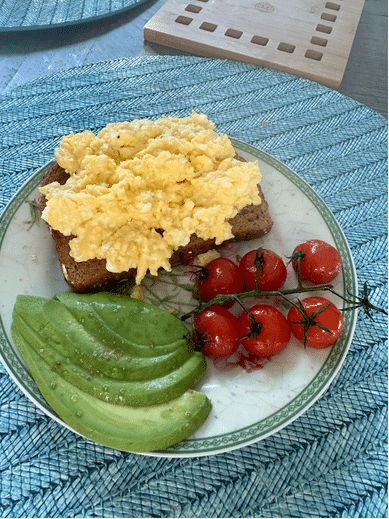
Breakfast : Scrambled eggs or Greek yogurt + fresh fruit + a handful of almonds + unsweetened tea or coffee. Rich in proteins, good fats, low in fast sugars.
Lunch : Protein (fish, legumes, chicken) + abundant cooked or raw vegetables + complex carbohydrates in moderate quantities (quinoa, brown rice, sweet potato). A square of dark chocolate for dessert, no regrets.
Snack 4 p.m. : A handful of nuts + a piece of fruit. No industrial cereal bars, often sweeter than they appear.
Dinner : Light. In the evening, the body does not need a full tank of fuel. Soup, vegetables, light proteins. The more digestible the dinner, the better the sleep, and therefore the recovery.
Water : 1.5 to 2 liters per day, distributed throughout the day, without waiting for thirst.
What if true luxury was eating better?
In a busy schedule, eating well often takes second place to everything else. It is a reflex to be reversed, not out of ideal health, but out of strategic interest. A leader who eats well is a leader who thinks better, who resists stress better, who makes better decisions.
It’s not a question of time. It’s a question of priority.
Start small: a real protein breakfast for a week. Observe. The rest often comes by itself.
Source: ANSES (National Health Security Agency), studies published in Nutritional Neurosciences & Frontiers in Human Neuroscience.