




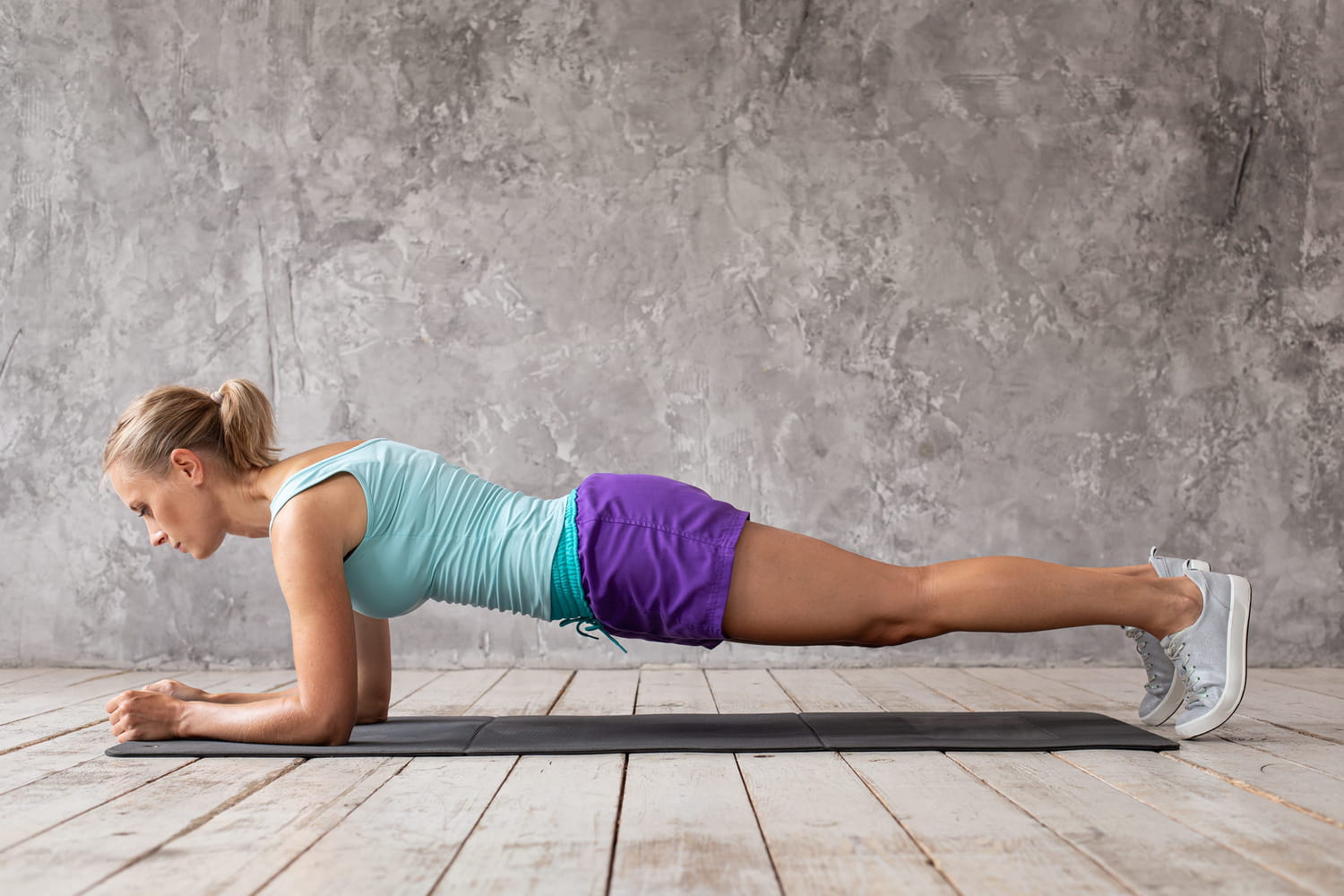
Long presented as the flagship exercise for strengthening the abdominal muscles, the plank is not unanimous. Too static for some, uncomfortable for others, an alternative is more accessible and better tolerated.
The board maintains a solid reputation in gyms and home sports programs. It requires little space, no equipment and is effective in firming up the figure. But in reality, it is not always the best choice. In fact, maintaining the position can tire the shoulders, compress the wrists or accentuate certain lumbar tensions when posture deteriorates. This is often where the exercise loses its interest: as soon as the hips sag or the back compensates, the core becomes less precise.
So many fitness professionals today are looking beyond the classics. Their priority is no longer just to “hold”, but to strengthen the core in situations close to everyday movements. Walking, bending, carrying a bag, climbing stairs or getting up from a chair all require one thing: moving your arms and legs while keeping the center of the body stable. A good abdominal exercise must therefore also work on this coordination.
The coaches also emphasize another point: visible abs are not based solely on a miracle exercise. It takes consistent training, regularity, sleep and a suitable diet. On the other hand, certain movements make it possible to better recruit the deep muscles, those which support the spine and improve posture. As a result, the stomach appears more toned, the waist better defined and the silhouette more harmonious.
Among the muscles targeted, we find the rectus abdominis, often associated with the famous “six pack”, but also the transverse, this deep muscle which acts like a natural belt. The obliques also participate in the work, as do the muscles of the lower back and those located around the pelvis. This set plays a major role in general stability. When it is strengthened, we move better, we force less on certain areas and we control our support more, which also facilitates the practice of other physical activities favorable to slimming.
Compared to the board, the most often cited alternative therefore ticks several boxes: it works the abs in depth, is more gentle on the wrists, is well suited to beginners and remains relevant for experienced athletes. It is also appreciated by Pilates enthusiasts, who see it as an excellent way to strengthen the center of the body without increasing the impacts. This exercise is the dead bug. It is practiced lying on your back, legs raised to 90 degrees and arms extended towards the ceiling, then consists of simultaneously extending one arm and the opposite leg while keeping the abs engaged and the lower back in contact with the ground.
The movement is done slowly, side by side. Three sets of 10 to 15 repetitions per side provide an effective base. Once the technique is acquired, it is possible to add small dumbbells or ankle weights. Less spectacular than a timed plank, the dead bug above all responds to what many coaches are looking for today: a firmer stomach, a better held waist, a more stable body and an exercise that we want to do again tomorrow.
Note that frequency also matters. Specialists point out that a low-traumatic movement can be integrated several times a week, or even daily depending on the level and total volume of training. A few well-executed sets are often better than a long, rough session.