




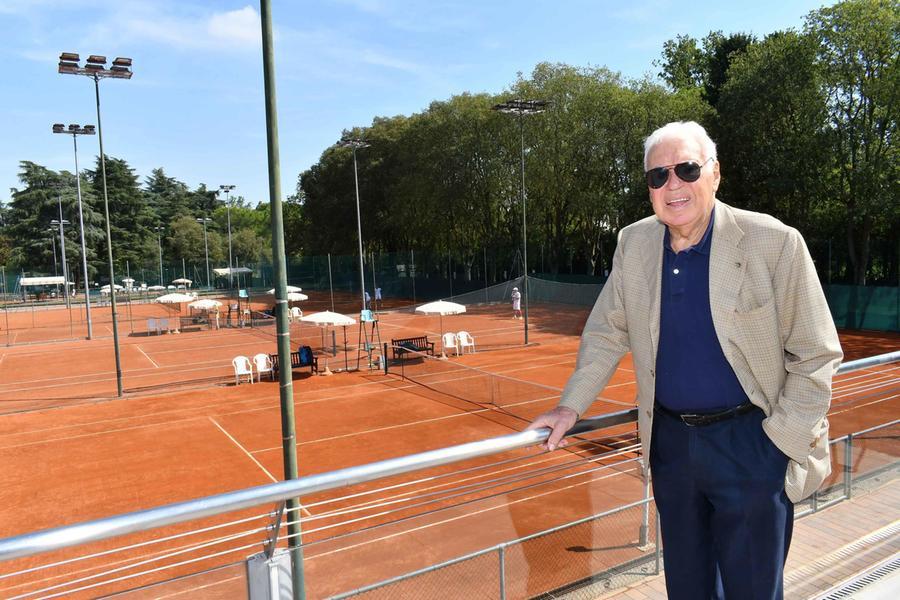
It was a Nicola Pietrangeli was another man, in and out of tennis, and he did nothing to hide it. He had never missed the stands for almost half a century at the most important events of the open era, but he remained a player of the previous era: he remained a man of white gestures, of red clay, of wooden frames, but also of amateur tennis in which no money was made in broad daylight, but which could only be accessed if born with a shirt. He told Domenico Procacci, for the documentary Una Squad, that he went to see the discus thrower Adolfo Consolini at the 1960 Rome Olympics with the letter of a professional contract in his pocket and that he returned home to tell his father, who was pressing: “Sorry, I can’t do it.”.
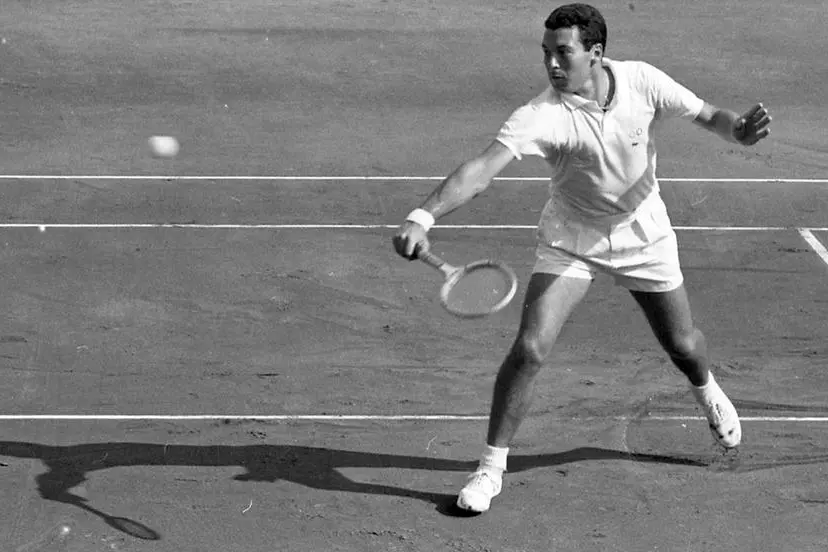
For this reason he did not and could not have understood the calculations that Sinner and Musetti made, perhaps without ever having accepted that tennis had changed a lot.
It is true that his loyalty to amateurism had something to do with the fact that the professionalism of the time would have meant renouncing Davis forever, which at the time was more useful in going down in history than now, and the Grand Slam tournaments, but it also had to do, as he admitted in Nicola VS Pietrangeli, that other matter that even bargaining for 100 dollars a game, all things considered: “To earn money you would have had to play almost every day and a hard worker like me didn’t accept it”. And he smiled as he said it, slyly and self-deprecatingly, implicitly agreeing with his friend Gianni Clerici, who on the day of his triumph against Rod Laver at the 1961 Italian Internazionali, celebrating his success, attacked like this: «Nicola complains to me, his hagiographer, because I write that he is fat: I tell him all the good in the world, but then I add that he is a lazy person». Today’s pro tennis would no longer allow it: it’s covered in gold, it’s true, but it requires incomparable consistency, just as the speed and athleticism are incomparable.
In the “vs” which means “against” the title, there is perhaps more than in everything else the essence of a man who was a little pleased with being “against” the direction of the wood, with not supporting it. Only his father ended up supporting him when he guided him, gently but firmly, towards tennis, an elite sport, taking him away from his beloved football. He later said that as a player he had trained his legs by continuing to play football, secretly from his father figure: in this he contrasted himself with Adriano Panatta, with whom he had a controversial relationship, a turbulent love/hate, originating in the never digested defeat at the 1970 Assoluti.
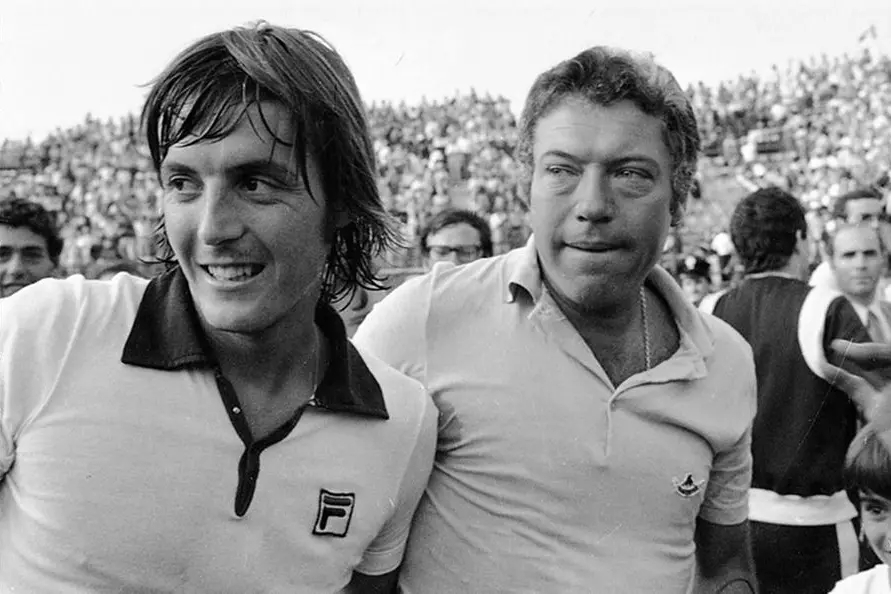
He said of Adriano: «He was an amazing talent, more than me, but less strong than me», (and he criticized his “little legs”) and then he put the numbers of the results on the table, so that it was seen that he had won more than the national Adriano, his player in Chile when Pietrangeli was non-playing captain of the Davis team won (Panatta, Barazzutti, Bertolucci and Zugarelli) in Santiago 1976, in which he was able to lead a team to success disharmonious and torn but still a legend, and a funny legend, now that Panatta and Bertolucci comment on TV, and authoritative if it is true that Barazzutti contributed to Lorenzo Musetti’s latest leap in growth, now firmly in the top ten. That victory was legendary, but the participation was controversial: there was an air of boycott against Pinochet’s Chile, Pietrangeli was in favor of playing, there was pressure from politics not to do so. He told of a somewhat trap interview in which he was paired with the Intillimani, who were against participation. About the red shirt – which Panatta had wanted without saying too clearly how much it was superstition because in that colour, the same as that of the mothers of the disappeared, Paris had won – and how much a mockery of the Chilean regime, Pierangeli claimed that he had not known about it, that he had never been involved in politics. Glissando said: I could be a monarchist, the Queen of England is a beautiful woman.
In the last period Pietrangeli had gained the reputation of being the “rosicone”, because, while admitting the fact that Jannik Sinner was now burning all the records, perhaps he was playing a bit at competing with him on the level of history, letting it be understood between the lines that deep down he was a little displeased at being overtaken as number one in Italian tennis, how much he really suffered from it and how much he played around a bit, playing at pretending that, because that’s what they now expected from Nicola Pietrangeli every time he they teased him. It was true that he had actually beaten the history of tennis in the person of the Australian Rod Laver, the only one to have won the Grand Slam several times, as an amateur and as a professional, on the court in the final in Rome in 1961. He has so far been the only Italian tennis player entered into the World Tennis Hall of Fame, the other was Gianni Clerici, but for the merits of tennis as told.
He was born in Tunis, to a father from Abruzzo (a Scrooge McDuck called him) and a Russian mother, on 11 September 1933, where his father had built a tennis court. Having arrived in Italy in 1946, he spoke only French and Russian, which gave him a snobbish air that he played with all his life, despite having lost the French “r”. For a very long season he had been, even in doubles paired with Sirola, the best tennis player in the history of Italian tennis at least until the terrible guys of today arrived to burn all the records. World record holder in the Davis Cup for matches played (164), matches won in singles (78-32) and doubles (42-12) and the first Italian to win a Slam tournament, Paris 1959 and 1960, Nicola Pietrangeli was in the news, for his backhand, for his elegance, for his loves, even if he always said that the playboy fame was glued to him by the magazines, exaggerating a little: «I only had four important women: Susanna (the mother of his three children), Lorenza, Licia (his most famous story) and Paola. And all four left me…”. Of her friend Virna Lisi she said: «Are we joking? There was Pisces (the husband) who not only was big and strong and would have beaten me, but who was one of my true friends, I would never have dared.”
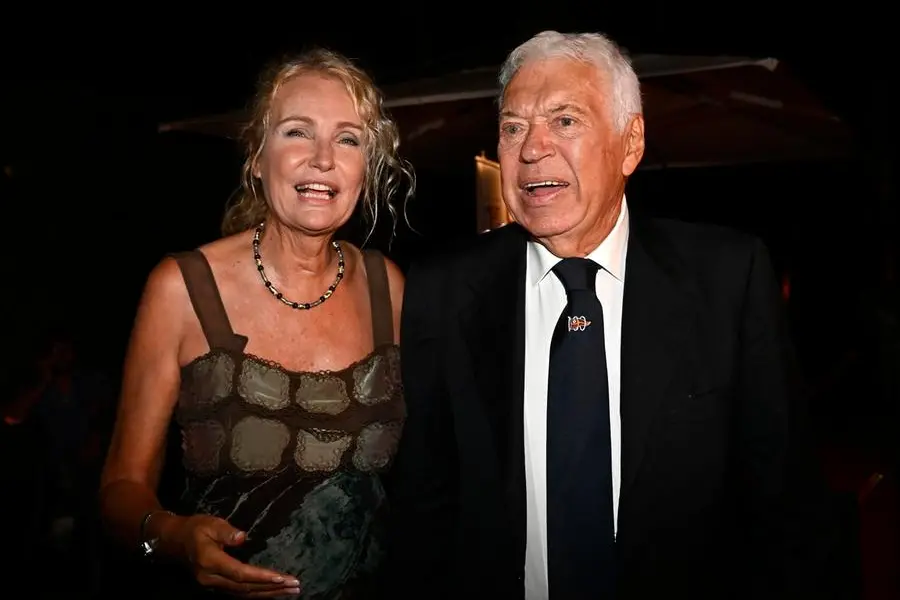
She was there at the finals a year ago in Turin, last year’s Davis raised it with the team, just before that Lea Pericoli, a lifelong friend, had passed away, but last July Pietrangeli had lost her youngest son Giorgio at the age of 59, a move that she considered against nature. Maybe it was the beginning of the end.
The funeral home will be at the Foro Italico, the symbolic place of Italian tennis, where he would have wanted his final farewell. It is no coincidence that there is a field named after him during his lifetime, something that can only happen to legends.