





«Sammy, look, if you ask Jesus to heal you, he can do it». His mother told him this every now and then, Laura, when he was very little. It was the instinctive, almost desperate way in which a parent tries to hold on to something when they see their child dealing with an illness he can’t fight. And he, very seriously, looked at her and replied: «No, mom. Because if Jesus made me like this, it means that he wants me like this. He probably has a plan for me.” He was about five years old. Too few to utter such words, especially if no one had ever taught them to them. At the Basso house there has always been space for faith: the sacraments, the catechism, Mass every Sunday, the official holidays. «We have always been believers, but not bigots», Laura is keen to point out.
Sammy Basso, who passed away in 2024 at the age of 28, was the best-known face in the world of progeria, the very rare genetic disease that causes premature aging.
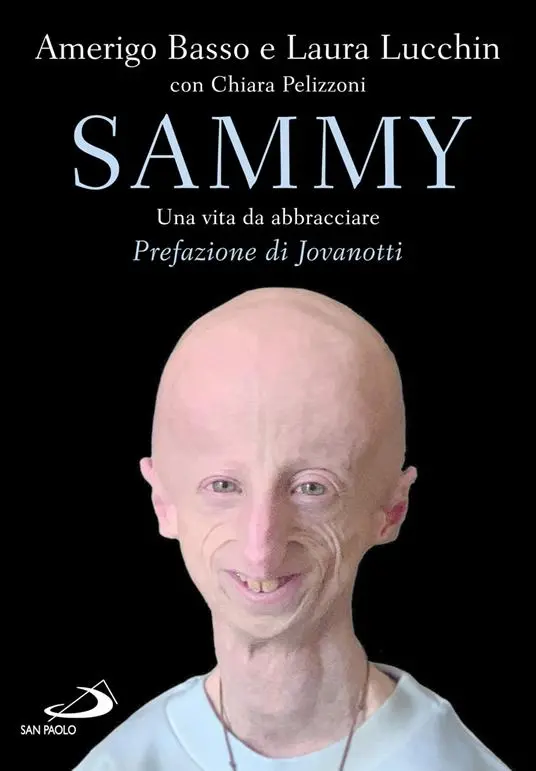
Researcher, popularizer, founder of the Italian Progeria Association, with two degrees – in Natural Sciences and in Molecular Biology – he collaborated with international research centers and personally carried out various projects related to the study of the disease. Projects that his parents and friends are carrying out today, whose voices, in various letters, have been collected in the book Sammy – A life to embrace (San Paolo) that Laura and Amerigo wrote together with the journalist from Christian family Chiara Pelizzoni and who sees Jovanotti’s preface (full text here).
A son, first of all
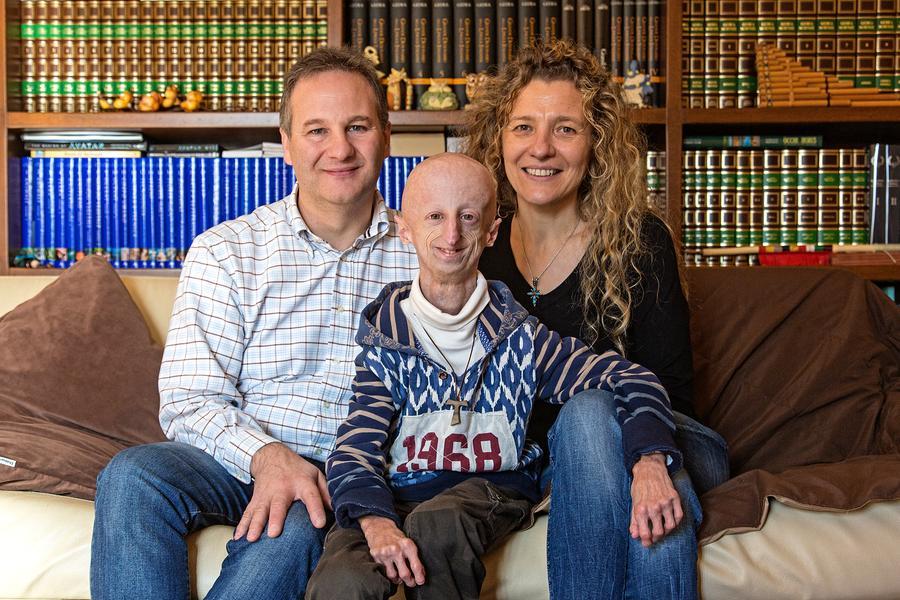
But far from conferences and audiences around the world, within the walls of home Sammy was first and foremost a son. And that’s where his relationship with God began to reveal itself in a surprising way. What had struck his parents, Laura and Amerigo, was not only that response given as a child. It was the fact that, as he grew up, Sammy continued to amaze them with his way of living his faith. “It was his thing,” they say. “We don’t know where it came from.” One day, the bishop arrived in the parish to bless the families who had a sick person in their home, and they were there too. «On the way back he asked us: “But why did you take me there?”. We told him: “You know, a blessing is always good, you never know…”. His response was: “It doesn’t help me”. Words that, spoken by an adult, would have seemed presumptuous, but which, spoken by a child, simply left one disconcerted. Sammy did everything that children of Catholic families usually do: catechism, summer camps, the very young… Yet, his faith went far beyond what he had learned: it was something that seemed to come from within him.
The crisis and the choice
A very personal dimension which, however, at a certain point breaks down. At the age of 11, Sammy was asked to participate in a clinical trial: the testing of a drug never tested before on patients with progeria. He is still a child, but a thought takes shape in his mind that shocks everyone: “He was afraid that that drug might go against God’s will,” his parents say. “He told us: ‘Jesus made me like this. What if, by taking this drug, I go against his will?'”. It is the beginning of a profound crisis. For over a year Sammy studies incessantly, spending day and night on books. He doesn’t just ask questions: he searches for answers. He delves into the most important religions, reads the Koran, becomes very close to Judaism, studies Buddhism. He speaks with priests, but also with the scholars who have followed him for years. Until he reaches a conclusion that becomes very clear to him: «The Lord uses the hands of researchers». It is at that moment that Sammy consciously decides to be a Catholic Christian. Not by family tradition, but by choice. At the age of 12 he began the process of scientific experimentation which will allow him to greatly exceed the average life expectancy for those suffering from progeria.
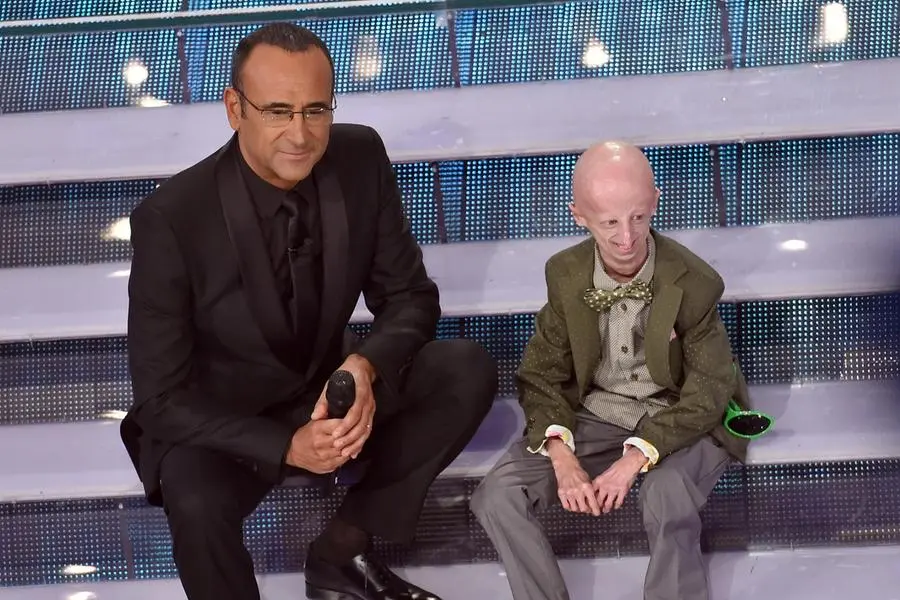
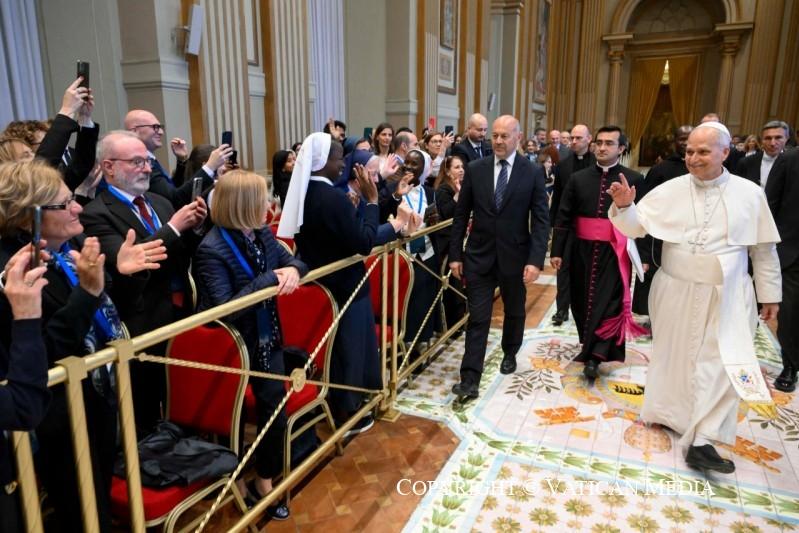
Carlo Conti with Sammy Basso guest at the 2015 Sanremo Festival
(HANDLE)
Together with God
From that moment on, there are no more doubts for Sammy. What he had always felt inside himself enters naturally into everyday life: every morning he sets an alarm on his phone that reminds him to read the Gospel of the day and listen to Pope Francis’ reflections through an app. It’s an appointment that never skips. When he leaves home, however, in his bag he always carries with him a small Bible and the Zohar, one of the fundamental texts of Jewish mysticism: «He drew from one and the other. He also felt very close to Judaism”, say Laura and Amerigo, “he said that the roots start from there”.
Even Mass was an experience for Sammy: “We followed the ritual,” admits his mother. «He, however, lived it. You could see him clearly: at certain moments it was as if he was no longer there with us, he seemed to be elsewhere.”
Among the figures he felt closest to was Saint Francis. It all started during a parish summer camp, where the theme was the saint of Assisi. At the end of the camp all the kids are given the Franciscan Tau and from that day Sammy will never take it off his neck again. Del Poverello loved simplicity, the relationship with Creation, respect for every form of life. “A fly would never have killed her,” her parents recall. “He took her gently and took her out into the garden.” And that closeness becomes even stronger a few years later, when a fifty-year-old friend of his confided to him: “I feel that Assisi is calling me… But I feel that you have to come with me.” Sammy doesn’t hesitate for a moment: “We’re leaving.” And they really leave.
Learning to look
«The first thing Sammy taught me», says Laura, «It was about looking at people differently, without stopping at appearances». Seeing him live his faith so deeply also raises many questions in them: «With such a debilitating illness, despite everything he went through, he had enormous faith. And we often asked ourselves: but how do we do it?”. After his death, that question comes back forcefully. Laura doesn’t hide that she went through a difficult period: “I was very angry with God, I admit it.” Then, however, something changes. “After what Sammy left written, after what he taught us, I could no longer be.” Today that dialogue with God is different: «I talk to Him like I talked to Sammy. Even raising your voice. I vent, I argue. But I always talk to him.”
The simplest inheritance
Rereading the words of Sammy’s “will”, Laura and Amerigo realize that, after all, he had already explained everything in those lines. He wrote that he faced death as a Christian, not because he was ready to die, but because he had prepared to do so. He hoped he had managed to welcome her according to the teachings of Saint Francis: like a sister. And he asked his loved ones something surprisingly simple: not to stop living. Crying, yes. But also going out, being together and laughing. The same way Sammy had lived since he was little.