


Every December, a well-known celestial phenomenon occurs and announces the entry into winter: the winter solstice. But what exactly does it mean and when does it take place? Here’s what you need to remember about this event.
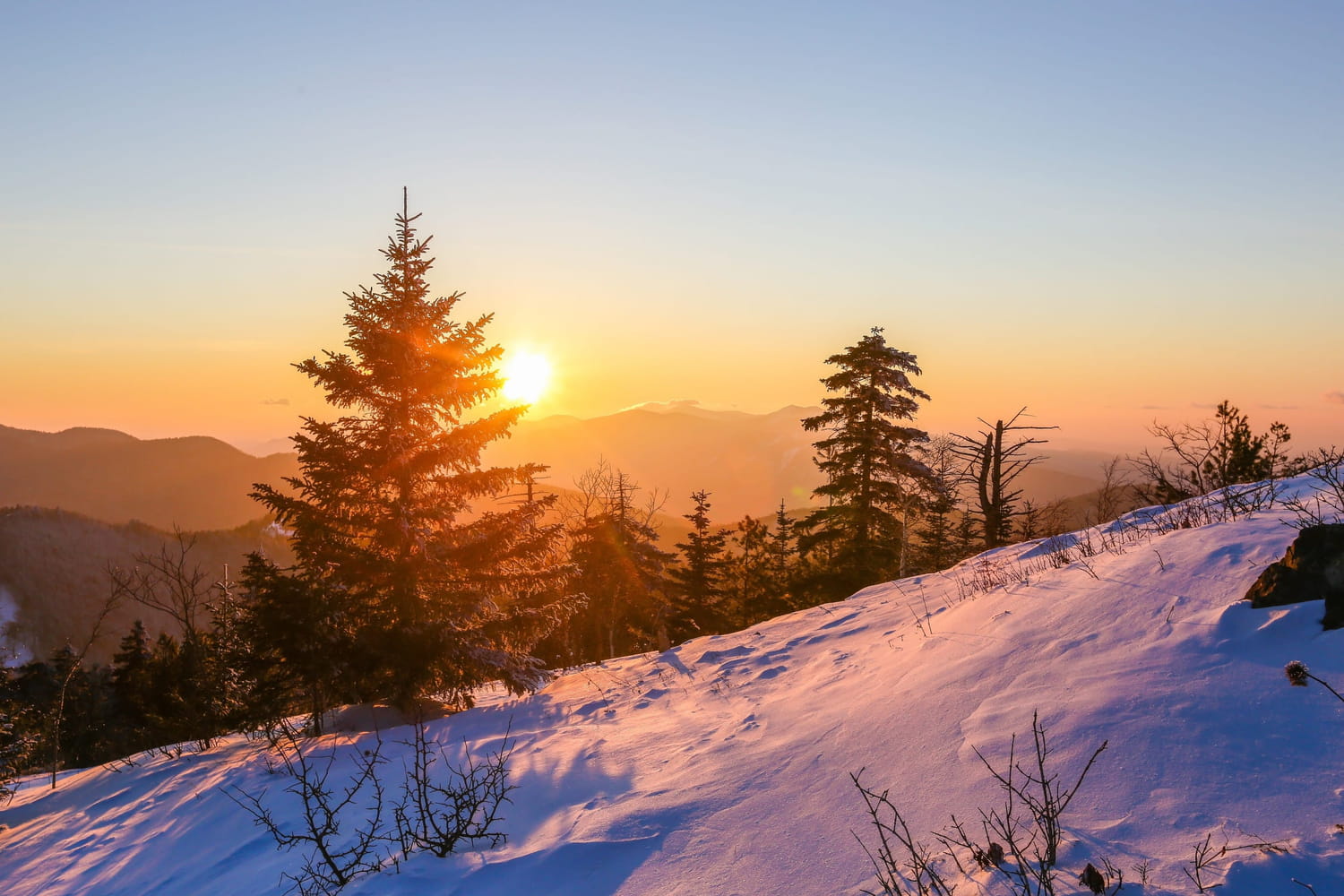
In December, there is a rather particular astronomical phenomenon that occurs beyond our atmosphere: the winter solstice. It is linked to the position of the Earth in relation to the Sun. Clearly, it marks the transition from autumn to winter, and corresponds to the shortest day of the year.
When is the winter solstice in 2025?
According to data from the Institute of Celestial Mechanics and Ephemeris Calculation (IMCCE) of the Paris Observatory, the 2025 winter solstice will be held on Sunday, December 21, at precisely 4:03:01 p.m. (Paris time), as indicated in the organization’s annual calendar. Autumn will therefore have lasted this year 89 days 20 h 43 min and 44.60 sec. The solstice generally takes place on December 21, although in some years it can exceptionally occur on December 20 or 22, or even, even more rarely, on December 23.
What is the winter solstice?
This phenomenon marks not only the longest night, but also the shortest day of the year. Night stretches for 16 hours, leaving only 8 hours of “daylight”. In France, the winter solstice occurs when “the Earth is tilted so that the northern hemisphere is away from the Sun” and therefore benefits from less light, explains Mathilde Gaunel, researcher at the Paris Observatory, in an interview with GEO. She also specifies that “our winter solstice also corresponds to the summer solstice in the south, which explains that in the north, when it is winter, in the south, it is summer.” Here is a diagram to help you see what is happening, with the winter solstice shown on the right:
What are the rituals associated with the winter solstice?
In some cultures, it was customary to celebrate the winter solstice around rituals. Formerly, it was a pagan festival marking the cycle of the seasons, like the Yule festival among the Germanic peoples. But, with the advent of Christianity, these rituals were mostly replaced by Christmas, celebrating the birth of Jesus. Today, some communities continue this tradition by lighting candles, exchanging homemade gifts and creating fires and plant wreaths.
What is the difference between the solstice and the equinox?
Contrary to what one might think – because they are both linked to the inclination of the Earth around the Sun – the solstice and the equinox are two very distinct astronomical events. Because of this tilt, the sun’s rays reach the hemispheres at varying angles, causing the seasons to cycle. The equinox occurs when day and night have the same length, while the solstice marks, in winter, the shortest day of the year, and in summer, the longest day.