


Wars don’t come to our homes just with the sound of bombs. Sometimes they come in silencewith a clause changed by a London or New York insurer. That’s where the Hormuz crisis it stops being a business for analysts and becomes a family affair: the first blow to the domestic budget is not the missile, it is the risk premium.
It seems like a technical topic. Actually it’s one of the most human things there is. Insurance is, after all, a cold form of solidarity: many pay little so that a few, if struck by bad luck, do not lose everything. When this network holds, world trade works almost without us realizing it. But when it tears, we discover that peace is not just the absence of war: it is also the possibility of trusting that a ship leaves, arrives, unloads, and that someone is willing to cover the risk.
This is why the story of maritime policies is more interesting than the usual story about high oil prices. The Strait of Hormuz may also remain formally openbut if its crossing becomes too dangerous or too expensive to insure, the economic result changes little. The sea closes first in contracts and then in the waters. Before scarcity comes doubt. Before the embargo comes uninsurability.
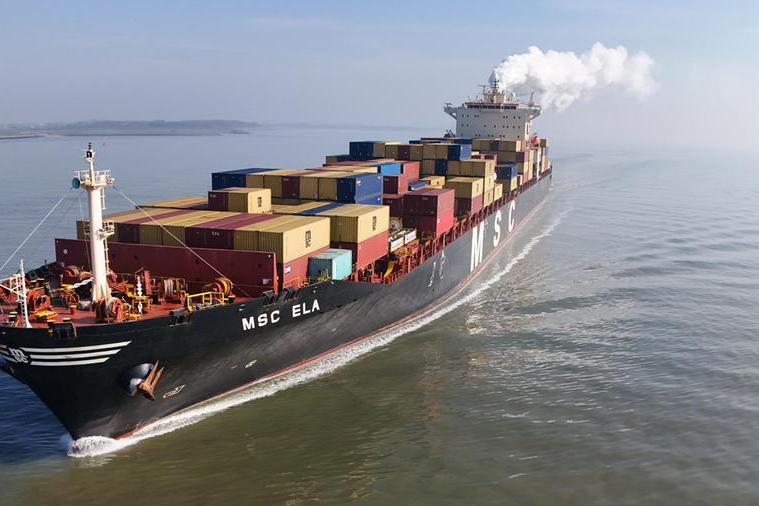
In recent days, war risk insurance premiums for ships in the Gulf area have risen by more than 1,000 percent in some cases. For a large tanker, what used to cost a fraction of the value of the vessel it can turn into millions of dollars for just one trip. And it’s not just an insider figure. It is a cost that spreads: on crude oil, on gas, on fertilizers, on transport, on plastic objects, on agricultural prices, up to the accounts of those who shop. War, in the economy, often does not enter by immediately destroying things: enter by making fear pay more dearly.
Here a paradox appears that it deserves to be better explained in the public debate. We often talk about the market as an autonomous machine, capable of regulating the world’s exchanges on its own. But when the risk exceeds a certain thresholdthe market retreats and asks for protection. It is no coincidence that the United States has announced public reinsurance of up to approximately 20 billion dollars for trade in the Gulf. Reinsurance, simply put, is the insurance of insurance. It is useful when damage is possible it is so big that it scares even those who sell protection by profession. It is a technical detail only in appearance. In reality it is a political confession: when the war escalates, the free market also demands the State.
And perhaps this is precisely the most original truth of Hormuz. We’re not just seeing conflict between armies or a surge in oil prices. We are seeing the moral fragility of globalization. Goods travel the planet not because the world is naturally ordered, but because there is an invisible infrastructure of law, guarantees, navies, contracts, awards, arbitrations, coverages. In a word: trust. When trust breaks down, the price doesn’t hit the big systems first; it affects ordinary lives first.
This is why peace today is not an abstract discourse. It is an item in the family budget. If the conflict drags on, fuel prices rise, rates stiffen, transport becomes more expensive and new inflation occurs. The International Monetary Fund has already warned of a 10 percent increase in oil maintained for most of the year can add around 0.4 points to global inflation. Translated: what appears far away comes close, and what seems like geopolitics becomes a bill.
There is then an almost spiritual lesson not to be missed. Coexistence is not defended only in great summits or on military maps. It also defends itself in those anonymous forms of cooperation that no one celebrates: an insured ship, a protected maritime corridor, a contract honored, a premium that remains payable. Peace, before being an ideal, is a minute practice of the possible. The war breaks it right there, where no one is looking. And by the time we realize it, it has often already entered the kitchen.