






No need to be an expert.
This is the first major celestial meeting of 2026. The most giant planet in the Solar System, Jupiter, is about to offer us a beautiful show. Imagine a white spotlight, intense and perfectly calm, suspended among the stars. This month, Jupiter reaches what astronomers call “opposition.” Concretely, the Earth slips exactly between the Sun and Jupiter. The giant planet then finds itself fully illuminated by the Sun, like a Full Moon, which makes it incredibly bright.
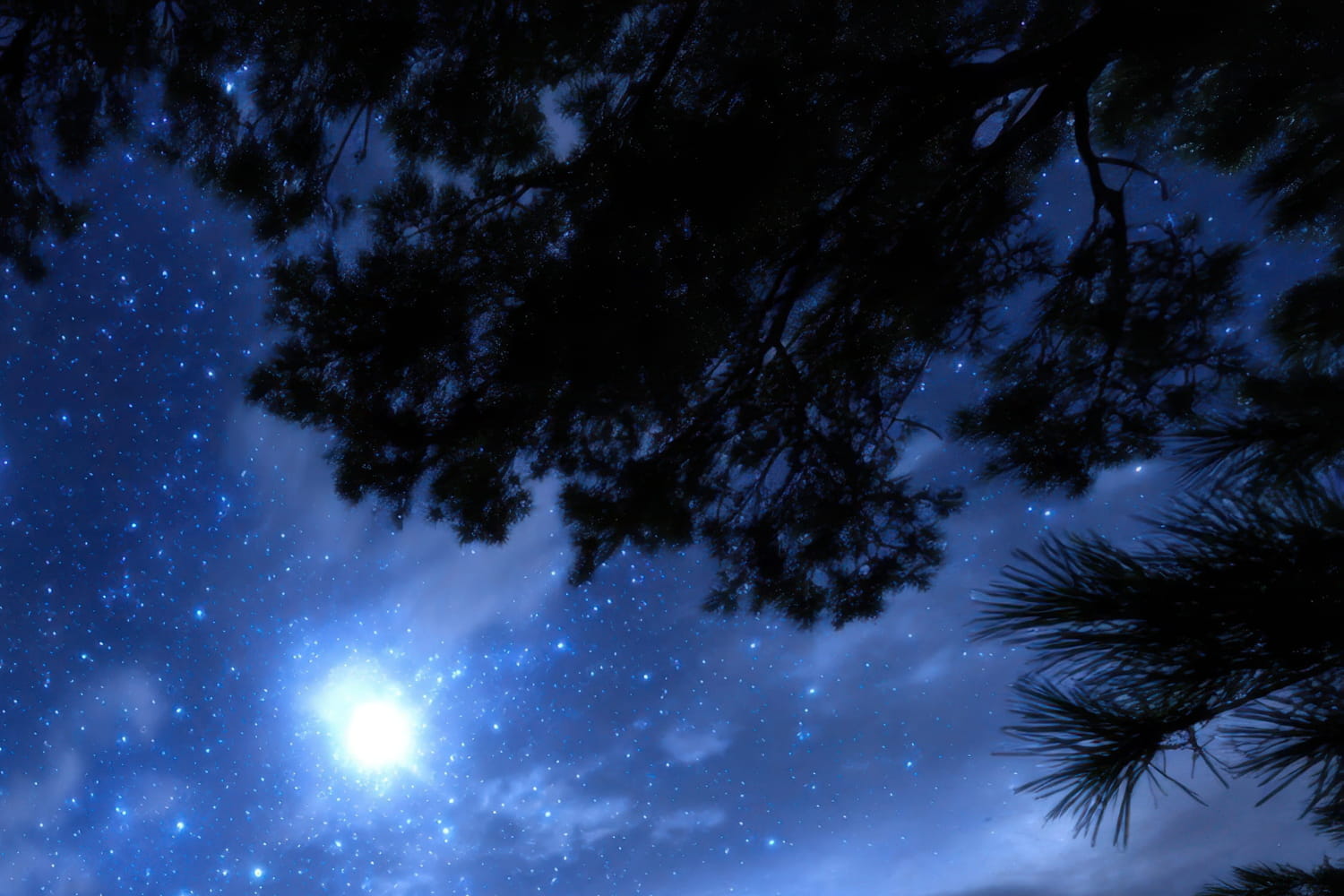
It is during the night of January 9 to 10 that the show will be at its peak. During this period, the planet will be visible for 14 hours straight. It will rise when the Sun sets, between 5:10 p.m. on Friday and 7:10 a.m. on Saturday. No need for an instrument to observe it. It will be enough to look with the naked eye towards the East as soon as night falls. You will see a very bright and, above all, fixed white point. Unlike stars, which twinkle due to atmospheric turbulence, planets emit stable light. It will rise very high in the sky (around 70° altitude), which is ideal for avoiding the mists of the horizon. Although Jupiter is bright enough to be seen in the city, a dark park or garden without streetlights improves the contrast of observations.
If you have a pair of binoculars, attach them to a tripod or lean against a wall to stabilize the image. Jupiter will no longer be a point, but a tiny luminous disk. As a bonus: you will see 1 to 4 small dots lined up around it. These are the Galilean moons: Io, Europa, Ganymede and Callisto. From hour to hour, their position changes. To enjoy this celestial spectacle even better, let your instrument “cool down”: take out your binoculars at least 30 minutes before the observation so that they come to the outside temperature. This avoids blurry images.
Whether you are alone on your balcony or with your family in a garden, take a moment to contemplate this gas giant. Observing Jupiter during its opposition is like experiencing spatial vertigo: you are looking at a world eleven times larger than ours, located more than 600 million kilometers away, but whose light travels to your eyes with striking clarity.
If you miss the peak on January 10, don’t panic: the planet will remain exceptionally bright throughout the month. It will be a little less visible than during the peak, but still very beautiful to look at or photograph.