






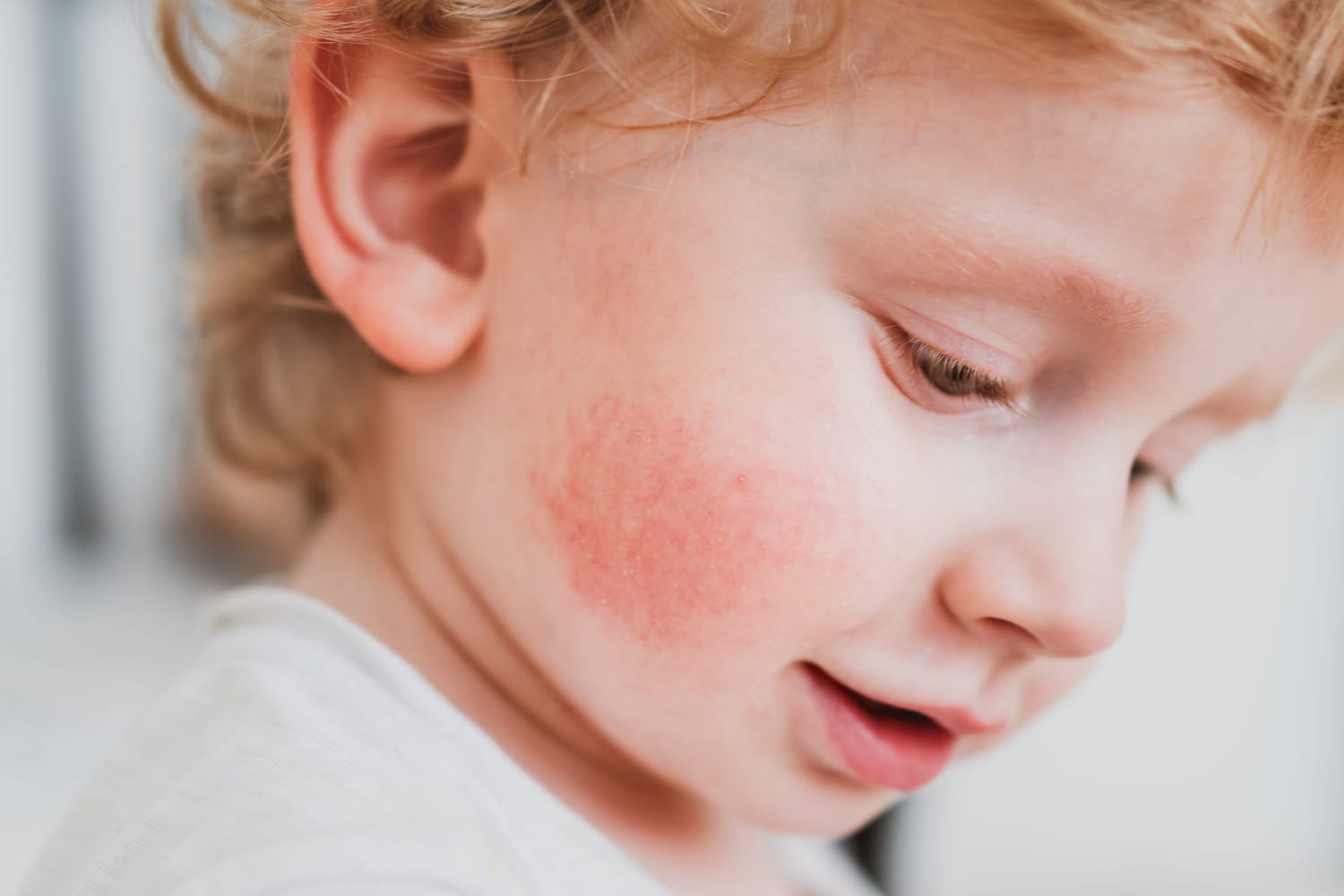
White, dry spots on the face or body? They might be darters. Causes, symptoms, treatments: everything you need to know about this benign skin condition.
Scabs, also medically called “achromic eczematis” or “pityriasis alba”, are a type of plaque that mainly affects the face of children and appears as small round spots, pink or whitish, on the skin. To the touch, they give a feeling of dryness and may have fine scales. How to recognize them? What creams should I put on them to treat them? What are the causes of scathes?
Why are spurts common in babies?
Darts mainly affect children between 3 and 16 years old, and are rarer in adults. Their frequency among young people is explained by the immaturity of their sebaceous glands before puberty, which makes their skin naturally drier. This condition occurs especially in winter, favored by the cold and dryness of the air, particularly in people with dry or sensitive skin.
Scabs appear in the form of small round or oval patches, pink or slightly red at first, which gradually become white (this discoloration is more visible on dark skin, especially after exposure to the sun). These plaques, which generally measure between 0.5 and 2 cm, have a dry and slightly rough appearance to the touch: the skin comes off in thin films. Itching is rare and, when it exists, remains mild. These spots appear most often on the face: forehead, cheeks, chin and around the mouth. But they can also affect the arms, torso, shoulders or back. They are more visible and numerous in winter, because of the cold and the heating which dries the skin more. Questioning and clinical examination by the attending physician or dermatologist are sufficient to make the diagnosis of scab. No additional examination is necessary, unless in doubt with other skin conditions such as eczema, vitiligo or mycosis.
What are the causes of scathes?
Scabs generally appear on dry skin. Their exact origin remains poorly understood, but they are linked to inflammation of the skin. Other causes are possible such as improper use of cream containing corticosteroids, which are particularly drying, baths or showers that are too hot and frequent, the use of aggressive soaps, humidity, stimulants (tobacco, alcohol, coffee), emotional shock or even pregnancy in adult women.
Are stingers contagious?
Darts are not contagious. Their development is favored by several external factors which will dry out the skin and therefore create a favorable environment: the cold and the wind in particular. People who naturally have dry or reactive skin are more predisposed to it but cannot pass the condition on to anyone else.
How long does it last?
Regular hydration is often enough to make the scathes disappear within a few weeks. The spots generally disappear spontaneously within a few weeks to a few months, but complete repigmentation can take longer, sometimes several months, especially if the skin has been exposed to the sun. It is essential to apply a high protection sunscreen to the spots in case of exposure to avoid depigmentation of the spots, which makes the spots more visible.
The basis of the treatment is daily hydration of the skin with an emollient moisturizing cream. Prefer lukewarm, short showers, rich or soap-free bars to wash the face and body and dry the skin by dabbing rather than rubbing. If the initial lesion is more marked, we can use either copper and zinc-based creams available over the counter in pharmacies, or, in the case of a frankly red and inflammatory lesion, a topical corticosteroid of weak to moderate activity over a short period of time (generally 5 to 7 days maximum). More rarely, antifungals or antibiotics are indicated when the lesions risk becoming superinfected by scratching.
What creams treat scathes?
Emollient and moisturizing creams (first intention): Health professionals particularly recommend cold cream-based creams, lipid-replenishing balms (shea butter, glycerin, ceramides) or emollients for atopic skin. Application must be daily, ideally twice a day, even after the plaques have disappeared to avoid recurrence.
Copper-zinc creams (if the scabs persist): When hydration is not enough, pharmacists recommend copper-zinc creams with healing and soothing properties, available without a prescription: Cicalfate® (Avène), Cicaplast Baume B5® (La Roche-Posay) or Cicabio Crème® (Bioderma). These products are validated for their effectiveness on small skin lesions.
Mild topical corticosteroids (only by prescription): In the case of very inflammatory plaques, the doctor may prescribe a cortisone cream, to be used for a short period. Caution is always required with the application of cortisone in children.
Products to avoid: Avoid prolonged use of topical corticosteroids without medical advice (risk of worsening depigmentation), perfumed creams or creams containing alcohol, and remedies that are not scientifically validated. If in doubt, ask your pharmacist for advice.
What natural products can be used to treat scathes?
Among the natural solutions to soothe sore spots, aloe vera is recognized for its moisturizing, anti-infectious, soothing and healing properties. It can help limit scabs, after seeking medical advice (there is always a risk of allergy, try on a small area of skin and if in doubt, ask a pharmacist). Massages with argan, calendula, sweet almond or avocado oil can limit the formation of crusts. If symptoms persist, consult a doctor.