


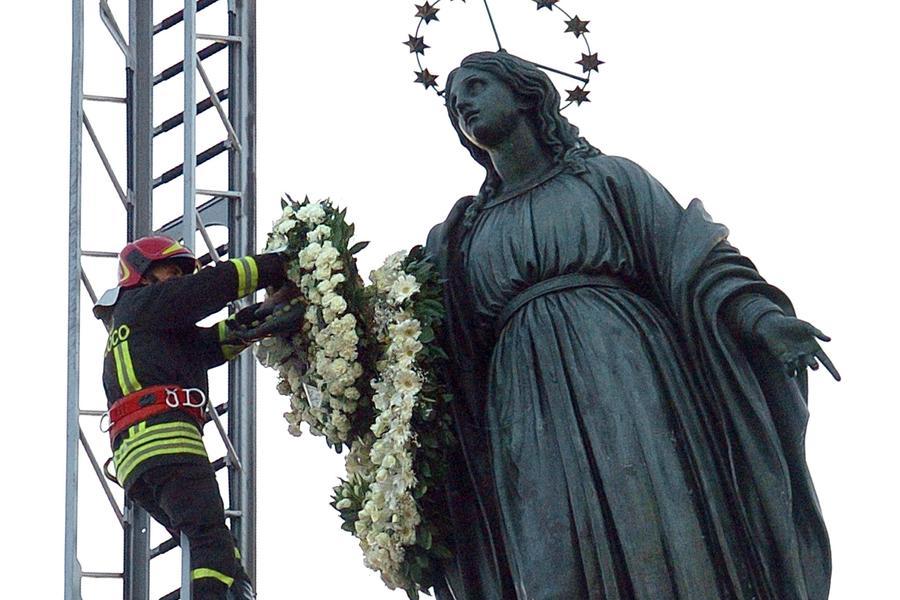
In today’s Gospel page which is the backdrop to the Feast of the Immaculate Conception there is a detail that can become the key to understanding everything: the angel enters a house, not a temple. Enter the room of a girl unknown to the world, in a marginal village, on a day that apparently had nothing special. That’s where God decides to change history. It is there that eternity knocks on the door of everyday life. And Mary teaches us that holiness always begins like this: not when we plan, but when we allow ourselves to be surprised by Him. On the feast of the Immaculate Conception we could fall into the trap of imagining we are only celebrating Mary’s immaculate perfection and living this day only with the eyes of admiration, but what is striking is her full availability. Being immaculate does not mean being without problems, but being without that subtle “no” that we oppose to God every day driven by the suggestions of evil. Mary is the yes without reservations, the yes that asks for no guarantees, the yes that welcomes even what it doesn’t understand. Maria is the most free. Free to trust, free to surrender, free to let God make room in her life. The joy to which the angel invites her does not come when everything goes well, but when you discover that God is with you. This is what dissolves fear. Maria is upset, yes, but she doesn’t back down. Question, listen, reflect. And in the end he says what each of us should say every morning: “Let it be done to me according to your word”. It’s not about resigning yourself to a script written by someone else. It’s courage. It is believing that God’s will takes nothing away, but accomplishes everything. In the Immaculate Conception we celebrate the miracle of a girl who allowed God to be God. We ask Mary not to make us impeccable, but to make us capable of saying yes, even when we tremble, even when we fall and have to get up. Because every yes, like his, always has extraordinary consequences.