





A brand launch in one year, a first collection sold in 24 hours, an innovation that shatters a universe unchanged for 30 years: the world of shoes will never be the same again.
Every decade has its own shoe trend. Each generation has its own heel. Since their appearance, heeled shoes have continued to change, taking on an appearance a thousand miles from their initial version intended for horse riding. Like any object of desirability, they have evolved to fit the desires and tastes of society. It is especially in the shape or color of the heel that the great aesthetic innovations of the century were born.
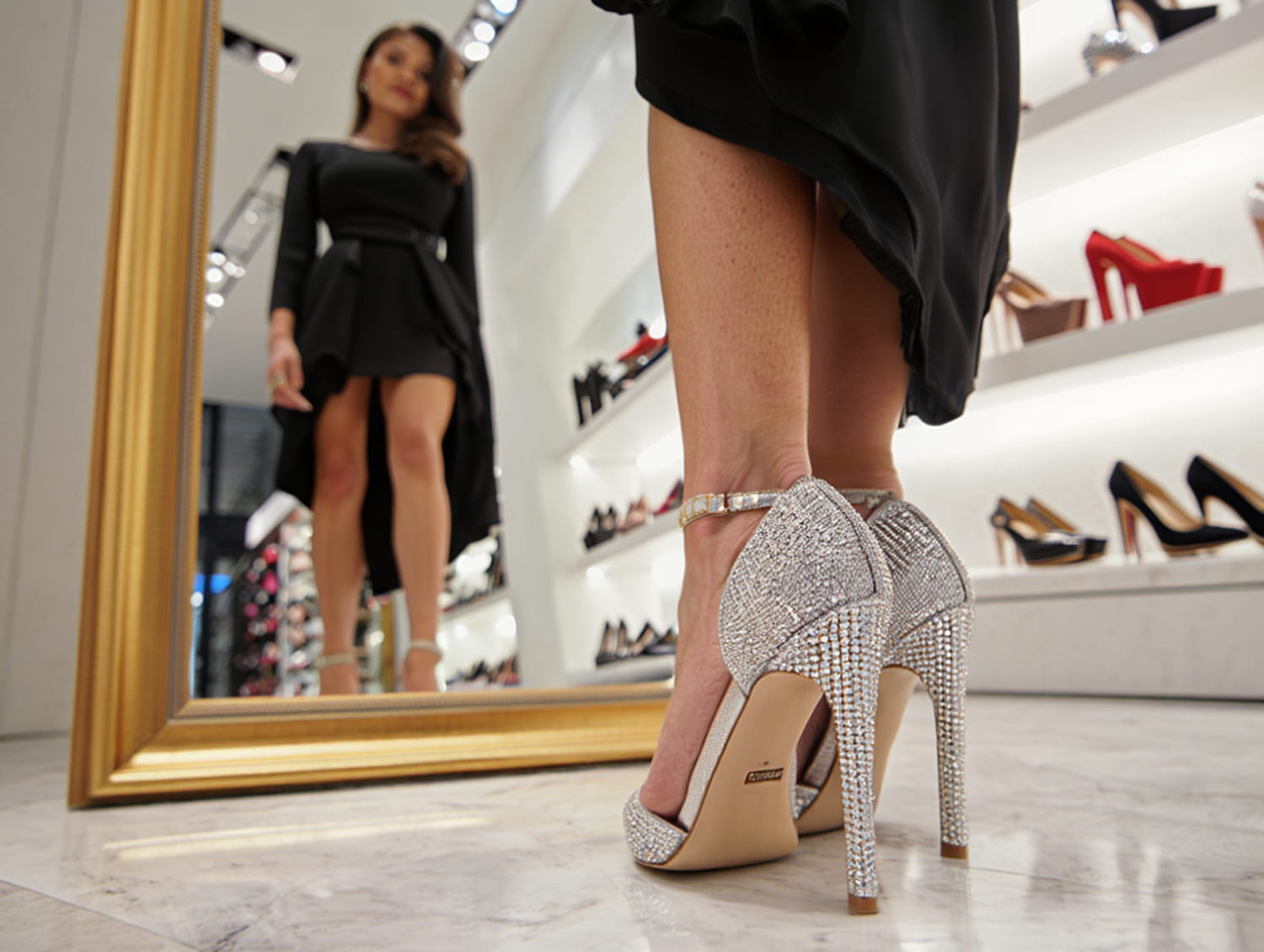
First there were the cork wedge heels – patented, please – from Salvatore Ferragamo in the 1930s, stiletto heels; in the 1950s, short heels known as “trotter” heels Roger Vivier in the 60’s, the iconic red sole of Christian Louboutin in 1992, then… nothingness. No other innovative heel silhouette has broken the catwalks and streets for thirty years. That was without counting on this young shoe brand born 7 years ago… It broke the market with a heel never seen before. We are in 2018 when the label Amina Muaddi establishes the pyramid heel as a big trend.
If flared heels already existed in the 90’s – they were once called “cake stand heels” -, they are much more massive. Amina Muaddi innovates in “offering a differentiating aesthetic through this stiletto heel/voluminous heel contrast”recognizable among a thousand (Forbes). She even patented her design: “for the heel, we established a patent because no one had done it before me. We checked.” An approach that says a lot about the scale of innovation. Indeed, as the researchers explain, designers do not bother to apply for patents because the process is long while fashion is short: “A patent typically gives inventors several years of exclusive rights, extending beyond the lifespan of fashion designs. Most importantly, a design innovation must be copied and imitated to move from a promising idea to a lucrative trend.”*
This aesthetic immediately appeals: “the collection was sold out in 24 hours on the day of its official release”entrusts the designer to Sally. During the years that followed, the heel inspired the most cutting-edge ready-to-wear brands and fashion houses, like Miu Miu And Jacquemus.
Accessible brands also copy its aesthetic, helping to disseminate it and anchor it in the collective imagination. On the streets, people rush to wear pyramid heels, regardless of whether they are real or fake. It’s simple: this heel is absolutely everywhere. And it shows in the turnover: 51 million euros per year on average. This summer, the label set up shop – or rather store – on avenue Montaigne, in Paris. There success story is far from over.