




“The extreme concentration of the world’s wealth”. “The staggering level of inequality in the world.” With these headlines the French newspaper Le Monde anticipated the third edition of the World Inequality Lab, the Laboratory on global inequalities, a research institute at the Paris School of Economics created by the economist Thomas Piketty author of the world best-seller in 2013 Capital in the 21st century.
Collecting the works of around 200 researchers, The report documents the explosion of the wealth of the ultra-rich and details how these inequalities creep into every level of society: in education, in politics, in the consequences of climate change, in income gaps between men and women.
There are 56,000 ultra-rich people (a club which allows entry with a minimum wealth of 254 million euros) and represents 0.001% of the richest people on the planet. “Together, they now own three times more than the poorest half of humanity, or 2.8 billion adults. And while the gap has remained stable since the start of the Covid-19 pandemic, it has increased dramatically in recent decades: in 1995, the bottom 0.001% owned ‘only’ twice as much as the poorest,” he writes Le Monde.
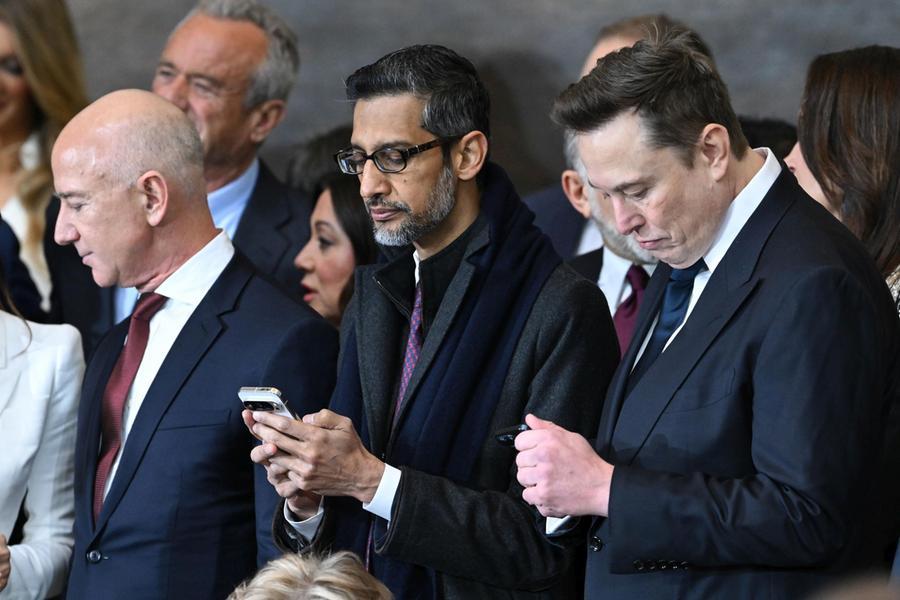
The world’s 56,000 richest individuals have grown richer by nearly 5% per year for the past thirty years. But there are very rich super rich people who have seen their fortunes increase by 8.4% per year. There are 560 multi-billionaires (with a minimum asset of 4 billion euros) weighing Elon Musk, Mark Zuckerberg, Jeff Bezos and Warren Buffett.
“Behind the surge in these considerable fortunes,” he further observes Le Monde“hides a slow crumbling of the middle classes, those above the poorest 50%, but below the richest 10%. This “40%” has only recorded a 1% increase in their annual income since 1980.”
The report highlights that “women continue to work harder and earn less than men”. Another disturbing consideration: the richer you are, the more you consume, the more you pollute. In the United States, the richest 10% of the population produces 24% of greenhouse gas emissions. It even emits 40 times more than the richest 10% of Nigeria.