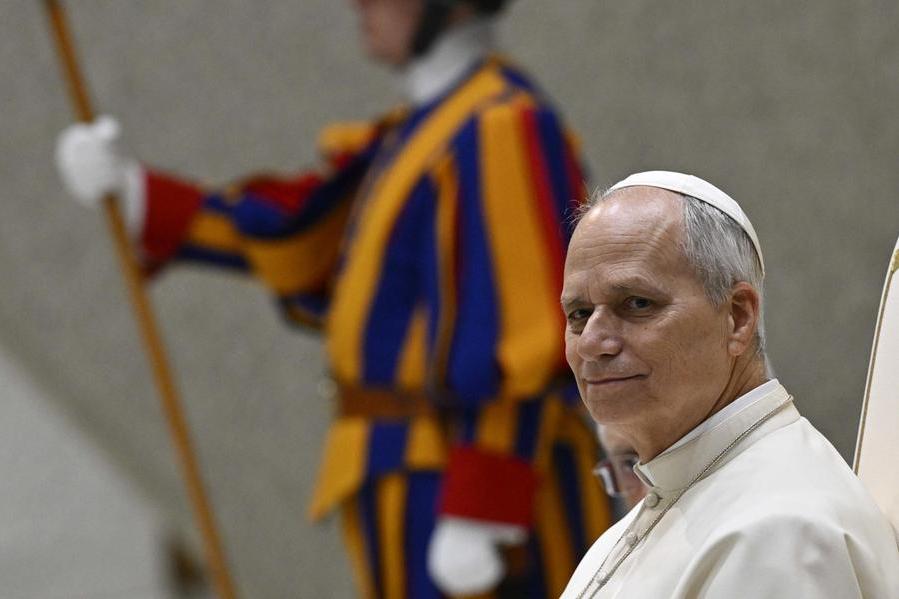



In a world in which new forms of communication open up unprecedented horizons of knowledge, but at the same time break down the boundaries between true and false, Pope Leo XIV invites deep reflection on the role of the media. In the message sent for the thirty years of the broadcast Door to Doorthe Pontiff underlines how, in the continuous flow of words and images, «the false can take on the face of the true; quick reading masquerades as depth; monologues disguise themselves as dialogues in which, in reality, “no one really listens””.
Addressing the host Bruno Vespato the editorial staff and viewers, Leo Door to Door in the form of dialogue in front of a television audience.
The Pope warned of the risks of new information: «mistaking the false for true, compulsive zapping for listening, doom-scrolling for intentional reading, superficial curiosity out of a desire to know, monologues for dialogues where no one really listens.”
And he concluded with a clear appeal: «I wish you and all of you to always be able to offer the world, thirsty for beauty and truth, quality television».
On the topic of journalism and information, Pope Leo sent a message to Fédération des Médias Catholiquesgathered in Lourdes from 21 to 23 January to reflect on the theme “Catholic media, media for whom”: «As professionals of Catholic-inspired social communication, I encourage you to be sowers of good words, creators of a word that embraces, of a communication capable of reuniting what is broken, of a balm on the wounds of humanity». The Pontiff underlined the importance of communication that promotes peace and dialogue in a polarized world: «We need words that mend the lacerations of life, words that build communities where enmity separates individuals and peoples. We must say “no” to the war of words and images.”
Leo XIV cites the example of Father Jacques Hamel, the priest killed in hatred of the faith in 2016, as a model of dialogue and patient listening: «To get to know each other we must meet without being frightened by differences, ready to fight for who we are and for what we believe in». His sacrifice becomes a guide for Catholic journalists and communicators: to be “seekers of the truth in the love that explains everything”.
Finally, the Pontiff recalled the urgency, in the era marked by the “irruption of artificial intelligence”, to return “to the reasons of the heart”, enhance “good relationships” and get closer to others “without excluding anyone” underlining that even in an increasingly digital and fragmented context, Catholic media are called to offer a service of truth to all, believers and non-believers, helping to build bridges and not walls.
The Lourdes days represented an opportunity for discussion on the major themes of communication, with debates on the challenges of digital technology, new Catholic media, social networks and the minority condition of Catholicism in France.