






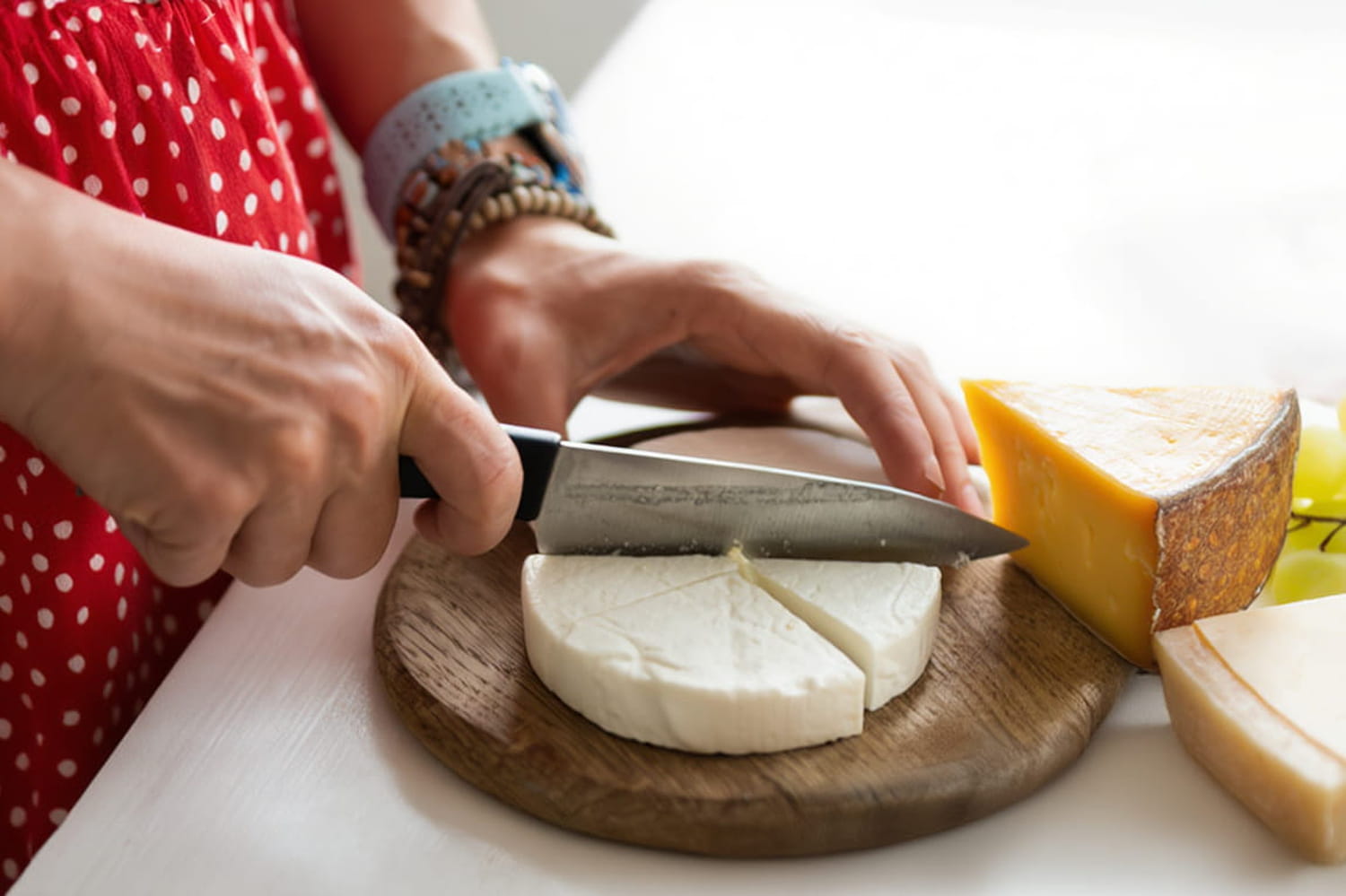
Among all the cheeses available in France, one of them hides a much higher protein content than most meats. Nutritionist Nina Voit reveals to Journal des Femmes which one and gives us her secrets to enjoy it without feeling guilty.
Often singled out for its richness in fats and calories, cheese nonetheless remains a precious ally for our health, provided we know how to choose it. “We are lucky to have an infinite variety of cheeses in France, there is no reason to deprive yourself of it.”immediately supports nutritionist Nina Voit at Journal des Femmes.
Although they all share the same base (milk), their protein content varies from one to four times depending on the cheese. “The difference in nutritional density is due to the quantity of water remaining in the finished product: the harder a cheese is, the less water it contains, and the more concentrated its nutrients (proteins and lipids).“, continues our expert. These proteins serve as “building blocks” for the body to maintain muscle mass, repair tissues and support the immune system. Choosing a protein cheese therefore means offering your body high-quality, particularly satiating fuel.
If you are looking for the highest protein cheese, turn to cooked pressed cheeses, and more particularly to Parmesan. With around 38g of protein per 100g, it far outperforms most animal protein sources. This is the typical example of “dry” cheese where the protein is ultra-concentrated. Just behind Parmesan, we find Emmental and Comté: with around 28 to 30 g of protein per 100 g, these are two good allies for those looking for a milder but effective cheese for protein intake.
To avoid making a mistake with the quantities, the nutritionist recommends an infallible and visual method: the size of your index and middle fingers combined represents the ideal quantity of cheese to consume per day. Basically, it forms a rectangle that is the size of your two fingers. This corresponds approximately to the famous 30 gram portion recommended by health authorities, but adapted to each person’s body shape. For example, a standard serving of parmesan provides around 11g of protein, which is as much as two small eggs or a nice chicken thigh.
It is better to consume cheese preferably in the morning or at midday: its richness in proteins and fats provides lasting energy for the day, while avoiding overloading digestion in the evening before bed. For athletes, she advises consuming cheese “after sport, especially not before“, because its digestion mobilizes energy that the muscles require during exercise.
Beyond the numbers, the quality of a cheese lies in its “digestibility”. Pasteurized industrial cheese (like Laughing Cow® or grated mozzarella) can have a high protein level, but it will often be “dead” enzymatically. Conversely, a raw milk cheese has been “predigested by living bacteria”which makes its proteins and fats much easier to assimilate by our digestive system. “Eating cheese from time to time to nourish this flora inside our body is a good thing“, specifies the nutritionist. This is where cheese becomes a health ally: when it is chosen for its bacterial richness rather than for its simple industrial practicality.
Thanks to Nina Voit, adapted diet coach, author and founder of “Du Bon Sens dans mon Assiette”® Exclusive interview conducted on April 15, 2026.