



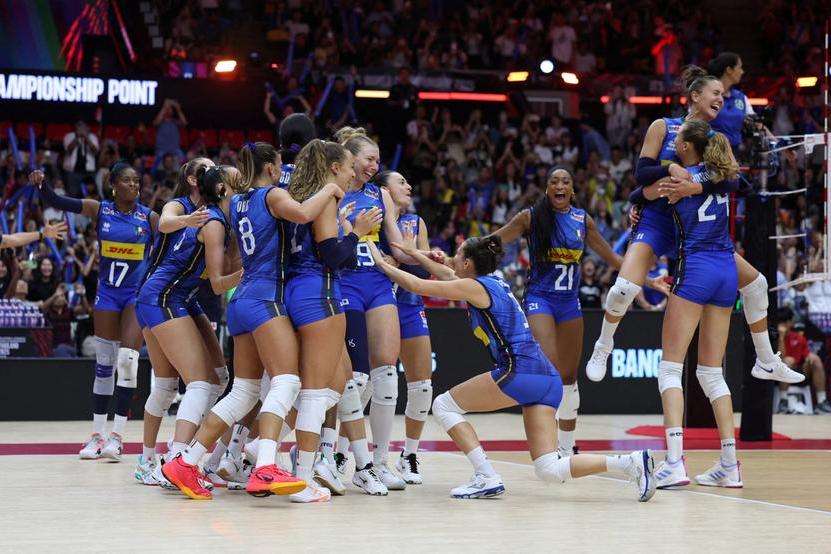
A team of women who said they were disintegrated and who found the right alchemy in uniting around their objectives to be able to do the most difficult thing after the most difficult thing. If until August 2024 the most difficult thing for Italian volleyball was winning Olympic gold: a forbidden dream that had been touched so many times that it risked turning into a chimera, 2025 asked for more: to repeat itself, at the World Cup, managing to keep the expectations and demands of others at bay. There are explosive equations in sport, equations like this: «the women’s Italy won the 2024 Olympic gold in Paris (almost easily), Italy is the strongest team, Italy wins the 2025 World Cup». So, as if it were an automatism. And instead every time it is Penelope’s canvas, to be woven from scratch, resisting the temptation to sit down but also the weight of the victory taken for granted.
The 2025 Italy women’s volleyball team was perhaps even stronger than the one that almost took a walk in Paris 2024. Stronger for how it remained on the court when the matches got ugly, dirty and nasty, when the sets went up and down, when the game got tough.
A volleyball team is democratic by definition: the rules demand it. One touch each and the quality of each gesture is closely interconnected to the gesture of whoever came before. A mistake in defense, if the ball doesn’t go to the ground immediately, often becomes a mistake in attack. There is no individual talent that can solve the difficulties of a team alone. This does not mean that individualities are leveled out: they have certainly been seen. From Paola Egonu to Ekaterina Antropova, sharing the dunks and substitutions, without any more conflicts; by Alessia Orro called to sort every ball, but who can be put out, like everyone else, if something isn’t working; to Stella Nervini, the mascot of the group who is ready to play as a starter in the running, passing through the captain Anna Danesi and the libero Mochi De Gennaro.
It would have been a mistake to choose just one face to represent what was a team result, built with patience, awareness, professionalism: that of the players, certainly undeniable, no one wins without it; but also that of a very professional staff.
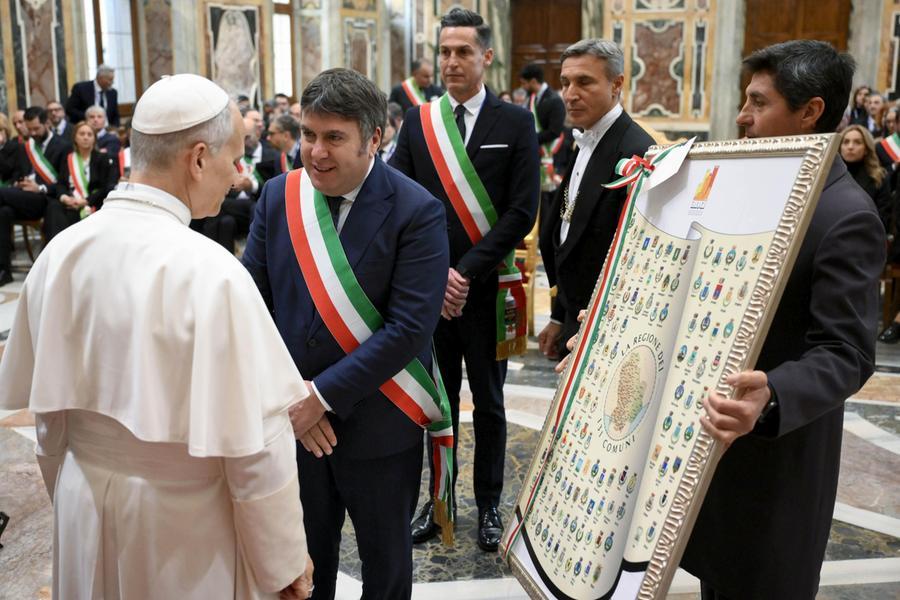
At the Quirinale in October Julio Velasco, the girls’ coach, spoke of the team as a democratic model, in which different ideas are accepted, preserving individual diversity, but in which we then play together “as a team” because everyone tends towards the same side, making individualities shine, is functional to the result.
There are other aspects in this team and in those who lead it that could serve as lessons in other worlds: surrounding oneself with competent people is an effective strategy for a leader, but it implies accepting the professionalism of others, comparison. When Velasco became coach of the women’s Italy team he chose Lollo Bernardi, spiker of his men’s Italy team as a player, who became one of the most successful club coaches and Massimo Barbolini, already second to Velasco in the past, but also former coach of the Italian team, the most expert in women’s volleyball of the three. Not “yes men”, therefore. Like Velasco, he has never made a secret of the fact that he does not want yes women on the pitch, but autonomous and authoritative women, capable of making decisions during the match.
There is also more: in a world in which not only divisions are exalted, but in which generational conflict is evident, in which the word “ageism” is invented, to indicate the psychological scrapping of those classified as “boomers”, while young people feel without space, this team is an example of virtuous bridges between generations: a 72-year-old coach who hates saying “in my time”, has won on the pitch, with his competence and ability to communicate, the respect of players who could be his grandchildren. And when in the emergency caused by the injury of the starter Alice Degradi she gave the field to Stella Nervini and Gaia Giovannini, 46 years old between them, the “little ones” of the group repaid the trust with a splendid World Cup.