




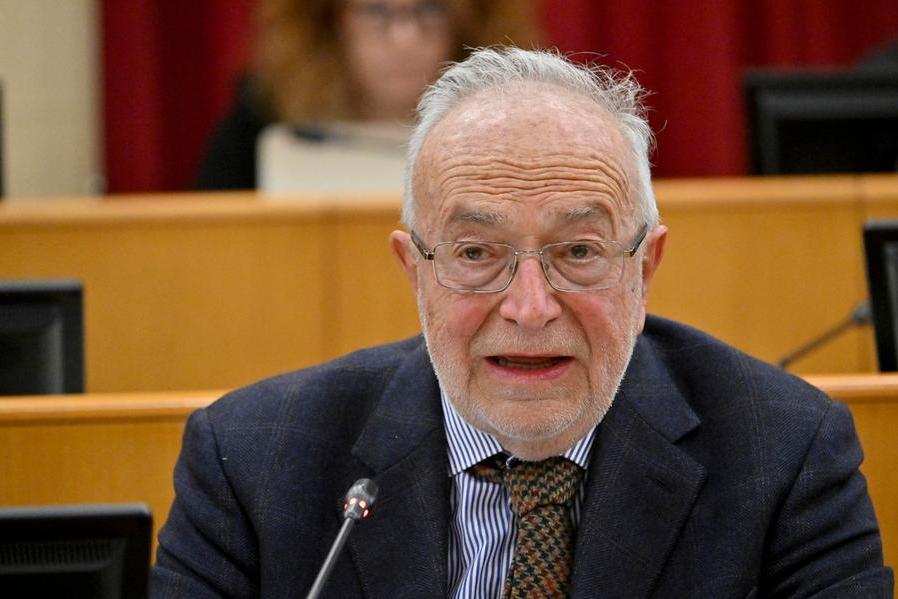
Professor De Siervo, by separating the careers of prosecutors and judges, will we have a more fair and equitable criminal trial?
“Whoever says this forces the object of the referendum, it is by no means certain that this would be a consequence of this constitutional law, while it is certain that its true content is the weakening of the Superior Council of the Judiciary and the representation of magistrates.”
Is it necessary to change the Constitution to prevent 0.21% of prosecutors and 0.83% of judges from changing roles on average in the last 5 years?
«The transition from one function to another is now marginal: an ordinary law (Cartabia 2022 reform, ed.) has radically reduced it, allowing it only once in the first nine years of a career. Already today the law prevents one from being a prosecutor first and then a judge, or vice versa, in the same place or on the same cases.”
It is said that separate prosecutors and judges would guarantee the citizen more. It is true?
«On the contrary, I see a particular risk in a separate body of prosecutors: there is a risk of creating a super specialization of prosecutors among prosecuting magistrates, with a consequent rapprochement between prosecutors and the police. Today prosecutors must not be uncritical accusers, they must verify whether a report of a crime is founded and whether the evidence is adequate to support the accusation in court. For this reason it is good that the judge’s culture is involved in their professional paths.”
What impact does the reform have on citizens?
«I read a report by Giovanni Leone, constituent, then President of the Republic, in which he said that it is of little use to say that the judiciary must be independent if we do not then monitor the mechanisms that operate in reality: with the reform we would have mechanisms that, by weakening the representatives of the magistrates, weaken the citizens in the machinery of justice».
How?
«In many countries these days we are witnessing the temptation of governments to “use” the judiciary. When Donald Trump says to his adversaries or alleged adversaries: “I will report you to prosecutor XY and ask for billions in reimbursement” what does he do? He threatens the disproportionate use of the powers of the judiciary to solve his political problem. When someone in Italy says to magistrates: “Block government action”, he says that he would like judges to stamp the government’s decisions even when they do not comply with the law, while the task of the judiciary in the democratic system is to enforce the laws in an egalitarian way.”
Those who wanted the reform admit the shift in the balance between powers: rebalancing or imbalance?
«So far the CSM has managed to fulfill its functions through the participation of the representatives of the magistrates – introduced by an amendment proposed by a very young Catholic constituent, Oscar Luigi Scalfaro – which was based on the election, radically excluding the draw. If we replace the CSM with three different bodies (a CSM for prosecutors, one for judges, a disciplinary court), all very weak because they are mainly composed of magistrates chosen by lot, we introduce a very strong imbalance into the republican system. Counterweights imply, in fact, that if you take away weight from one side, you give it to the other side; in this case if you remove it from the judiciary you add it to the Ministry of Justice, precisely what the Constitution wanted to avoid by creating the CSM as it has been up to now. And to say that so far the members of the CSM have been chosen with a “paramafia method” is an insult that cannot be accepted.”
They say that the draw would avoid new “Palamara cases”.«Degeneration can exist in all institutions: haven’t we perhaps seen it in Parliament or in local administrations? Should we conclude that we need to draw lots for Parliament or regional councils? The Palamara cases can be resolved with better made ordinary electoral laws. As for the currents, I find that the physiology of the life of a public institution is scandalized: it is not that if groups of magistrates have different ideas, their choices become inadmissible: proposals and counter-proposals will be compared. The important thing is that whoever is called to this task is authoritative, known, selected according to experience by other magistrates as more reliable, not drawn by lot”. Why separate the disciplinary function in the High Court? “In my opinion to weaken the protection of magistrates and at the same time increase the power of the political class in matters of justice. Among other things, there is a contradiction: careers are divided, CSMs separate and then prosecutors and judges return together to the High Court to decide disciplinary sanctions based on rules of conduct established separately by the two CSMs. Something doesn’t add up.”
As they say, the reform will reduce judicial errors: Tortora, Garlasco?
“Miscarriages of justice are, unfortunately, an professional risk in all judicial systems, with all legislation: using them to support the need for reform is simply incorrect.”
In more detail: