




The debate on the constitutional reform of justice, which introduces the separation of careers between judges and prosecutors, also comes to life on an institutional level. It happened on Friday at the inauguration ceremony of the judicial year in the Supreme Court, in the presence of the President of the Republic Sergio Mattarella and the highest offices of the State, in a climate marked by tensions but also by explicit calls for dialogue and loyal collaboration.
The reform, strongly supported by the Government and intended for the judgment of citizens in confirmatory referendum on March 22nd and 23rd, she remained the stone guest of all the interventions.
Starting from the report of the first president of the Court of Cassation, Pasquale D’Ascola, who opened the proceedings with a clear appeal: «It is necessary to tenaciously cultivate a climate of mutual respect and effective collaboration between the institutions, which allows for a calm and rational discussion on the future of justice».
A reminder that does not go into political merit, but reiterates a fundamental constitutional principle: the independence and autonomy of the judiciary not as a corporate privilege, but as an essential condition for the law to be truly equal for everyone.
“The judiciary”, underlined D’Ascola, “feels that it has fulfilled its duty only when every right finds effective protection, not when it remains an abstract proclamation”.
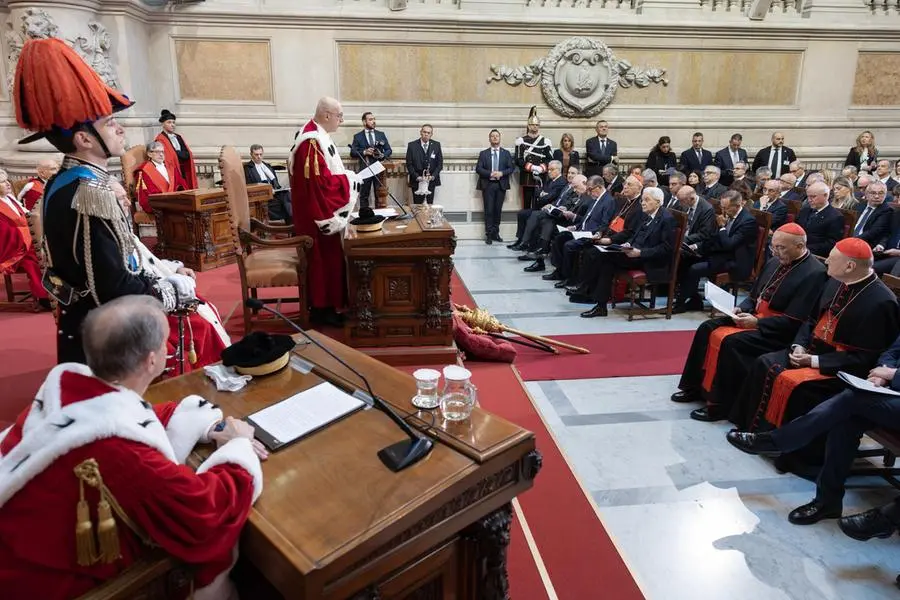
The President of the Republic Sergio Mattarella on the occasion of the General Assembly of the Supreme Court of Cassation for the inauguration of the judicial year 2026 and for the report on the administration of justice in the year 2025
(HANDLE)
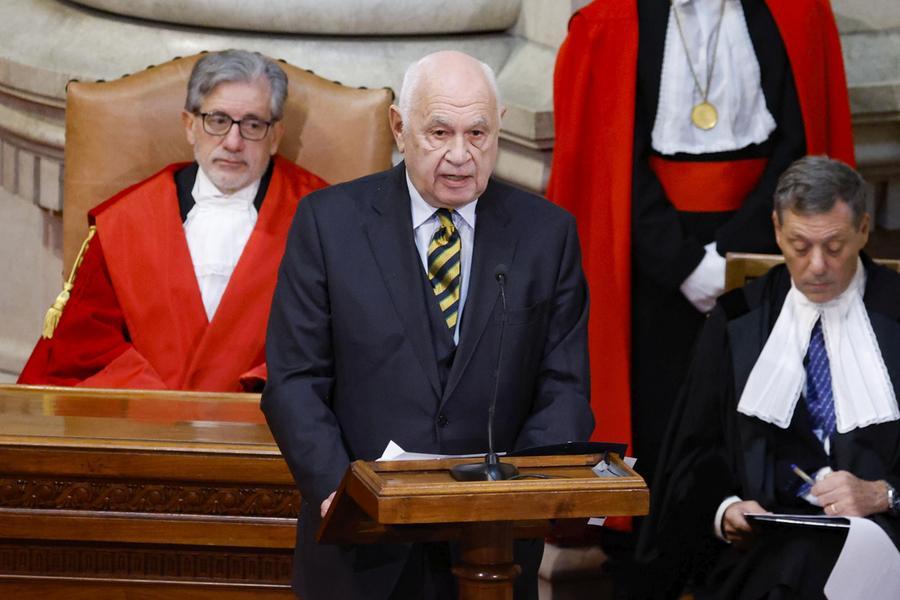
The intervention of the Minister of Justice was of an opposite nature, but not without conciliatory tones Carlo Nordio, promoter of the constitutional bill. For the Keeper of the Seals it is It is “unjust and even blasphemous” to argue that the reform puts the independence of the robes at risk. At the same time, Nordio wanted to look beyond the conflict, ensuring that, whatever the outcome of the referendum, the discussion with the judiciary, academia and lawyers will remain open: “If the Yes vote wins, work on the implementing rules will begin the following day, in a spirit of dialogue.”
Yet, the fracture between politics and the judiciary remains evident. The Attorney General of the Supreme Court said it bluntly, Pietro Gaeta: «The conflict, as it is presented in the eyes of citizens, has reached unacceptable levels for a country that harks back to the tradition of legal liberalism». Words that sound like a warning: when institutions delegitimize each other, citizens’ trust pays the price.
On the same line, the vice-president of the CSM (Superior Council of the Judiciary), Fabio Pinelli, who warned of the risks of a permanent conflict: «Mutual delegitimization weakens institutions and disorientates citizens», he said, recalling the principle of loyal collaboration as a necessary complement to the separation of powers. Pinelli also recalled the sacrifice of many magistrates who defended democracy up to the cost of their lives, in the fight against terrorism, mafia and subversion: a memory that calls everyone to a more responsible comparison.

President Mattarella welcomed by Carlo Nordio, Minister of Justice – Government Representative, by Pasquale D’Ascola, First President of the Supreme Court of Cassation, and by Pietro Gaeta, Attorney General at the Supreme Court of Cassation
(HANDLE)
Alongside the reform, the ceremony also offered a concrete insight into the state of Italian justice. According to the data provided by Minister Nordio and Attorney General Gaeta, the results of the Pnrr are producing tangible effects: in the criminal sector the objective of reducing the duration of trials by 25% has already been achieved, while in the civil sector the backlog has decreased by up to 90%, with encouraging prospects also on the timing.
But justice is not just numbers. D’Ascola forcefully recalled some open wounds in the country: violence against women and feminicides, deaths at work, suicides in prison. Themes that question the collective conscience and return to the heart of fundamental rights: “The dignity of the person”, he recalled, “is offended in the unemployed, in the abandoned poor person, in the mistreated prisoner”.