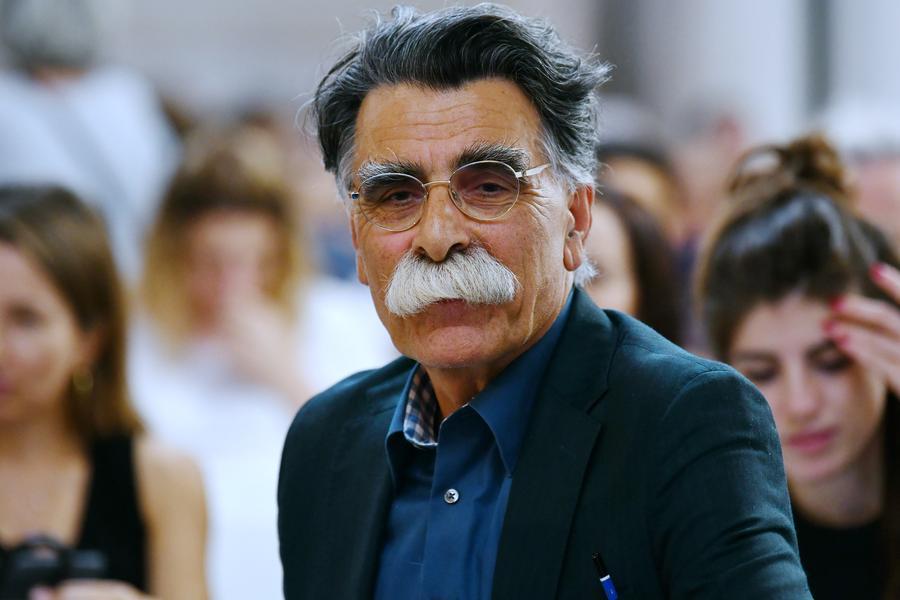




Trump threatens to make a civilization disappear in a single night, a massacre, postponed for now, announced with unacceptable lightness and which, in addition to the violence and inhumanity of the purpose, shows that those who threaten are unable to understand how weapons can do very little in the face of the strength of a history and a thousand-year-old culture. This can be perceived from the words of the famous Iranian writer Kader Abdolah (pseudonym of Hossein Sadjadi Ghaemmaghami Farahani), an author who has made memory, exile and cultural identity the heart of his work. Born in Iran in 1954, Kader Abdolah studied physics in Tehran since 1972 and began writing in Persian early on. After the publication of two collections and, for his safety, the adoption of a pseudonym, he was forced into exile in 1985: he moved from Türkiye to the Netherlands, where he obtained political asylum. Here he taught himself Dutch and chose to write in this language. With his novels, published in Italy by Iperborea, he begins an autobiographical journey on the experience of exile: the journey of empty bottles (1997), Cuneiform writing (2000) e The House of the Mosque (2009)an award-winning international success.
Why do you use a pseudonym?
«Life decided it for me. When I published my first book in Iran, it was dangerous to use my real name and I had to choose a pen name so the book could be sold on the black market. Around that time, two of my friends were executed: Kader and Abdolah. I combined their names and have been Kader Abdolah ever since.”
He left Iran many years ago and has watched his country from afar ever since. What did you feel when the war broke out?
«I want to tell you something. Something that might sound strange. When the bombings started, I was more afraid for the unity of my country than for my family. I shouldn’t say this, but I don’t want to censor myself. I thought about all the damage that could tear apart a country held together by literature and classical culture. I thought they were bombing cultural Persia and that affected me deeply. Only afterwards did I think of my elderly mother, who had nowhere to run to.”
In your opinion, what aspect of the Iranian soul is most often misunderstood in Europe and the West?
«Perhaps the West struggles to understand that the combination of ancient Persian culture and Shiite religion gave the country a strong spirit: a powerful, mysterious and complex existence. I’ll give you an example: when Khamenei’s house was bombed, they killed him. Then they proposed his son as the new leader. But we are not sure if this son is alive. There is a great possibility that he is dead. Yet they chose him as their leader, so Israel or the United States cannot kill him. It is a historical and religious choice that only Iranians can make, because in the Shiite religion we still wait every day for the sacred Mahdi, who disappeared a thousand years ago.”
In recent years many young Iranians have taken to the streets to demand freedom and rights. Do you see the beginning of a change in these protests?
«I see desperation, anger and courage. Ten times courage. They do all this unarmed. I envy them. Their fight will not be rewarded immediately, but they are all necessary steps. Once upon a time it was our turn. Now it’s their turn.”
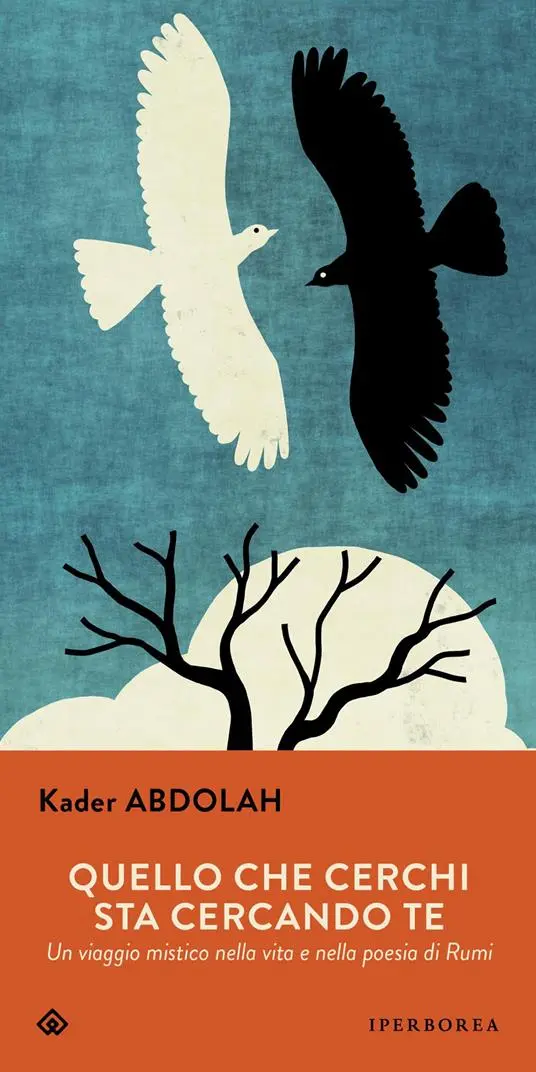
His most recent publication, What you are looking for is looking for youis dedicated to the poet Rumi (one of the greatest spiritual masters of the 13th century), who like her was forced to leave his country. What does the word “exile” mean to you today?
«I thought that exile would be terrible, that I would lose everything. And that’s how it is. It’s very hard: you lose a lot and it’s difficult to stay standing, especially for the first generation. But I don’t know how at a certain moment life suggested this to me: “change the language in which you write and take back everything you’ve lost”. So I was rewarded and got even more. I was able to take charge of my life and become a new writer, a new personality, perhaps even build a new identity.”
And so he chose to write in Dutch, the language of the country where he lives. Was it difficult?
«It was certainly very difficult. Continuous, non-stop work. I tell you this: There is no one in the Netherlands who has devoted more time to the Dutch language in the last thirty years than me. Difficult, but fascinating. An extraordinary research on the meaning of leaving, of escaping. And on the encounter with “the other”».
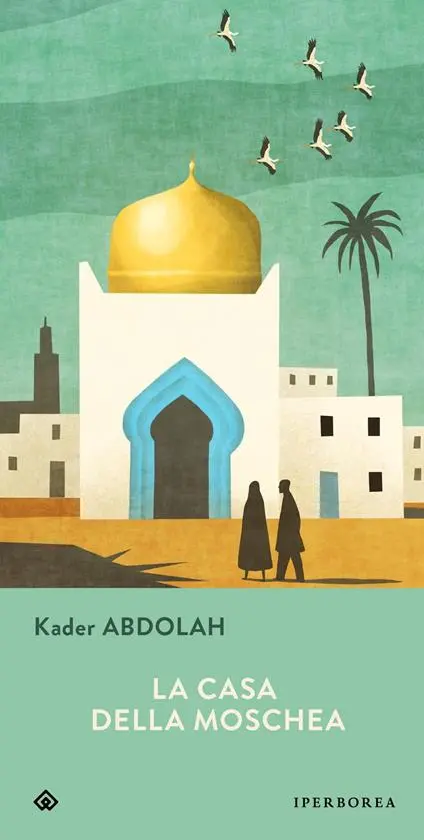
In his novel The house of the mosque tells the story of a family and a community overwhelmed by the revolution. How much is autobiographical?
«Earlier I told her that, by changing the language in which I write, life has given me more strength and possibilities. A good example of this concerns a tragic family event: when the regime executed my brother, we could not bury him in the cemetery. We buried him in the mountains. An eternal pain for me. But I later buried it again by telling it in Dutch. Everything in that book is autobiographical, but with the cement of a new language and immigration.”
The mosque at the center of the novel is both a place of spirituality and the center of social life. In today’s Iran, is religion still a space of faith or has it become above all an instrument of power?
«The spirit of the country is characterized by a combination of the faith of Zarathustra and the Shiite faith. This is the identity of the Persian people. Politics cannot transform it or appropriate it. This regime will disappear sooner or later but not our faith. The faith and culture in this country are thousands of years old and so strong that the current leaders are too small to change them. This is a fact.”
What memory do you treasure most from your childhood in Iran?
«My father was deaf and dumb. At home we communicated with sign language. I have beautiful memories of my childhood. As a child, for the first time, I tried to say something to him with my hands and he laughed: I had managed to talk to him.”
I imagine he still hopes to be able to return freely to his country. Who would you like to meet?
«My mother is almost a hundred years old and has forgotten everything. He can’t walk, he can’t communicate. But he doesn’t die, because he waits for his son, me. I hope I can go home, hug her, kiss her gray head and accompany her to heaven.”