






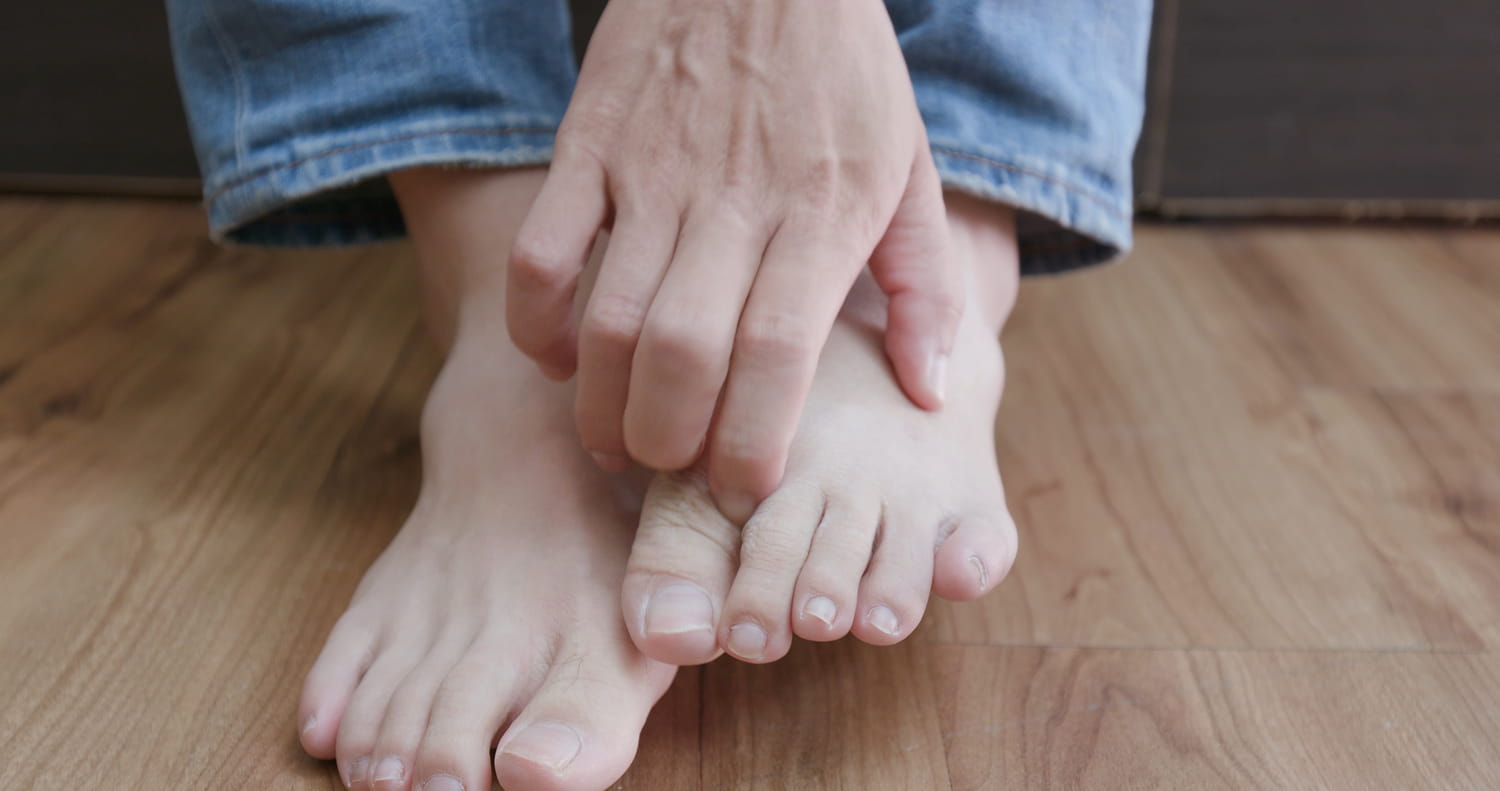
Pain in the left or right toe, sudden or persistent, with or without apparent reason: this common symptom can have very varied causes, from simple rubbing to pathologies such as gout, ingrown toenail or osteoarthritis. Signs to spot, possible causes and solutions for quick relief.
Toe pain is common. They appear after a long walk, wearing shoes that are too tight or for no obvious reason. In most cases, they remain benign, but they can become bothersome to the point of disrupting walking. Where does this pain come from and how to recognize it quickly?
Toe pain can have several origins
It often occurs after an impact, such as a contusion, dislocation or fracture. It can also be linked to repeated friction in the shoe, which encourages the appearance of calluses. “Corns and calluses which are caused by a lack of support and/or friction with the shoe. They are generally located at the level of the pulp of the big toe, on the external edge of the big toe or even at the level of the interdigital space (friction between the big toe and the second toe). We can also find one or more corns in the furrows of the nail or even under the nail”, explains Karine Poirier, chiropodist-podiatrist.
Some pain has an infectious origin. An ingrown toenail or small friction wounds can become infected quickly, especially if they go unnoticed. People with diabetes are particularly at risk, because sensitivity in the feet can decrease and delay treatment.
Other causes are more specific. A gout attack often causes sudden pain in the big toe, accompanied by redness and swelling. Osteoarthritis of the joint, called hallux rigidus, causes progressive stiffness. Finally, hallux valgus, also called “bunion”, corresponds to a deviation of the big toe. “We can suspect hallux valgus very early, even in children, particularly in the case of hereditary hallux valgus, warns our specialist. The deformation is quickly seen, with the big toe tending to deviate outwards.”
What are the associated symptoms?
Depending on the source of the pain, the toe may appear red and swollen, deformed and/or have a skin sore. A thickening of the skin, in the form of a corn or callus, may also be observed. “In the case of hallux valgus caused by wearing unsuitable shoes (pointed and high heels), the joint inflammatory crisis between the first metatarsal and the first phalanx will be the first sign of the appearance of hallux valgus”specifies Karine Poirier.
► For corns and callusesa visit to a professional is strongly recommended: “Only a chiropodist-podiatrist treats these conditionsunderlines Karine Poirier. It painlessly removes corns and calluses, limits their reappearance by offering protection, gives advice on footwear to avoid any further friction and offers suitable equipment to modify the support if necessary.”
► An ingrown toenail must be treated as quickly as possible to avoid a severe infection and the formation of a bud: “In order to avoid ingrown toenails, you must cut your nails straight, regularly, with pliers or nail clippersadvises our expert. You should not try to go into the corners, but file the angles. In addition, care must be taken to treat any excessive perspiration, which would tend to soften the skin and thus encourage the penetration of the nail into the furrows. Finally, wearing shoes that are too pointed or too tight should be avoided. “
► In case of osteoarthritisTHE wearing orthopedic insoles and physiotherapy sessions can help relieve symptoms.
► If hallux valgus becomes too painful on a daily basis, foot orthotics tailor-made by the chiropodist and wider, lower and seamless shoes help relieve pain. If the hallux valgus is too severe and painful, its correction by surgery can also be considered.
When to consult?
Corns and calluses can interfere with walking: it is advisable to have them removed by a chiropodist. In the absence of a chronic illness (such as diabetes, heart disease, immunosuppression, etc.), pain linked to an ingrown toenail does not constitute a medical emergency if it is quickly treated by the chiropodist-podiatrist. However, care must be taken to treat the wound well to prevent the infection from progressing: if no improvement is noted within 48 hours, it is advisable to consult a doctor.
Thanks to Karine Poirier, Chiropodist-Chiropodist.